This piece was adapted from Russell Moore’s newsletter. Subscribe here.
The manger scene on your living room table might be keeping you from understanding Christmas. Those Nativity sets are, after all, how most of us want this time of year to be—safe and warm and cheery, with lowing cattle and humming angels in the background. But the actual birth of Jesus shook up the snow globe of all our expectations. In the backdrop were not little drummer boys but Roman soldiers and a bloodthirsty dictator who could not afford to lose. The Antichrist is in the Nativity too.
“I am hoping that Christmas will be a distraction this year, that I can just escape back into Bethlehem for a while and forget all the, you know, news,” a friend said to me. I get it, and you probably do too. Today’s Bethlehem is in a war zone—and it would be hard to find a place on the globe that’s not either a tinderbox or fuel for the flames. Authoritarianism is on the rise. Many, even professing Christians, now speak as if “winning” were itself a moral category. The problem for my friend—and for me—is that first-century Bethlehem is not an escape from all that. It’s the epicenter.
In the coming weeks, many of our churches will read the familiar words from Luke 2 and Matthew 2 on the birth of Christ. Many more will also read John’s words about the Word that became flesh and dwelt among us. Few, however, will remember that the Book of Revelation is a Christmas story too.
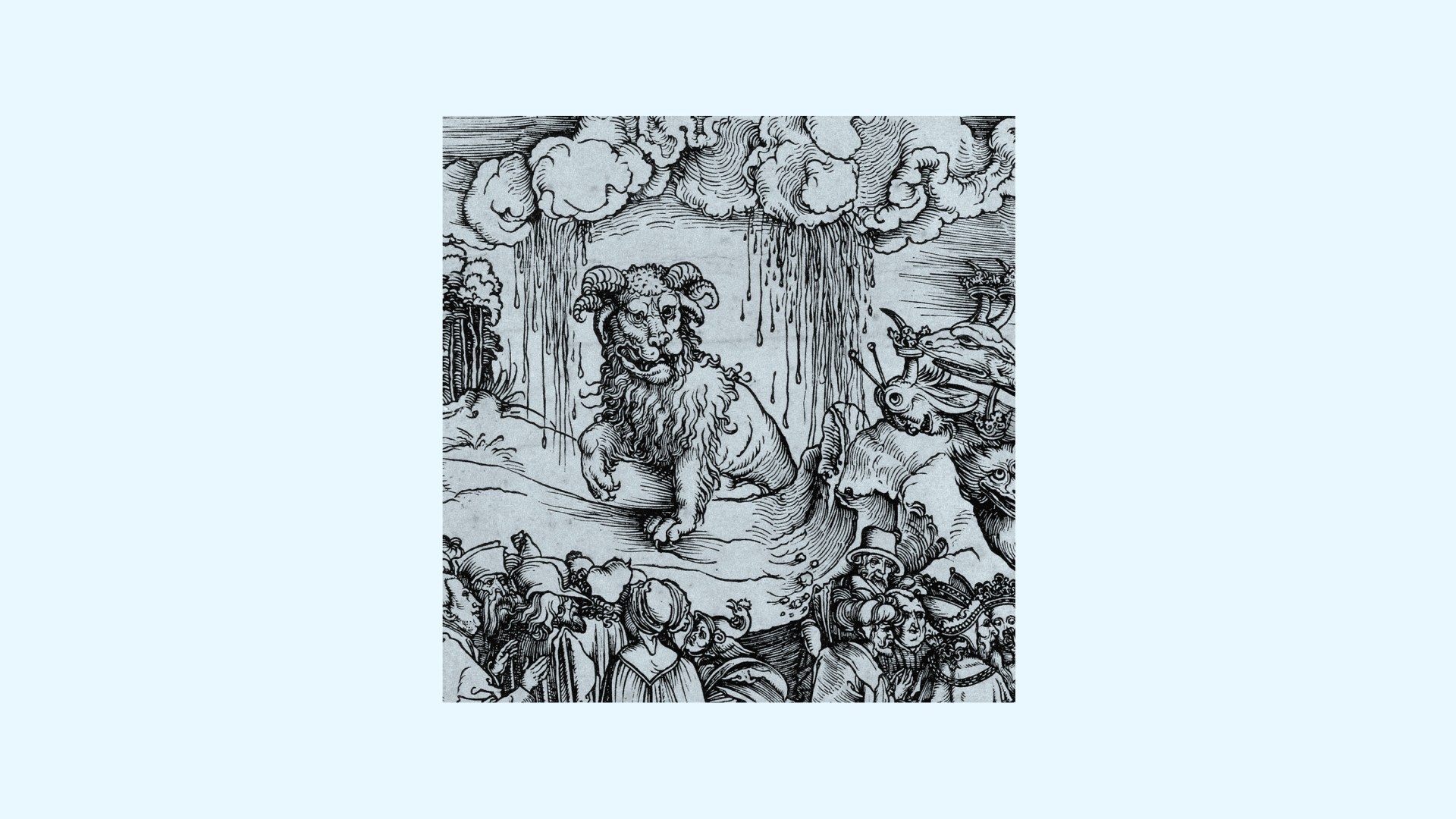
In Revelation 12, Jesus unveiled for John a picture of the entire sweep of history: a woman who cried out in labor pains and gave birth to a baby who would rule the nations, a dragon who sought to devour that child and chased both mother and baby into the wilderness. Immediately afterward, Jesus revealed the dark and mysterious vision of a “beast rising out of the sea” (13:1, ESV throughout), described in terms of a political power that seeks domination over all else. With it was “another beast rising out of the earth,” which was the religious authority giving justification for that domination (v. 11).
This is not a case of the story line shifting genres from Hallmark Channel Christmas movies in the Nativity accounts to Stephen King’s It: Welcome to Derry horror at the end. This is the same story all the way through.
The Beast rising from the sea, the imperial Roman power, is everywhere in the backdrop of the birth of Jesus. The words we will sing about and hear recited—Bethlehem, no room for them in the inn—all of it is due to a decree from Caesar Augustus to count the bodies of his subjects (Luke 2:1). This was the power move of a surveillance state, counting those subject to the empire to tax them and maintain order by force.
The carved wise men in our Nativity sets ought to remind us that those same men stood before Herod, who was enraged that the stars they saw predicted the coming of a king of Israel. That’s not only because Herod wanted to maintain his own power base as a client king of Rome but also because he knew he was a fraud.
Jewish sources from the time told the story of Herod’s descendant reading aloud from Deuteronomy 17 each year about the duties and limits of kings, as that text required the king to do (v. 19). Some of these sources said the king would weep when he came to the line “You may indeed set a king over you … from among your brothers” (v. 15). Herod was not from the offspring of David. He knew the promises. He was not one of the brothers.

Herod’s descendant might have wept, but Herod did not step down. Instead, he did what tyrants do when repentance is too costly: He turned with rage against those vulnerable to his power. And he found religious scholars who knew the Scriptures well enough to collaborate with his criminality by pinpointing the geographic location of the threat but not well enough to resist the violence that every one of those prophecies would tell them is evil.
When the apostle John described the Antichrist in his letters to the first-century churches, he did not fix his attention on deciphering 666 or weird occult practices but wrote instead that the spirit of the Antichrist is at work whenever someone denies that “Jesus Christ has come in the flesh” (1 John 4:2).
That flesh is important. Flesh and blood in Scripture is depicted as the ability to die, to be killed, to be vulnerable (Isa. 40:6–8). Nothing is more hurtable than an infant, utterly dependent on others for safety and food.
Our world right now seems especially fragile. Silicon Valley tech oligarchs are giving lectures on the Antichrist even while creating systems that promise to make us gods while surveilling us like slaves, all with a gumption perhaps not seen since O. J. Simpson vowed to find “the real killer.”
Many, knowing we are on the edge of unimaginable changes and perhaps inconceivable chaos, quote poet William Butler Yeats’s World War I poem “The Second Coming,” which laments, “Things fall apart; the centre cannot hold” and concludes with those haunting words “And what rough beast, its hour come round at last, / Slouches towards Bethlehem to be born.”
But every generation thinks it is the first to face the Beast. The unsettling truth is that the Beast has been slouching toward Bethlehem since, well, Bethlehem. And the Beast always looks unstoppable. Power and domination cause even people who claim the name of Christ to conclude that only by being beasts ourselves can we stop this.
Christmas carols should remind us otherwise. The beast of human power keeps getting humiliated by a baby—even when it seems to be winning. Caesar gets his census. Herod gets his massacre. But even so, the angel screams, “Fear not, for behold, I bring you good news of great joy that will be for all the people. For unto you is born this day in the city of David a Savior, who is Christ the Lord” (Luke 2:10–11).
Nothing could seem more ridiculous in a world where Caesar could crucify dissenters and Herod could chase them out of the country. The world still looks like that: Survival looks like victory, safety looks like salvation, and control looks like faith.
We should remind ourselves of this. The Christmas story reeks of blood. That’s because the Incarnation is not about crowning the warmth of humanity but about tearing down the house of the Devil (Heb. 2:14–15). The good tidings of great joy are not that darkness isn’t real but rather that “the light shines in the darkness, and the darkness has not overcome it” (John 1:5).
Evil is in the backdrop of your Nativity set. But set your attention elsewhere. Look instead at the feeding trough, at what seems utterly unimpressive and fragile. The hope and fears of all the years are met in that box in Bethlehem. It’s beast versus baby. Only one of them will conquer.
Choose wisely.
Russell Moore is editor at-large and columnist at Christianity Today and leads its Public Theology Project.