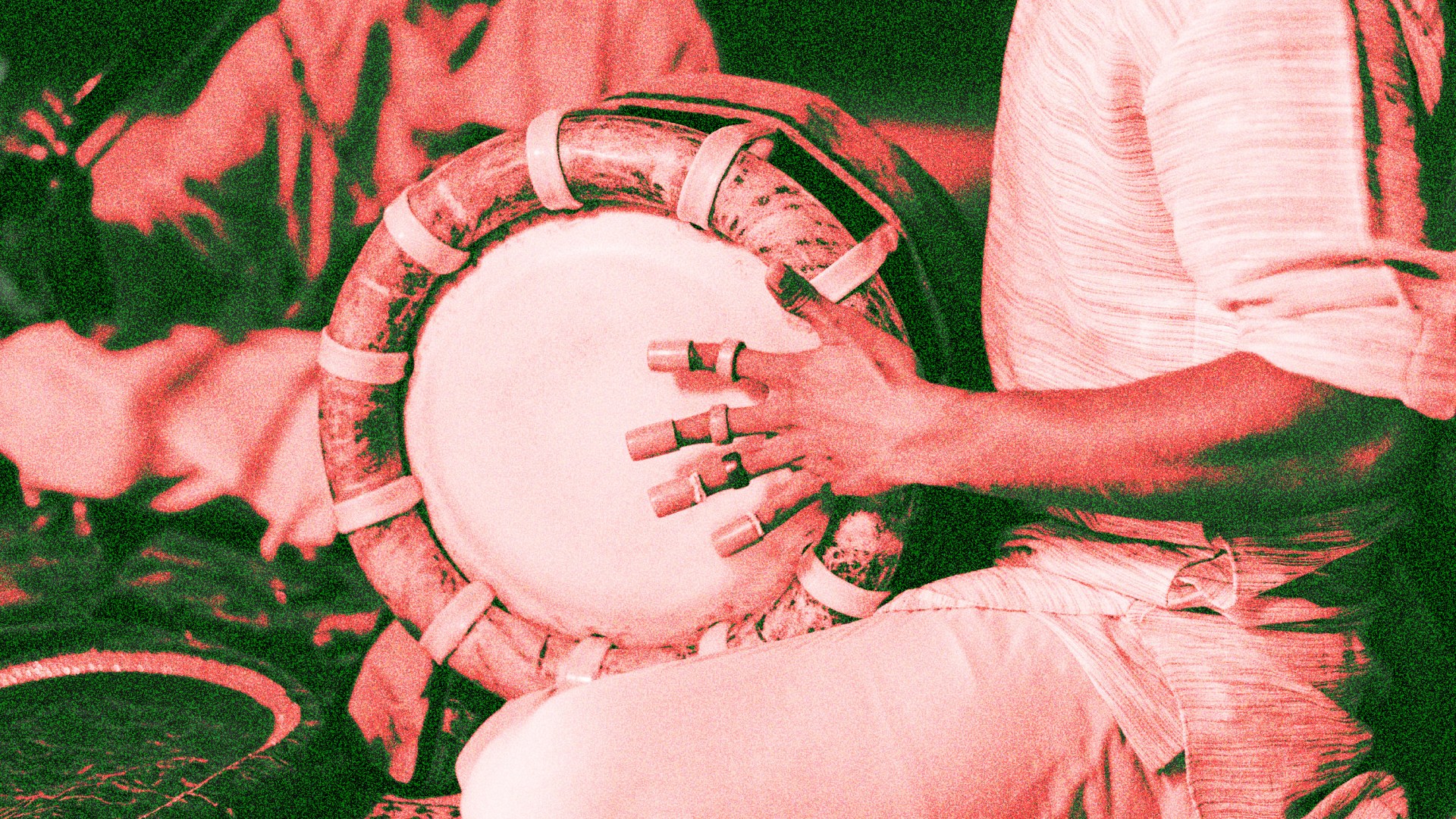
Last year, my husband and I went Christmas caroling with our church in Bhopal, a city in central India, one Sunday night. We brought along a mini djembe (an African drum) and an egg shaker, thinking we could add a fun percussive element to the singing.
We caught up with the crowd just as they were entering a church member’s home. The group of 30, predominantly teens and young adults, began singing their lungs out and clapping to the thumping of a bass drum.
“Sum sum sum sum sumbhavichallo, sumbhavichallo; Bethlehem goshalaya athu sumbhavichallo,”the carolers belted out with gusto. These Malayalam lyrics declared the miraculous joy of Jesus’ birth: It hap-hap-hap-hap-happened! It happened! In Bethlehem’s cowshed it happened!
More instruments joined in, including my husband with his djembe. Together, as if they could read one another’s minds, the percussionists progressively increased the tempo of the song.
Soon, the carolers broke out in dance. But instead of a gentle choral sway or synchronized choreography, people moved their bodies so spontaneously that I felt like I was in an unrestrained Bollywood-style celebration, like what takes place at local temple parades or Indian festivals like Holi and Diwali.
I had never seen Christians in India dance with such unbridled passion and energy before. “Is it acceptable for churchgoers to dance this way?” I thought to myself, feeling self-conscious and awkward as I attempted to move my body as enthusiastically as my fellow carolers.
There were other challenges: I am not fluent in Malayalam and could not pick up the words of the song and what they meant. The song’s exuberantly upbeat tempo didn’t help either.
Some of my discomfort around my Bhopal church’s caroling tradition probably stemmed from growing up in an Anglican church in the south Indian state of Tamil Nadu. The carols I sang then were all in English, with two- or four-part harmonies and specific stringed instruments accompanying the vocals. We might have lit a candle or clapped a little, but aside from the person dressed as Santa Claus, no one would dance at church.
Glorifying God at Christmastime can feel formulaic: We go to church, sing a few Christmas songs together, listen to a sermon, wish each other “Merry Christmas!” and head home. But glorifying God isn’t always a comfortable or respectable experience. It can be heartfelt and spontaneous, even if it might feel confusing or bewildering at times.
I wonder what the heavenly hosts sounded like when they praised God and said, “Glory to God in the highest heaven, and on earth peace to those on whom his favor rests,” after an angel declared to a group of terrified shepherds that a Savior had been born (Luke 2:8–14).
In my imagination, they probably sounded like an orchestra singing something Handelian. But maybe the angelic company was not as restrained in its praises to God as I had envisioned. They probably worshiped God as loudly as my church friends in Bhopal did. Perhaps they also danced as vigorously as David, the shepherd-king from Bethlehem (2 Sam. 6:14).
Caroling in India—a tradition called “carol rounds”—is a hallmark of the Christmas season. Usually, the singing and dancing begins after sunset and lasts from anywhere from 4 to 12 hours. The carol rounds may also be held over several days or weeks, and sometimes until the New Year.
related


Church congregations and Christian communities usually create a meticulous itinerary of homes to visit, ensuring that no church member is missed out and that hosts have enough time to prepare their homes to welcome guests.
The carolers often sing songs in the local or tribal languages of their communities. These songs are usually decided beforehand so lyrics can be printed out, and vocals are accompanied by whatever instruments people know how to play.
Only 2 percent of the Indian population identify as Christian, and amid the constant threat of persecution, church leaders also often have to ensure the carolers’ personal safety. In some Indian states, this may include securing permission from village leaders and government officials to go on carol rounds, making safe travel arrangements from one house to the next, and requesting a police escort if necessary.
After singing a few carols at a church member’s home, the family usually offers the carolers something warm to drink, a seasonal snack, or a cash offering for the church.
No one needs to have professional qualifications or skills to be part of the carol rounds. You just show up, ready to sing or dance in ways that extol God—even if people around you feel embarrassed or do not understand why.
As my caroling experience in Bhopal demonstrated, we do not need to construct an elaborate song repertoire to glorify God. All we need is to be willing to express what uncontainable joy in the Lord looks and sounds like. In doing so, we bring to life that vivid, sensorially delightful image proclaimed in Revelation 5: “To him who sits on the throne and to the Lamb be praise and honor and glory and power, for ever and ever!” (v. 13)
Several Indian Christmas carols reflect this powerful, and freeing, perspective on giving God glory. Take the Malayalam carol “Sumbhavichallo” (“It Happened”), which my church sang in Bhopal. The song’s composer, congregant K. S. Samkutty, wanted to communicate the incredulous news of Jesus’ birth in a humble stable through a dynamic, energetic tune. The lyrics’ catchy repetition, coupled with a rhythmic South Indian folk beat, makes this song a popular choice for collective rejoicing in my church.
related

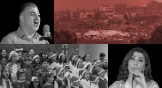
Another Indian Christmas carol, “Jishu Gadi Aja Nenju”(“The Lord Jesus is Born”), was originally written in Kui, a language spoken by the Pano and Kandha tribes in the southeastern Indian state of Odisha. My pastor friend Kishore Digal translated it into English last month, as he had fond memories of singing and dancing to the song as a child.
Set to the thumping, rat-a-tat beats of several dalgus (tribal drums), the song urges believers to awaken from spiritual slumber and be jubilant in praising God:
Let us all be joyful today
Today the Lord Jesus is born
We will worship him today …
Rise-up! Rise-up, oh heavy sleepers!
The Light has come that we may see it.
By the sun beams of Jesus,
Follow the path of holiness.
For he has come as the light of the world
And chased the darkness away.
When our worship practices become too familiar or staid—especially at Christmas—we may fail to realize the magnitude of what it means for the son of God to come into this world as a helpless, crying infant. We lose out on understanding the full breadth of emotions and expressions that arise when we fully give ourselves over to glorifying God, whether in private or in public spaces like our churches or neighborhoods.
Songs like “Sumbhavichallo”and “Jishu Gadi Aja Nenju”call us to break out of our spiritual lethargy. They encourage us to participate communally in celebrating Christmas with our brothers and sisters in Christ, just as the heavenly host broke out in praise to God for Jesus’ birth in the Book of Luke. Even if the lyrics and instruments used feel unfamiliar or strange, these songs’ messages are clear: Come and rejoice, for our Savior is here.
The carol rounds that many Indian Christians often participate in are a way to embody the good news of Jesus’ incarnation. We glorify God not only through the words we sing but also through our bodies and our cultures. In doing so, we confess our gratitude and devotion to him and acknowledge his lordship over us. We respond in awe at how he has interrupted the darkness and complacency of our world with Jesus, our Immanuel, just as Mary proclaimed in the Magnificat (Luke 1:46–55).
Glorifying God can look and sound messy. It can be boisterous and disorienting. And it is perfectly okay. I can’t wait to join my church in its carol rounds this year. It’s time I let loose and danced to “Sumbhavichallo.”
Ann Harikeerthan is a writer living in Bhopal, India.