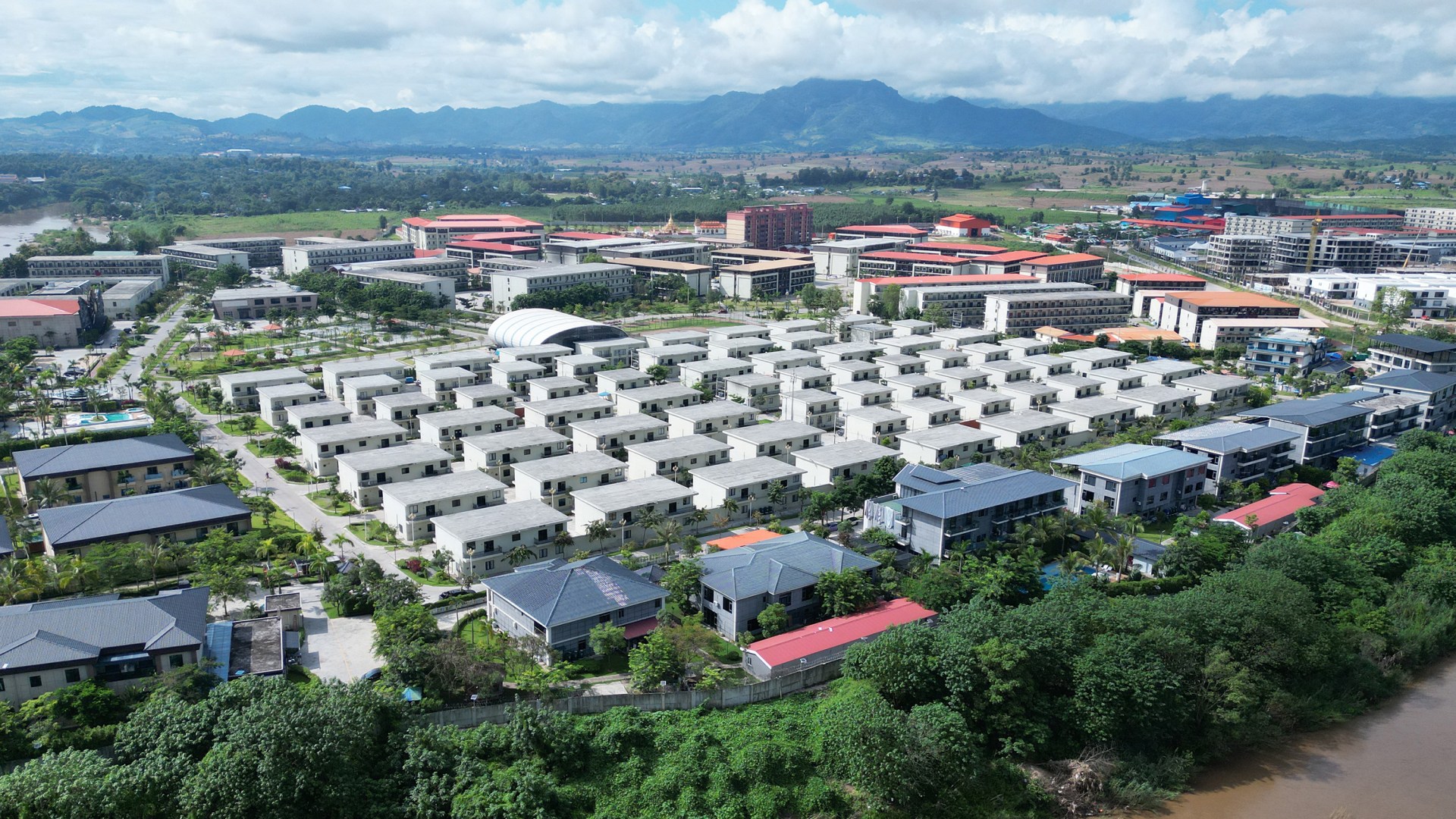
On October 20, rumors spread among victims held captive in a massive 520-acre scam center in Myawaddy Township, Myanmar, across the border from Thailand. “The gates are open,” people whispered, according to later-recorded statements. “The guards have abandoned their posts.”
The foreign workers at KK Park, many of whom had been tricked into online scamming and held captive by Chinese criminal organizations, hurried to the front gates of the compound to confirm the rumors.
It was true. Myanmar’s military had raided the compound, and the guards had left their post. The workers ran.
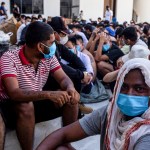
An estimated 1,500 people from 28 countries made it out. Some took shelter in nearby villages controlled by Myanmar’s ethnic armed forces while others swam across the Moei River into the Thai border town of Mae Sot, where Thai immigration intercepted them.
“This is heaven,” one victim recalled thinking when he got out, according to his testimony to International Justice Mission (IJM) staff two weeks later. In Mae Sot, he was able to buy Thai food for on 40 Thai baht ($1.25 USD) compared to 400 baht ($12.50) in the compound. “We didn’t have money to eat anything in the compound. And when we got out here, we felt like it’s really a heaven outside.”
Many of the victims were lured to Thailand by false job ads, then whisked away to scam compounds in Myanmar, where Chinese bosses forced them to work long hours scamming innocent people online.
As the victims flooded into Mae Sot, Thai authorities contacted Mechelle Moore of Global Alms Incorporated (GAI), a Christian nonprofit helping scam-compound escapees. She quickly gathered her team members—who are trained in crime typology, reports of victim testimonies, and emergency response—and they drove over to the Thai-Myanmar Friendship Bridge, where authorities brought victims from neighboring Myanmar communities.
They set up stations to process victims by gathering their information, including nationality, and recording their testimonies. If the survivors had names and descriptions of traffickers, along with any evidence, team members recorded it for Moore to investigate further. GAI often shares this information with national authorities and embassies to better understand the syndicate’s structure, according to Moore.
Over the next few weeks, GAI, IJM, and other antitrafficking organizations helped explain to the escapees their rights, provide emergency essentials, conduct detailed forensic interviews, and help with victim identification, a long process of screenings and interviews with immigration authorities to determine whether an individual entered into scam work by coercion or willingly.
Moore noted that the scale of the cyberscam industry can be extremely disheartening. Still, she focuses on the individual.
“Go for the person in front of you. They matter to God,” she explained. “There’s a certain vulnerability in being tricked. They have PTSD, issues with panic, and shame. They need a lot of grace for what they’ve been through.”
Since scam centers first came onto the world’s radar in 2020, a lot has changed. Governments are starting to take action against the organized crime syndicates responsible. They’re raiding or cutting power to compounds, leading to the release of thousands of victims. Media attention has increased global awareness of the issue, and churches in Asia are seeking to help traumatized victims after they return home.
Yet the criminal syndicates are also adapting—quickly moving to different locations and restarting operations as they make just under $40 billion a year running cybercrime centers in Southeast Asia, according to the UN Office on Drugs and Crime. In total, the UN estimates 220,000 people remain held in compounds in Myanmar and Cambodia.
Other challenges exist: The sheer number of released victims is overwhelming governments and nonprofits. Meanwhile, governments struggle to differentiate between true victims and complicit criminals.
“In my 15 years of working for IJM, I have never seen such systematic brutality employed against trafficked victims,” said Andrew Wasuwongse, director of IJM Thailand.
The difficulty of caring for victims was evident after the raid on KK Park, Moore said. GAI and the other organizations at the border have small staffs and limited funding to care for the traumatized people leaving the compound. With no place to put them, the victims slept outside or in temporary shelters, while local churches and nonprofits cooked to feed them. Before the escapees crossed into Thailand, ethnic armed forces found themselves responsible for the care of hundreds of victims in addition to their own displaced peoples.
The majority of IJM and GAI staff were busy interviewing victims, which can take hours for each person, especially if the staff members need translators or if they gather evidence on traffickers. Identifying victims is complicated, as many countries still see them as scammers rather than trafficking survivors, and proving they were unaware of what they had come to Thailand to do is difficult. Meanwhile, embassies are overwhelmed and need to raise money to fly their citizens home.
“The general trend is more awareness [about forced scamming globally], but there are still fundamental challenges, like governments deciding where the line is between a scammer and a victim,” Wasuwongse said. “The view of many governments and authorities is still focused on stopping the crime, scamming, and fraud. Meanwhile, there’s doubt [about] whether the victims are really victims.”
Sam Dunnet, a doctor from New Zealand, was also on hand to help the released victims. Dunnet had been coming to Mae Sot since 2013, initially to train and serve Burmese refugees in the Mae La refugee camp.
In late October, leaders of Global Advance Projects, which also helps scam-compound victims, asked her to assist with medical evaluations for those crossing the border. The Philippine Embassy had requested medical intervention, as many of their citizens had tuberculosis and cholera from poor living conditions in the compound and from camping out in the villages and jungles after escaping.
Dunnet noted that many of the victims she’s seen have torture wounds and struggle with exhaustion and a litany of other illnesses. Victims have said they worked more than 16 hours a day and their handlers would torture them if they didn’t meet a money quota or if they resisted instructions.
More than anything, Dunnet believes her most important role is to treat the broken souls of people who had been enslaved for months or years. Dunnet listened to heartbreaking stories of torture, beatings, severe untreated illnesses, suicidal thoughts, and guilt in defrauding so many people. She prayed for victims’ healing after they were deprived of basic humanity for so long.
Many of the victims came from African countries. Dunnet had previously served in hospitals and clinics across the continent, which helped her relate to the African survivors whom she met and even greet some in their native language. “There were many shame-and-honor problems—I knew that and the heaviness of carrying that,” she said.
She recalled Amy Miller, the head of Acts of Mercy holding a worship service with the victims. “It was full of repentance and prayer. It was so powerful.”
Due to increasing international pressure, in November, Myanmar’s military junta shared videos of its army bulldozing and bombing 150 buildings at the KK Park compounds.
Yet many, including Moore, believe it was only for show. The buildings demolished were all noncritical buildings, including spas, karaoke bars, and villas of the crime bosses. Meanwhile, satellite images and photographs show that the offices, dorms, and massive generators remain untouched.
“The only way out of this is divine intervention; [forced criminality] perpetuates itself,” Moore said. “This is not something that will dry up. The numbers are overwhelming. We need coordinated global effort, but there’s so much corruption in the world, that will always stop it from being eradicated. I don’t think man is capable of it.”
Still, Wasuwongse sees some progress. Some countries have sanctioned the Chinese crime bosses behind the centers. Thailand arrested a Chinese national who laundered the cryptocurrency earned from scam centers and turned it into property. IJM helped the Thai government convict 15 perpetrators for roles in trafficking to scam compounds. Wasuwongse also pointed out that the Philippine government has nearly eradicated smaller scam compounds in the country that had been fronting as offshore gambling businesses.
Recently, the church in Asia has better cared for victims who have returned home. In August, the Christian Conference of Asia held a gathering focused on forced scamming with participants from about a dozen nations. The church leaders assessed their response to the crisis and discussed ways to make church members aware of recruiters’ tactics, provide aftercare for victims, and advocate to their governments to protect victims.
Meanwhile, Talitha Kum Indonesia, part of an international Catholic network that fights human trafficking, is responding with victim-led initiatives that pinpoint the needs of the rescued, like creating guidelines for churches to provide trauma care and informing communities of recruitment tactics.
The international group 1000 Intercessors was formed two years ago to pray specifically for scam-compound victims. In a recent newsletter, the organization’s leaders shared the testimony of South Africans trapped in the compound’s prison who had not been fed for four days. The victims gathered together to pray and repent. Later that day, they called a staff member of 1000 Intercessors on a smuggled mobile phone to share the news: “Everyone is leaving! The gates are open. Everyone is fleeing KK Park!”
“None of the recent releases [and escapes] would have happened without God,” Moore said. She recalled feeling overwhelmed with the heaviness of the scam centers a year ago. “But God gives me hope when dealing with the one in front of me. He’ll show [the victims] something, or they’ll share ways he walked with them, ways he helped them stay hopeful. I always ask God to show me the small things [so] that I can see the goodness in it.”