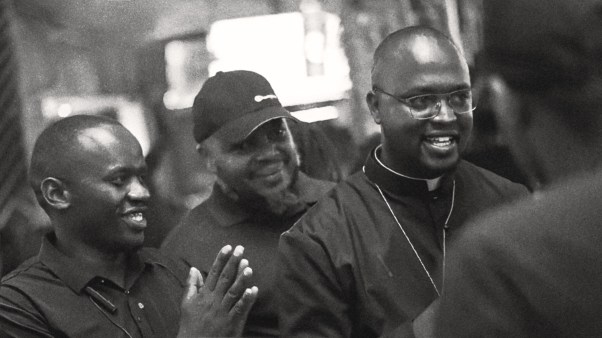
It was just after 6:30 p.m. on Sunday when pastor Martin Morgan and about 20 volunteers returned to Bondi Beach Church, a block away from Sydney’s famed Bondi Beach. They had been delivering boxes of food to families going through difficulties. Once they arrived inside, they gathered to pray before chatting about the visits and that evening’s sermon.
Suddenly, Morgan heard pops that sounded like firecrackers or fireworks. A few seconds later, they saw a woman in formalwear carrying her shoes as she ran past their door. She was the first of a wave of at least 50 people in a variety of beachwear running in the same direction, crying.
Most of them passed the Anglican church’s front door on Wairoa Avenue, but some yelled, “Get inside! Get inside! There’s someone with a gun!” before ducking into the building. Morgan and his team welcomed people into their church, locked the door, and began to pray for people who may have been hurt. The gunshots continued.
Then they heard helicopters and the sirens of emergency vehicles. The people sheltered in his church described seeing people bleeding and others lying face-down on the asphalt.
A hundred yards away from the church, Naveed Akram, 24, and his father, Sajid, 50, stood on a pedestrian bridge and opened fire on a Hanukkah celebration taking place at Bondi Beach, organized by the synagogue Chabad of Bondi to commemorate the first day of the Jewish holiday. Their social media post advertised jelly-filled donuts, a petting zoo, live entertainment, and the lighting of the first candle of a giant menorah.
The event’s location near a playground made the festival easy for hundreds of people to find. It also made them an easy target for Akram and his father, who had a recreational firearms license and owned six rifles. The pair used pump- and bolt-action rifles to shoot into the crowds of people on the half-mile crescent of beach.
One bystander, Ahmed al-Ahmed, snuck up behind Sajid Akram, tackled him, and disarmed him. Al-Ahmed held Akram at bay before leaning the gun against a tree to show police he wasn’t one of the attackers. He was among the nearly 40 people wounded.
The Akrams killed 15 people, including 41-year-old Chabad rabbi Eli Schlanger; a 10-year-old girl named Matilda; an 82-year-old Slovak citizen named Marika Pogány who delivered more than 12,000 Meals on Wheels over the course of a decade; and 87-year-old Holocaust survivor Alex Kleytman, who shielded his wife, Larisa, from the bullets.
Police shot and killed Sajid and wounded and detained Naveed. They found two rudimentary improvised explosive devices and two homemade Islamic State flags in the pair’s car at the scene. By 10 p.m., the prime minister declared the shooting an antisemitic terrorist attack. An Australian counterterrorism official believes the Akrams received training last month while visiting an island in the Philippines known for being a hotbed of extremism.
In the aftermath of Australia’s worst mass shooting since 1996, churches in the area are holding vigils and services while providing counseling and practical assistance to the Jewish community, bystanders, and neighbors. Christians are seeking to stand with the Jewish community as antisemitism rises in Australia.
Morgan, who mentioned his church also provided aid after a stabbing attack last year at the Bondi Junction Westfield mall, noted that caring for those affected by such an violent and traumatic event is a long-term commitment.
“In the end … the message of the gospel and the hope that Jesus offers is of great practical help,” Morgan said.
As those sheltering in Bondi Beach Church Sunday night scanned their social media feeds to stay updated on what was happening, Morgan and his church members also started praying for the dying and wounded. When they heard police had neutralized the shooters, they walked out to the street and began to direct traffic away from the beach and talk with neighbors.
Several of Morgan’s church members had joined the Hannukah celebration on the beach after the 5 p.m. church service. They were unharmed and comforted those who had been shot. The church building was open until midnight, serving coffee and tea and allowing people to gather, pray, cry, and process the attack. Morgan made sure the church remained open the next day as well.
On Monday evening, Morgan and assistant minister Matt Graham held their scheduled Nine Lessons and Carols service at St. Mary’s Anglican less than two miles away. They modified the service to include “a time of somber remembrance for the victims and prayers for those who’ve been affected, and that the Lord and the Prince of Peace would show how that peace works in the context of this sort of violence,” Morgan said. The service ended with a candlelit vigil.
For many in the Jewish community, the tragedy of the shooting is magnified by the fact that as antisemitism in Australia has grown since the Israel-Hamas War began, an attack felt inevitable. “Jewish friends of mine have been expecting something like this,” Morgan said. “They said, ‘It’s going to happen. It’s not a matter of if it happens, but when.’ They’ve been on tenterhooks.”
The day after the shootings, Ben Pakula, a Messianic Jew and assistant minister at Grace Anglican church in Sydney, told Dominic Steele on The Pastor’s Heart podcast, “To be honest, I find it difficult to know how to respond. There’s an element of shock when you hear something like this, but I’m not surprised, I’m very sad to say.”
The country’s 117,000 Jews are concentrated in Sydney and Melbourne. Synagogues and organizers of Jewish events in Sydney’s eastern suburbs have expanded security since the October 7, 2023, Hamas attacks in Israel as antisemitic acts in Australia increased fourfold.
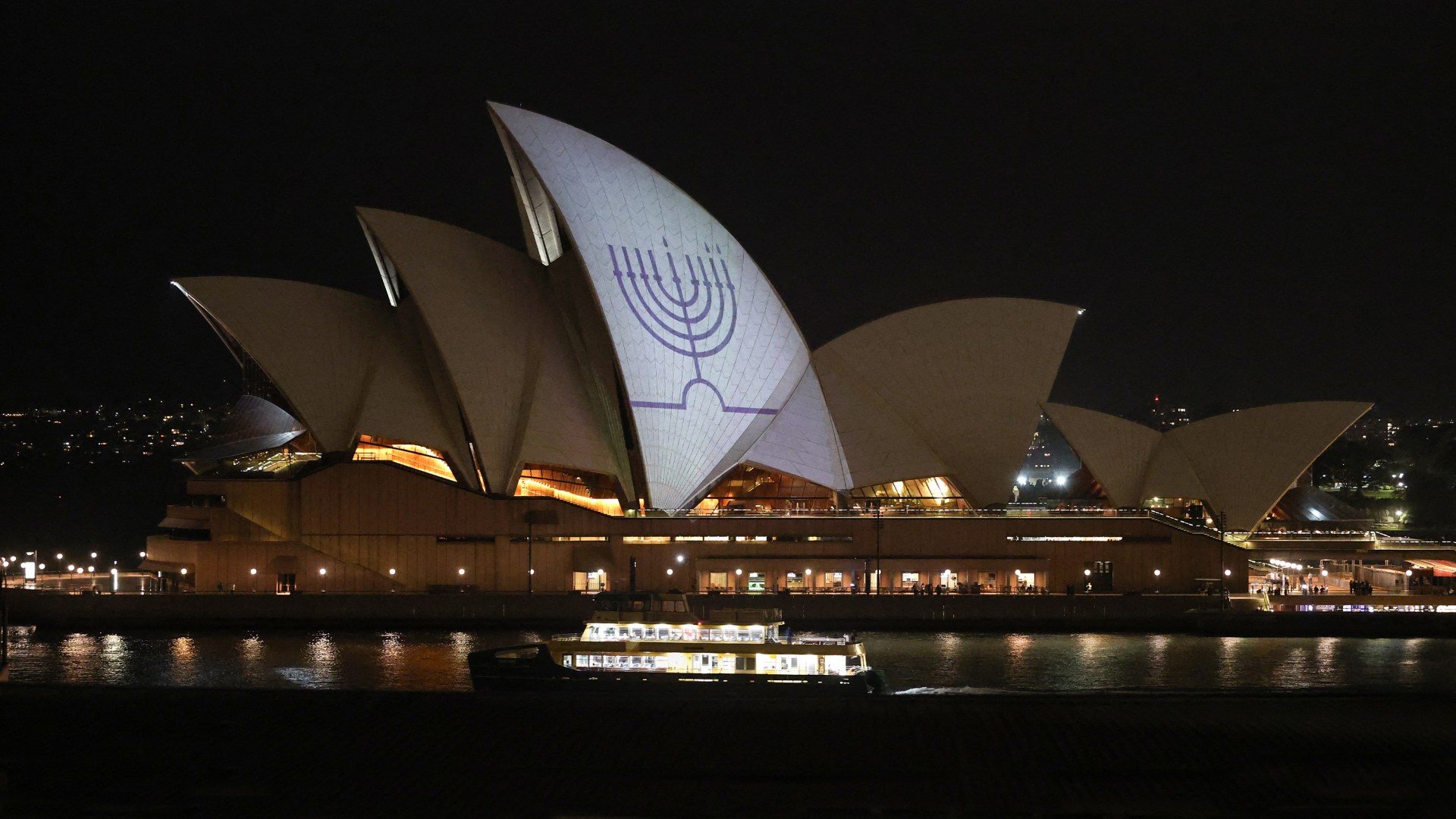
On October 9, 2023, government officials lit the sails of the iconic Sydney Opera House blue and white to mourn the victims in Israel. But when they learned of an unauthorized pro-Palestinian protest on the theater’s steps, they told Jews to stay home. Since then, graffiti targeting Jews has been sprayed on businesses and homes. Arsonists have burned a Melbourne synagogue, a Jewish childcare center, the cars of Jewish people, and their businesses.
“Once again since the Hamas pogrom of October 7, 2023, the Jewish people throughout the world are under violent attack,” rabbi Yehiel E. Poupko, rabbinic scholar at the Jewish Federation of Metropolitan Chicago, told CT. “This time darkness has come to the House of Israel in Australia during the celebration of Hanukkah, the Festival of Lights. When will it stop?”
In North Sydney on Sunday night, Jews for Jesus missionary Alexander Adelson had invited a few friends and families to his home to celebrate the beginning of Hanukkah. Adelson, who had moved to Australia from Israel, said his phone often buzzed with news notifications about attacks in the cities where his Israeli friends and family lived. Since moving to Australia, Adelson has turned off most of these, so that night it was one of his visitors who saw news of the Bondi Beach attack and told him.
“You think immediately of the people you should call to check on them, pray for them,” Adelson said, noting the similarity of his response to when he hears of bombing in Israel. Because the Jewish community is relatively small in Sydney, when a name comes up in the media, he thinks, Hey, I know that guy. What happened to him? What happened to his wife?
He admits that he sometimes feels helpless: “Because I cannot do much, it is much more powerful to pray for those people who potentially could be there and immediately to contact them.”
Morgan and Bondi Beach Church are looking for ways, no matter how small, they can help in the aftermath of the tragedy. The congregation is delivering boxes of food and toys to neighbors, many affected by their proximity to the attack.
One man who sheltered at the church was unable to reach his car as it was stuck in the crime scene, so a congregant drove him home to the other side of Sydney. Other church members also provided rides to bystanders. Meanwhile, Anglicare Australia, which is associated with the Anglican denomination, set up a counseling hotline.
“When a violent thing like this happens, which is so in-your-face violence and evil, that tension is going to take time and very special care,” Morgan said. “So we’re praying that God gives us wisdom to respond.”
This week, Morgan and leaders from different churches and denominations met to discuss the needs of the community in the aftermath of the Bondi Beach attack.
“The churches of the eastern suburbs are uniting rather than working in our own little separate silos,” Morgan said. “So we pray that we have the wisdom to take the next step in a way which actually increases that connectedness within the Christian community but also with the synagogues in the area.”
Adelson recommends Australian Christians reach out to the local Jewish community in tangible ways.
“Use your voice,” he said. “Bring them a flower. Bring them a postcard. Say something, that you are standing with them, because this is what makes the change in people’s mind and people’s understanding that we are not alone.”
Adelson has been inundated with phone calls and emails from people in Israel, the US, and Australia saying they are praying for the Jewish community.
“But it’s not only a small group of Jews for Jesus or a hundred Messianic Jews,” he said. “It’s thousands and dozens of thousands of believers around the globe who stand with them and are saying, ‘Never again. It shouldn’t happen, and we are here to support you.’”
Ultimately, Adelson says, there’s an opportunity to share the hope of Jesus at the right time. “We never forget about the comfort that we are hoping to share with them, and this comfort can come only through one source—through Yeshua, from him, from God.”