Waves of sirens pierced a quiet summer afternoon at home. In an area with multiple hospitals, sirens are a normal part of life. But this Friday in August 2025 was different—the sirens screamed in from multiple directions for more than 30 minutes, prompting a scan of our neighborhood Facebook page.
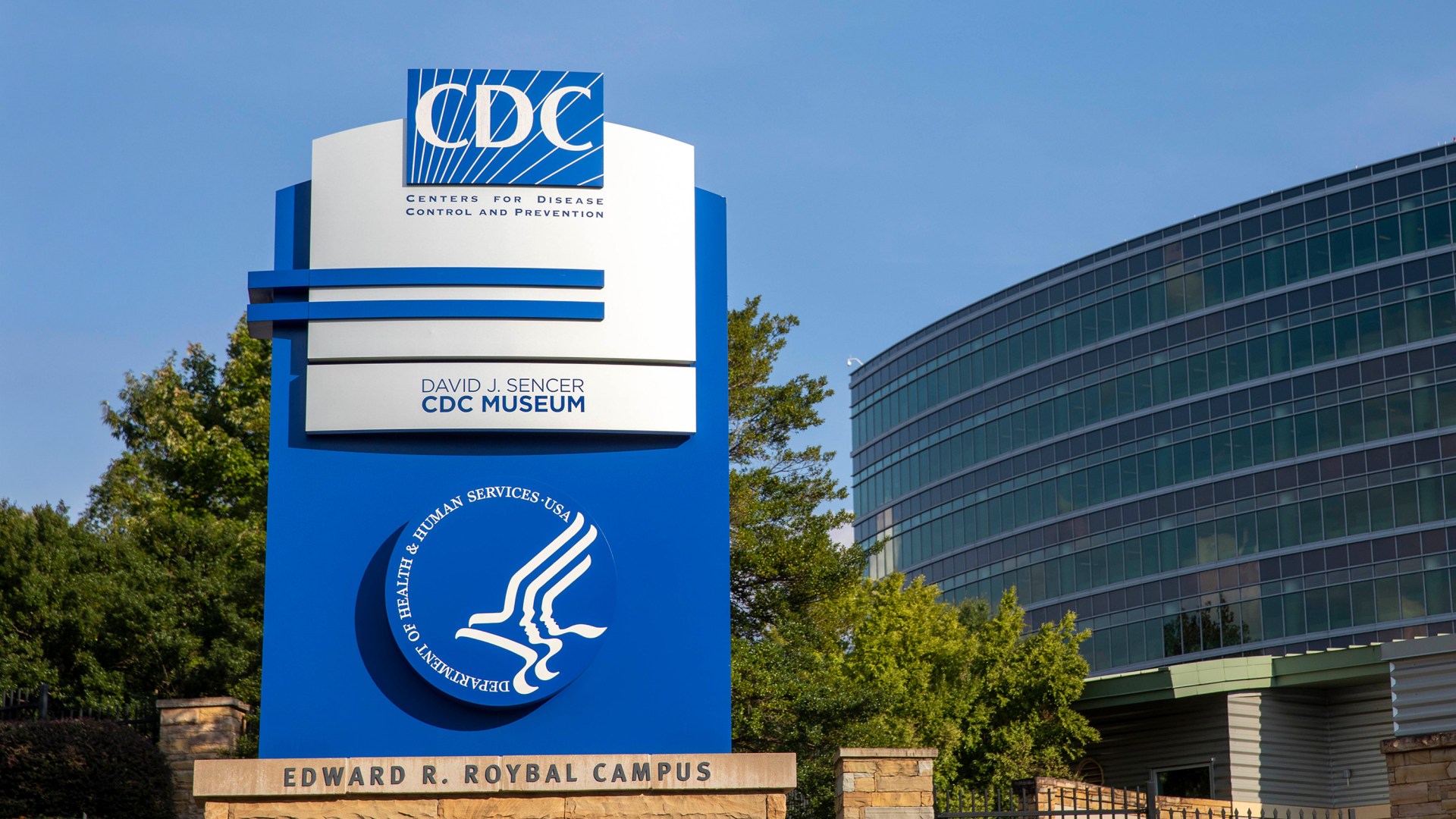
An active-shooter situation was unfolding at the campus of the Centers for Disease Control and Prevention (CDC) just one mile down the road as scores of fire trucks and police cars flooded in from city, state, and federal agencies. The shooter, angry about the effects of COVID-19 vaccines, had killed a police officer and shattered more than 150 windows at the CDC’s Atlanta campus.
Thankfully, no employees were injured in the attack that summer day. But the incident rattled an agency already reeling from 18 percent layoffs a few months earlier. The rest of 2025 didn’t fare much better: a public ousting of its director in August, a 43-day government shutdown, and additional layoffs in October. Challenges to reinterpret and reevaluate scientific evidence continue.
One CDC employee summed up these difficult events by paraphrasing Mike Tyson: Everyone has a plan until they get punched in the face.
In the midst of recent upheaval, hundreds of CDC employees, their families, and the surrounding community are taking stock of a challenging year as they tentatively enter 2026. Christians serving in the CDC are grappling with questions about their vocations and the future of public health as they seek to trust God’s provision. And area churches populated with CDC employees are searching for ways to minister to those living through sustained uncertainty.
Linda Mattocks, 60, had served as a health scientist working in disease surveillance with the CDC for nearly 15 years when she was one of 2,400 agency employees laid off in a reduction in force (RIF) by email on April 1, 2025.
“My entire branch was eliminated,” she said. “We were notified one day, and most lost network access the next.” She expressed concern about the lost expertise and the lack of transition for those continuing her branch’s work. The group’s data management may have looked extraneous to an outsider, she said, but was necessary to understand where disease was present and how to assess the effectiveness of interventions.
Mattocks, a native of Northeastern Pennsylvania, began her career in mergers and acquisitions as an investment banker in New York City in an industry that “primarily tried to separate people from their money.” But she felt a pull toward a different kind of career that better aligned with her faith and her desire to serve others, so she eventually pursued a public health degree. “You go to work for the CDC because you want to help people,” she said.
Mattocks was inspired by the way the church has historically used public health measures to serve their communities — from John Calvin’s focus on social welfare leading to the building of hospitals and latrines in Geneva to Austrian monk George Mendel experimenting with peas and discovering the basic laws of genetics.
As the government makes deep cuts to public health research and initiatives, she asks, Where do we go from here, and does the church have a part to play? “If we say as a society that government has taken on too much and we can’t afford to provide public health, is there still a societal need? And whose responsibility is it if it’s not the government’s?”
Living in this uncertainty is hard, she said: “I have more questions than answers.”
Within hours of hearing about the CDC layoffs in April, Atlanta pastor Tae Chin began putting together a church event promoted by word of mouth to reach those affected.
“When grief strikes, it’s important for the church to respond with the loving presence of God,” said Chin, pastor of spiritual formation at Intown Community Church (which is also this reporter’s church), a Presbyterian Church in America (PCA) congregation located just two miles from the CDC campus in Atlanta. “Our immediate hope was for people to feel valued and supported whether they were Christians or not.”
Three weeks later, 30 CDC employees and church members, including Mattocks, gathered over Greek food in an Intown conference room for “Process to Progress,” an evening of sharing stories, resources, and prayer. CDC employees approached the mic in the middle of the room to share stories of being laid off, while others nodded along. The church invited attendees to speak with individuals brought in for support: a financial adviser, a career coach, and several members who had experienced job loss firsthand.
One woman, a 38-year-old ten-year CDC employee laid off in the RIF, bounced her 3-month-old son on her knee throughout the Intown dinner.
“There aren’t many job opportunities for people like me,” she said, explaining that she was reworking her résumé to display how public health experience applies to the private sector. The leap from government work to the private sector has proven challenging for many laid-off CDC employees: “We’re all competing for the same jobs.”
She did not have a church home and was invited to the event by a fellow CDC employee. “It’s great they put this together,” she said. “I really appreciate the expertise and knowledge of the career coaches and financial counselors here.”
Intown Community Church senior pastor Jimmy Agan spoke at the Process to Progress event, welcoming the CDC community to the church: “Given our proximity to the CDC and our relational connections, we wanted to give people a place to grieve and to lament.” The 530-member church includes 35 members who work for the CDC or other federal agencies.
He also wanted the laid-off workers, many of whom went into public health with the goal of helping others, to know their work was not in vain.
“You may be thinking, It’s painful for my career to end this way, but if you went into public health to serve God by serving people, it was not wasted,” Agan said at the gathering.
Just days before the CDC event, Linda Mattocks attended a church service at Intown and sat with a fellow CDC employee who was still employed and shared gratitude about feeling protected. Mattocks marveled that despite the uncertainty she also was at peace: “I am just as protected. God doesn’t love her more and me less—I just don’t know yet how I’m protected.”
In our politically polarized society, Agan expects pushback for holding events like Process to Progress but sees this outreach the same way he would view other mercy ministries.
“I think of it like a church helping victims of a natural disaster, where some segments of people are hit harder than others,” said Agan. “And if people are hurting, we want to help.” But he acknowledges it’s likely some will misunderstand the church’s intentions. “We are a purple church in a purple city in a purple state. But we don’t want to let fear keep us from showing love.”
Chin agrees. He’s heard the argument that it’s not the church’s job, that this type of work causes the church to neglect other important things. “But our work isn’t just to represent a truncated version of Jesus’ death and resurrection,” he said. “It’s also to embody the restorative work of Jesus. The church is to image that today so people can taste and see the coming kingdom of God.”
During the extended government shutdown in October, Intown Community Church used its benevolence fund to provide financial assistance for church members who were federal employees and had missed multiple paychecks. “The church reached out with practical support when people were not getting paid,” said Mattocks. “For some, that assistance came at just the right time.”
She also drew comfort from the weekly prayers of the community group she has attended for the past 15 years and the knowledge that elders and staff were praying for her. Months later, she received surprising news—her entire branch was being reinstated. “The fact that my branch was brought back is clearly an answer to prayer.”
Now, Mattocks is reflecting on the past year and looking ahead: “I continue to approach my work with integrity and excellence and also want to have a different kind of patience to see where things go.”
Challenging times are not unique to the CDC, she said. It’s just a matter of time before we all suffer, she said, and difficulties create an opportunity to build resilience as we trust in God. “Tough stuff has happened before, and it will happen again. But God promises to provide.”
The coming year offers a challenge to keep serving the church body and beyond, said Agan. “Let’s be ready for when the next disaster hits. Who knows what that issue will be? Let’s offer gospel hope to people hurting, along with practical help, and not be afraid to be misunderstood.”