This piece was adapted from Russell Moore’s newsletter. Subscribe here.
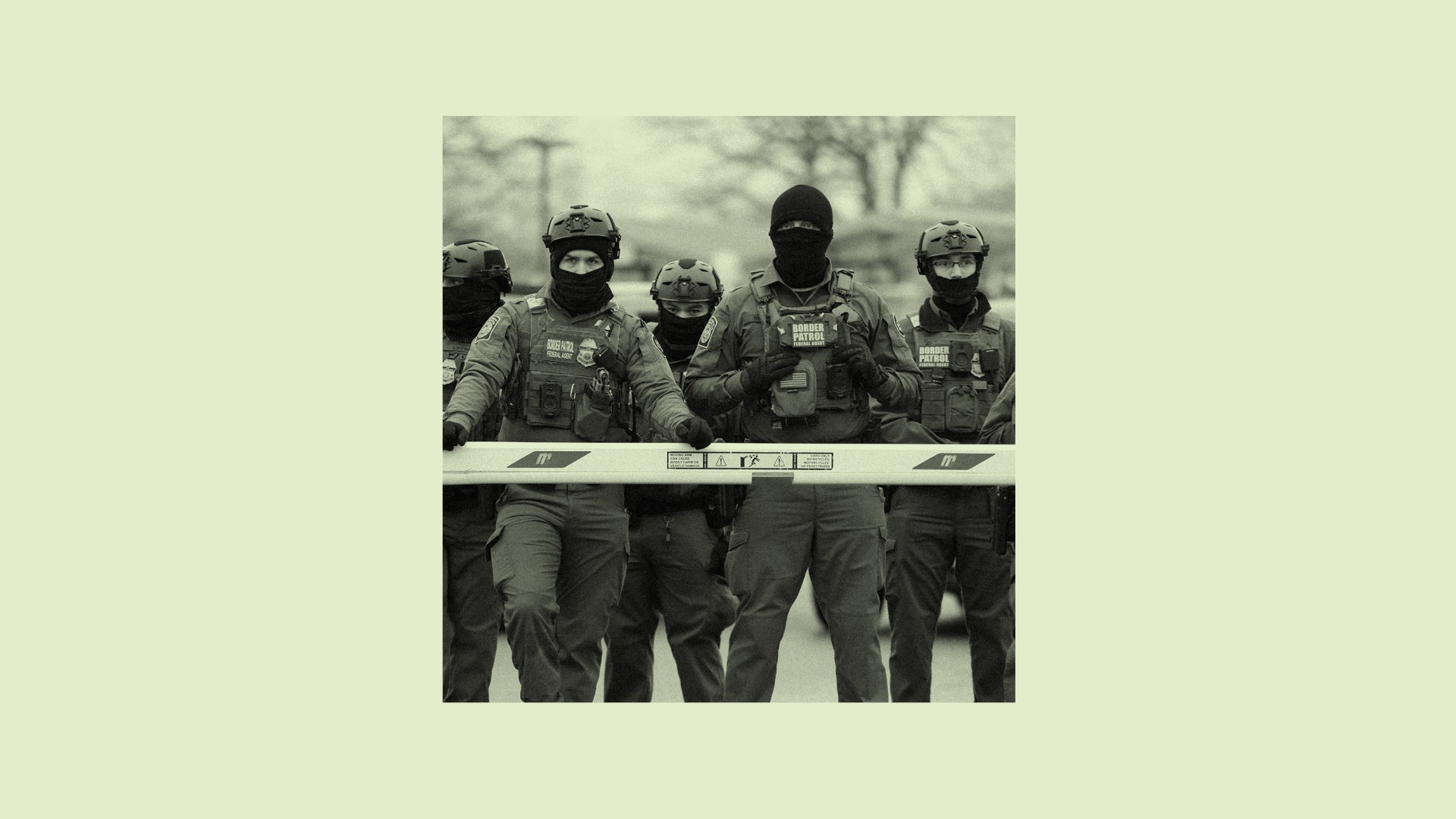
An ICE agent shot protester Renee Good this week and killed her. Videos record one of the agents cursing her as she died. I knew immediately that many Christians would be morally shaken by this, and rightfully so. And I knew many of them would soothe their troubled consciences with a predictable passage of Scripture, and it isn’t “Blessed are the peacemakers.” Instead, whenever an agent of the state kills a person in morally questionable circumstances, many Christians go right to Romans 13, quoting it before the blood is even cleaned up from the ground.
What people reference when they say “Romans 13” is the argument the apostle Paul makes in that chapter: “Let every person be subject to the governing authorities. For there is no authority except from God, and those that exist have been instituted by God. Therefore whoever resists the authorities resists what God has appointed” (vv. 1–2, ESV throughout). What some Christians draw from this, then, is that whatever the state does in using lethal force (or bearing “the sword” as Paul put it in verse 4) is morally legitimate and those who question it are wrong.
Some Christians quoted Romans 13 to oppose the American Revolution. Some cited it to oppose efforts at civil disobedience, such as the Montgomery bus boycott or the nonviolent resistance to police forces in Birmingham or Selma. And certainly people pull out this passage as a kind of moral trump card to silence questioning when they see the protester as not on their side or the person in power as on their side. That Romans 13 is most often invoked not when the state is acting justly but when Christians feel the urge to quiet their consciences ought to trouble us—not because this habit puts too much weight on biblical authority but because it attacks it.
The problem is not with Romans 13 itself, any more than the cocaine dealer quoting Judge not, lest ye be judged is a problem with Jesus. Should we refrain from quoting Psalm 91 because the Devil quoted it in his temptation of Jesus in the wilderness (Luke 4:1–11)? Not at all. But we also have no excuse for allowing ourselves to use that verse to make the same satanic case.
The Book of Romans did not come to us with chapter and verse distinctions; it was one continuous argument from the apostle. The argument in Romans 13 continues that of chapter 12, in which Paul exhorts the Christians to “rejoice in hope, be patient in tribulation, be constant in prayer” (v. 12) and to “bless those who persecute you; bless and do not curse them” (v. 14). He has just implored these readers not to seek vengeance on those who mistreat them: “Do not be overcome by evil, but overcome evil with good” (v. 21).
Paul then makes a very similar argument to one the apostle Peter makes elsewhere, in which Peter argues that those who are now “sojourners and exiles” should “be subject for the Lord’s sake to every human institution, whether it be to the emperor as supreme, or to governors as sent by him to punish those who do evil and to praise those who do good” (1 Pet. 2:11, 13–14). Peter goes on to apply this posture by telling his readers not to use freedom as a “cover-up for evil” but to bear reproach for the sake of Christ.

Romans 13 makes a very similar case, with Paul writing—as did Peter—to people without badges or guns or even voting rights, telling them they can exist alongside their neighbors even as they wait for the kingdom of God. The powers that be, Paul argues, have a real and legitimate authority, and obeying that authority is not a break from obeying God but an extension of it. That authority exists for something: restraining wrongdoing, protecting the vulnerable.
That neither Paul nor Peter was giving moral carte blanche to the state is obvious not just in other Scriptures but also in their very lives. After all, both were later killed by the sword of Caesar (figuratively in Peter’s case, literally in Paul’s). Was the decree to behead Paul or to crucify Peter therefore morally right? No. Were the Christians who refused to say “Caesar is Lord” and were thus hounded, marginalized, or beheaded sinful in their refusal? Jesus said that, in that case, those who obeyed earthly powers were the ones bringing judgment on themselves (Rev. 14:11–12).
Moreover, the use of Romans 13 as a refusal to question the morality of a use of force is, ironically enough, a violation of the passage. We might well ask, what would Paul have written if Romans 13 were addressed to the authorities rather than to those under their rule?
Well, we actually know the answer, because the same Spirit who breathed out Romans 13 also breathed out John the Baptist’s instructions to tax collectors and soldiers. John told them not to extort money from anyone, implying that they would be held responsible for the misuse of their power (Luke 3:12–14). The same Spirit also favorably portrayed Paul’s interaction with the police who told him and Silas, on behalf of the magistrates, to leave quietly, to which Paul replied, “They have beaten us publicly, uncondemned, men who are Roman citizens, and have thrown us into prison; and do they now throw us out secretly? No! Let them come themselves and take us out” (Acts 16:37).

Paul knew of what he spoke. In his prior life, he had persecuted the church—with legal warrants and the full force of law. He did not see that legality of that action as being in any way an excuse (1 Tim. 1:12–14).
Romans 13 is about refusing to become what oppresses you, not about baptizing whatever the oppressor does. And Romans 13 puts moral limits around what authorities can and cannot do—it tells them to use the sword against “the wrongdoer,” for instance. Paul wrote Romans 13 not to protect the state from critique but to shield the church from vengeance.
To use Romans 13 to automatically justify state violence is not the equivalent of first-century Christians seeing their calling as not to overthrow the empire. To use it that way is more like if Daniel in Babylon had said that the fiery oven is the lawful punishment for civil disobedience against worshiping the king’s image, and therefore Nebuchadnezzar is right that Shadrach, Meshach, and Abednego should be burned alive.
There are legitimate uses of tragically necessary lethal force on the part of law enforcement officers. Watch the video, if you can, and decide for yourself if you think, morally, that this was one of them. But don’t simply turn away from the violence and refuse to ask any questions at all. And if you decide that whatever is done with government power is beyond moral scrutiny, don’t blame Romans 13. That’s not what it tells you to do.
Update (January 16, 2026): An earlier version of this piece stated that Renee Good was shot through the head. A newly released fire-department report says her gunshot wounds were in the chest and forearm, in addition to a possible gunshot wound on the side of her head.
Update (January 23, 2026): An autopsy commissioned by Good’s family reported that she was shot in the head.
Russell Moore is editor at large and columnist at Christianity Today and leads its Public Theology Project.