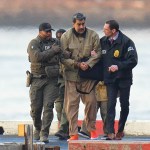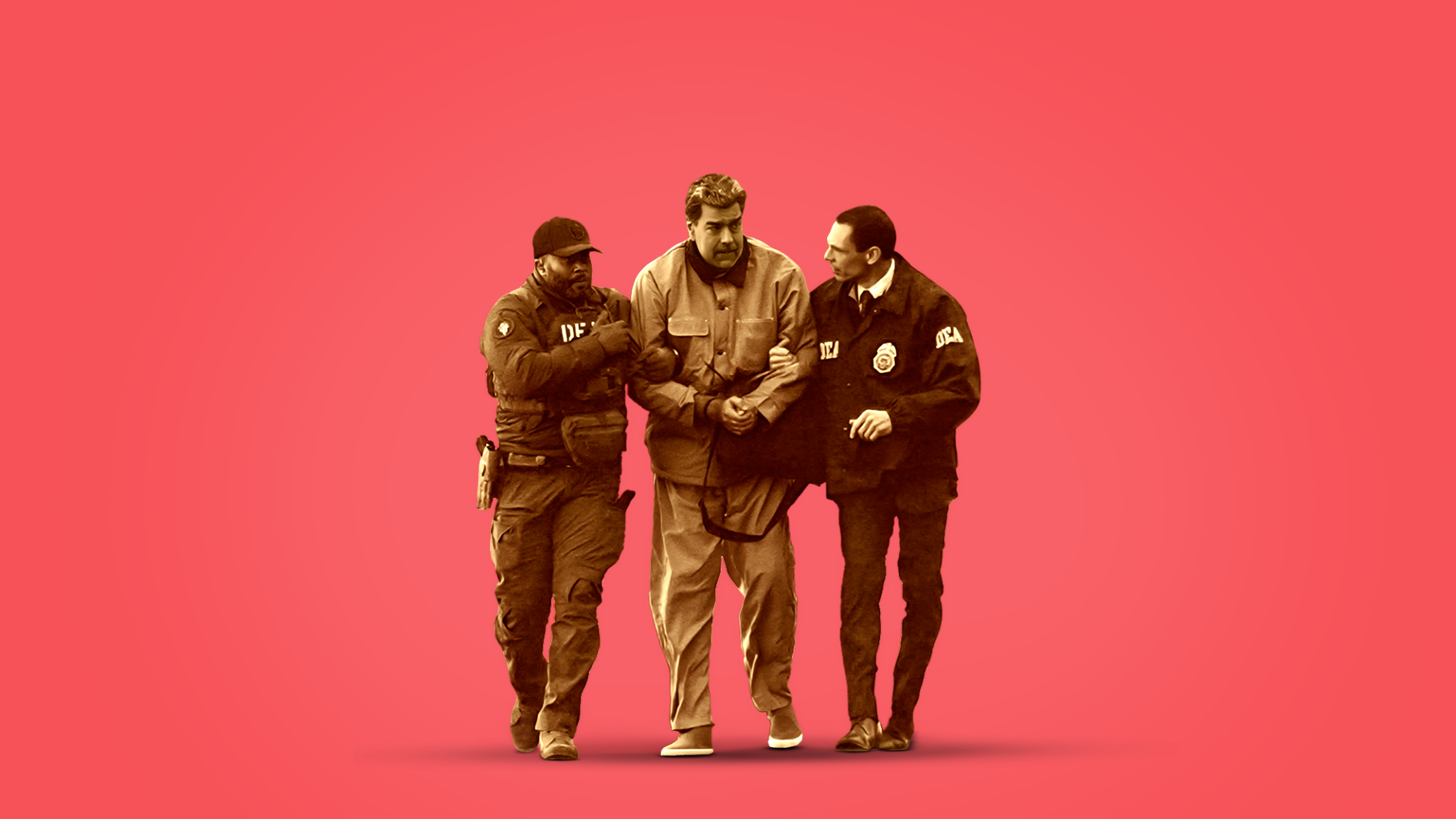
On Saturday morning, the US military captured and extracted Venezuelan president Nicolás Maduro and his wife, Cilia Flores, from the capital city of Caracas. Following their early-morning arrest, Maduro and his wife were flown to New York, where they await charges of drug trafficking and narco-terrorism.
The Bulletin sat down with senior contributor Mike Cosper, homeland security expert Elizabeth Neumann, and legal expert and New York Times columnist David French to learn more. Here are edited excerpts from their conversation in episode 240.
How did the capture and extraction of Maduro and his wife happen?
Mike Cosper: The operation was led by US Delta Force, a special operations force inside the US Army. As many as 150 aircraft were involved in striking targets in Caracas and providing air support for the operations—everything from information gathering and strike drones to F-35s, F-18s, and helicopters flying special operations and the law enforcement personnel into the city to arrest Maduro.
The DEA and the FBI were also involved. The administration is treating this as a law enforcement action, not as an act of war, which is why they didn’t involve Congress.
Elizabeth Neumann: This operative has been developed for over six months with a military buildup to pressure Maduro to surrender. The United States’ position was You can leave and, like many famous dictators in history, go enjoy life on a deserted island where nobody can find you, or you can end up in prison in the United States. Which door would you like to choose? Clearly Maduro either didn’t believe that we were actually going to do it or maybe thought his security apparatus was strong enough to keep him safe.
There were a few strikes with some initial reporting that some civilian targets were hit. It’s not clear if that was intentional. There’s still some fog of war, but for the most part, it appears we targeted very specific sections of Caracas.
Why would the US engage in such a complex, extensive operation? What’s the purpose?
Neumann: Nicolás Maduro was the vice president under socialist leader Hugo Chávez before he became president of Venezuela. Back in the early ’90s, Venezuela was an up-and-coming country, very successful and wealthy. After the Chávez takeover, Venezuela lost its ability to function in the international world order in a healthy way. Economic challenges hit hard, and the regime is very repressive.
There have been two elections where Maduro lost and stayed in power, using all of his henchmen in various security apparatuses in the government to maintain his power. The United States, along with over 50 countries, does not recognize him as the legitimate president of Venezuela, which is an important distinction because in international law you cannot extradite, arrest, or try the head of a country for things that they’re doing as the head of a country.
The Biden administration agreed that Maduro was not the legitimate head of Venezuela and indicted him in 2020. That is why we’re allowed to go and extradite him to receive prosecution in the United States for his crimes.
When you do a military venture like this, before you do anything, it should be very clear what your objective is. It certainly should be clear when you’re briefing the American public after the fact. The end game is still not clear to me. This has tremendous consequences for the United States and for our allies.
One of two things is possible. Perhaps those plans exist and nobody wanted to tell the president, so they haven’t been bothering him with those details. I watched that happen in the first Trump administration. Option two is that everybody who knows how to do that is gone. They were either fired through the DOGE process or pushed out because they were not seen as sufficiently loyal. That’s the scarier option to me, that that knowledge doesn’t exist anymore in the US government.
The United States doesn’t do regime change or nation building well. Our track record is abysmal. There are real scars in our collective imagination around what this looks like in places like Afghanistan, Iraq, and Libya. We tried regime change at least 18 times through covert operations during the Cold War to try to disrupt various regimes in Central and South America. None of them worked. In fact, they actually had the opposite effect. They led to authoritarian regimes, destabilized countries and economies, and mass migration flows. Arguably, the reason we have had such mass immigration for the last 40 years is because of what we did during the Cold War.
We could still have done this well if we had a plan of action and could clearly articulate it to the American people and to the world. But the administration can’t seem to get their talking points together, and that does not look good for us internationally when we’re trying to tell Russia not to invade Ukraine or China not to invade Taiwan. We went much farther away than Taiwan is from China and removed the leader. Granted, he was not the duly elected leader, but we removed a dictator from another country and did not go through any of the normal United Nations processes or authorization from Congress. There are ways we could have done this and not have lost the moral high ground.
Cosper: As a Christian, you want to insist that everything our government does is according to due process. At the same time, you recognize Maduro was a bad dude.
We don’t know what this new administration is going to be like. Once Maduro is gone, how’s this administration going to rule? How are they gonna treat their citizens? What’s gonna happen to the economy? Venezuela is sitting on the largest oil reserves in the world. Chávez and Maduro were good Marxists. They nationalized the oil industry, and they destroyed it. It crushed the Venezuelan economy, which some analysts have said drove Maduro into the drug industry to find money.
There’s an enormous opportunity for Venezuela to rebuild, which will take a lot of time. That’s the direction that the reformers in the country want to go. And the reformers won two elections in a row, and Maduro refused to leave. Trump is not supportive of the duly elected government of Venezuela taking office, which could drive some transition around some of these issues right now. Maduro’s people are still in power. There’s motivation to change based on what happened to Maduro, and they certainly don’t want that to happen to themselves.
Neumann: [Marco] Rubio genuinely wanted Maduro out. He wanted the Venezuelan people to have their freedom. It’s possible that Rubio has one desire, your traditional neocon “We want freedom; we want democracy.” In order to get the president of the United States to buy into a regime-change model, you have to appeal to what he cares about, which might be the oil. Or, we saw Stephen Miller, deputy chief of staff, on the stage at the press conferences. This is also about immigration. All can be true all at the same time.
What is the legal justification for these actions?
David French: The administration’s core legal justification is related to a legal opinion that Attorney General Bill Barr issued in 1989 regarding the invasion of Panama. Manuel Noriega, like Maduro, had been indicted in the United States for drug trafficking. So President George H. W. Bush ordered an operation into Panama to arrest Noriega to end his control over Panama. Barr wrote an opinion that said the FBI can investigate and arrest people who are not in the United States. That’s an important tool in their toolbox to be able to do that.
But then it gets a little bit more dicey. Barr’s opinion says that the president could lawfully order this, empowered by the Constitution’s “take care” clause, even if it violates international law by impinging on another country’s sovereignty. His argument is that an indictment of a foreign leader authorizes a civilian law enforcement effort to arrest, for which the military can be deployed to protect civilian law enforcement personnel as they execute the arrest. This is a dangerous line of thinking.
Essentially, it says the president on his own authority can authorize the Department of Justice to engage in actions that would violate the UN Charter that we agreed to, at the will and whim of the president and maybe even under the authority of the attorney general.
We’ve had a degradation of our constitutional order before Donald Trump in that legal opinion. Previous violations of the Constitution have laid the groundwork for what we are dealing with now. The legal justification for this action is specious: the idea that you can circumvent all constitutional requirements regarding the declaration and conduct of war by serving up an arrest warrant against a foreign leader.
If a government in Europe indicted Trump for financial corruption charges related to some of his conduct and overseas business interests, and at a conference the French Legion and French police mow down the Secret Service and take Trump into custody, would we say they just arrested the president, or would we say they just committed an act of war?
Under every understanding of what war is, that is an act of war. It’s very reasonable to say that the FBI’s extraterritorial jurisdiction does not empower it to engage in acts of war without congressional authorization on behalf of the United States of America. To what extent can FBI action be sanctioned or permitted as law enforcement, even though it would be considered an act of war under international law?
Neumann: We heard the president call the administration’s national security strategy the “Donroe Doctrine.” It was the Trump corollary to the Monroe Doctrine, which is this idea that we get to basically decide what’s going to happen in the Western Hemisphere. Putin can decide what’s going to happen in his neighborhood. Xi [Jinping] can decide what’s going to happen in his. President Trump has been operating that way for quite some time, but the administration actually put pen to paper and articulated that as their strategy.
French: If you listen to Trump’s emphasis on oil and oil rights over freedom and democracy, there’s no just purpose in the war. It’s a violation of international law. The Constitution has a structure: The Congress declares war. The president commands the military once war is declared. We have departed and are departing from that at a terrifying rate, and it’s a very dangerous thing for our constitutional structure.
When voluntary compliance fails and there’s no effective enforcement mechanism, a lot of people start to question whether the law is tangible and real. It gets less and less real to more members of the UN Security Council. The more who depart from the realm of international law, the less international law exists. Already China and Russia don’t care. Of the five [permanent] council members, Britain, France, and the United States have held together the system with spit, bailing wire, and duct tape. If the US leaves the structure, it’s gone, because Britain and France can’t do it in 2025 anymore than they could do it in 1938.
What happens next?
French: No tears should be shed for the end of the Maduro regime. Some of Trump’s best moments in his second term have been in the arena of foreign policy. Some of his worst moments too. I worry that he’s going to get a little bit drunk on his success and push and push until we actually get to the situation that we’ve seen many times throughout history that a great power reaches too far. It’s just wrong to say that Trump is an isolationist at this point. It’s wrong to say that America First is isolationism. It’s much more “We get to dominate the Western Hemisphere.”
The problem with that is did the Western Hemisphere agree to domination? Does Canada agree? This has always been the problem with the spheres of influence. Yes, there are ways in which through clever diplomacy and shrewd policymaking, you can kind of do that dance for a while. That emphasis is never going to work over the long term because you cannot deprive other people of agency indefinitely.
Trump is not emphasizing freedom, democracy, elections, et cetera. He’s emphasizing oil profits and his threat to comply with the current regime in Venezuela. Maduro is horrible, and you can easily imagine a situation in which it would be lawful to intervene in Venezuela over Maduro. But that is not what happened here. That’s why, although I am relieved Maduro’s gone, the ends do not justify the means. And the means are so alarming that they overwhelm the virtuous elements of the ends.
Related