I’d gone through the entire day feeling good, energized, and productive without wanting to drink. I assumed the feeling would continue as the day progressed. But my cravings returned as reliably as the rising sun.

As usual, I dreaded making dinner, so when I saw my neighbors outside with their kids in the afternoon, I avoided cooking. I brought my own children over to play and pushed responsibility out of my mind. As was so often the case, the wine at their house was flowing freely. I often went there, quietly hoping they’d offer me a glass, as they almost always did.
Accepting the glass really didn’t feel like a deliberate choice.
Wine with friends on a beautiful Tuesday afternoon—that’s a very normal thing to do. Normie drinkers do that, and I was definitely normal—at least I tried to be.
I drained the glass within ten minutes. My friend graciously offered a refill. Who was I to refuse? I could get a little buzz, which would help with the dinner dread, and my husband wouldn’t even know I’d been drinking. Or I could tell him it had just been a little.
Once home, I was brooding with self-hate for decisions I knew had brought this on. I chugged a glass of water, made a pile of cheese quesadillas, and ate until I felt sick. I hoped without hope that the food would soak up the alcohol. That’s it, I told myself. I’m quitting drinking tomorrow.

The Secret Sin of ‘Mommy Juice’
Fifteen years after these awful tendencies had begun in my life, they were still running rampant and worse than ever. I knew there was a better way, but everything seemed pointless compared to a buzz. Yoga, meditation, prayer, exercise—sure, I thought those might help a little, but they were so tame compared to the chemical high of alcohol.
That was how my mind operated back then—almost feral when it came to a fix. If you look closely at both people and animals, there’s a natural, almost primal instinct to fix what feels off—as fast as possible.
Animals and humans cope with pain differently, but it’s for the same primary reason: When a core need goes unmet, we reach for something to fill the gap. When social, emotional, and spiritual deficiencies overshadow our sense of security, belonging, and purpose, our brains search for anything that will ease our pain. Drinking is simply one method of temporarily meeting our unmet needs.
This is the theology of addiction I wish I had heard in the beginning of my recovery journey. It echoes the truth I mentioned earlier: You can’t self-discipline your way out of addiction. You can’t pray hard enough or be “spiritual” enough to beat alcohol dependence on your own. That’s not because you’re weak—it’s because life is challenging and substance reliance is powerful. By grace, Christians are uniquely empowered—not merely by mental or emotional tools but by a spirit made alive through the Holy Spirit (Gal. 5:16).
As Christians, we carry something our secular counterparts don’t: a spirit made alive by the Holy Spirit. Recovery isn’t just behavior modification—it’s soul-level renewal, dealing first with any spiritual roots that may be feeding our addiction, empowered by the Spirit of God within us.
Thankfully, we can implement self-forgiveness, which can help us overcome the Enemy’s greatest tool: shame. We can do this by applying Scripture and evidence to understand God’s perspective, instead of continually relying on our own faulty beliefs.
This theology reminds us that addiction is far deeper than a sinful choice. It’s more like being in bondage. Maybe that sounds dramatic to you. But even if you wouldn’t describe yourself as a captive, isn’t alcohol dependence exhausting? Praise God, Jesus came to set the captives free (Luke 4:18). And we don’t have to earn that freedom by perfect behavior or religious effort; instead, we receive it through acceptance, surrender, and grace.
Remember the beautiful words God gave to Paul: “My grace is sufficient for you, for my power is made perfect in weakness” (2 Cor. 12:9, ESV throughout). You might feel weak, as if you’ve failed. But the gospel assures us that we need not be strong. God’s grace is not for some future, better version of you—it’s for right now, in your raw, real efforts to make better choices. God sees your desire for change and meets you there in whatever wilderness surrounds you.
Psalm 34:18 reminds us, “The Lord is near to the brokenhearted and saves the crushed in spirit.” Being crushed in spirit resonates with me bigtime. How many times did I disappoint myself? How many times did I end up back at square one? This Bible verse was often my only solace. You and I don’t need to prove ourselves to God. He already knows us, loves us, and is committed to our restoration.
Today, I’m able to look at my experience through the lens of mental health and addiction theology. I can better understand Scripture and God’s perspective on these matters in my heart, and I can see each step of my journey to today with grace and truth.
“For I do not do what I want, but I do the very thing I hate,” wrote Paul (Rom. 7:15). For me, that may be the most relatable verse in the entire Bible.
Sound familiar?
The verses after that one can be a comfort for us, though: “As it is, it is no longer I myself who do it, but it is sin living in me. For I know that good itself does not dwell in me, that is, in my sinful nature. For I have the desire to do what is good, but I cannot carry it out” (vv. 17–18, NIV).
We are all born with a sinful nature, unable to overcome it without the grace of Christ. He atoned for every part of our nature, including those elements that feel out of our control. We relieve performance pressure by accepting this fallible nature and believing that any good in us comes from God alone. It’s not possible to “do what is good” without God. And while giving everything to God may seem difficult, there’s hope in day-to-day, even moment-to-moment, surrender.

In the case of addiction, the “sinful nature” of seeking alcohol has compulsively taken root in the brain. The addicted or dependent brain turns off certain natural functions that must be intentionally retooled to work correctly again. In the grip of addiction or dependence, our brains naturally gloss over painful memories or consequences. Often, our minds deceive us, downplaying the anxiety, hangovers, headaches, and regret, convincing us that the situation isn’t that bad or that we don’t have a “real” problem. But we need to see through these biased memories and misunderstood myths.
In the video “How an Addicted Brain Works,” a Yale Medicine team explains that “addictive substances trigger an outsized response when they reach the brain,” which ultimately causes “dopamine to flood the reward pathway, ten times more than a natural reward.” I want to emphasize again what researchers explain about alcohol and the reward system: “Achieving that pleasurable sensation becomes increasingly important, but at the same time, you build tolerance and need more and more of that substance to generate the level of high you crave.”
Once we’re aware of scientific realities, we can begin to view our own situation from a more rational perspective. So, please, forgive yourself for what you didn’t know. Forgive yourself for taking all the blame and being lied to by the world about the harms of alcohol.
Once you take all the pressure off yourself, you can healthily take up a mantle of responsibility—which is graciously lightened by our Lord: “‘My grace is sufficient for you, for my power is made perfect in weakness.’ Therefore I will boast all the more gladly of my weaknesses, so that the power of Christ may rest upon me” (2 Cor. 12:9). Thank God he didn’t make us dependent solely on our own strength. Today’s world tells women to save themselves, love themselves, and find themselves. That’s the wrong answer. We have a role to play, but we are not the remedy. He’s the solution.
In a sermon, the pastor Alistair Begg once said, “Don’t ask me what I feel about myself. Ask me what I know about God.” I want to tattoo that on my forehead. Our feelings are fleeting and unreliable. But what’s true about God? God’s truth is immovable, unchangeable, covenanted. Don’t just say you believe it. Actually believe it.
Our triggers have power only when we deliver their demands. They’ll soon shut down when they realize we refuse to do so anymore. We know that God is sovereign and that only he holds the swirling of the universe in his hands. By the power of the Holy Spirit, God has given you the ability to say no. And he’s promised to help you do it.
Pain is inevitable, but we have control over how we cope with it. You’ve been using unhealthy tools to cope with uncomfortable parts of life, but now you know there are alternatives for that.
When we think of “spiritual” tools, we might think of prayer, Scripture, and worship. We can rely on these, but God has provided us even more to help us overcome—friendships, family relationships, mentors, marriages, church family, biblically grounded books, podcasts, support groups. And we have healthy coping mechanisms like breath work, exercise, laughter, and music. We can put God first in our journey and also deploy the many modes of recovery that prove helpful.
When we “work it”—as they say in Alcoholics Anonymous, the tools and healthy ideas we’re learning now—we are free to make better choices in the future. Forgive yourself for choices you made long ago without fully understanding their consequences. In hindsight, you might have chosen differently.
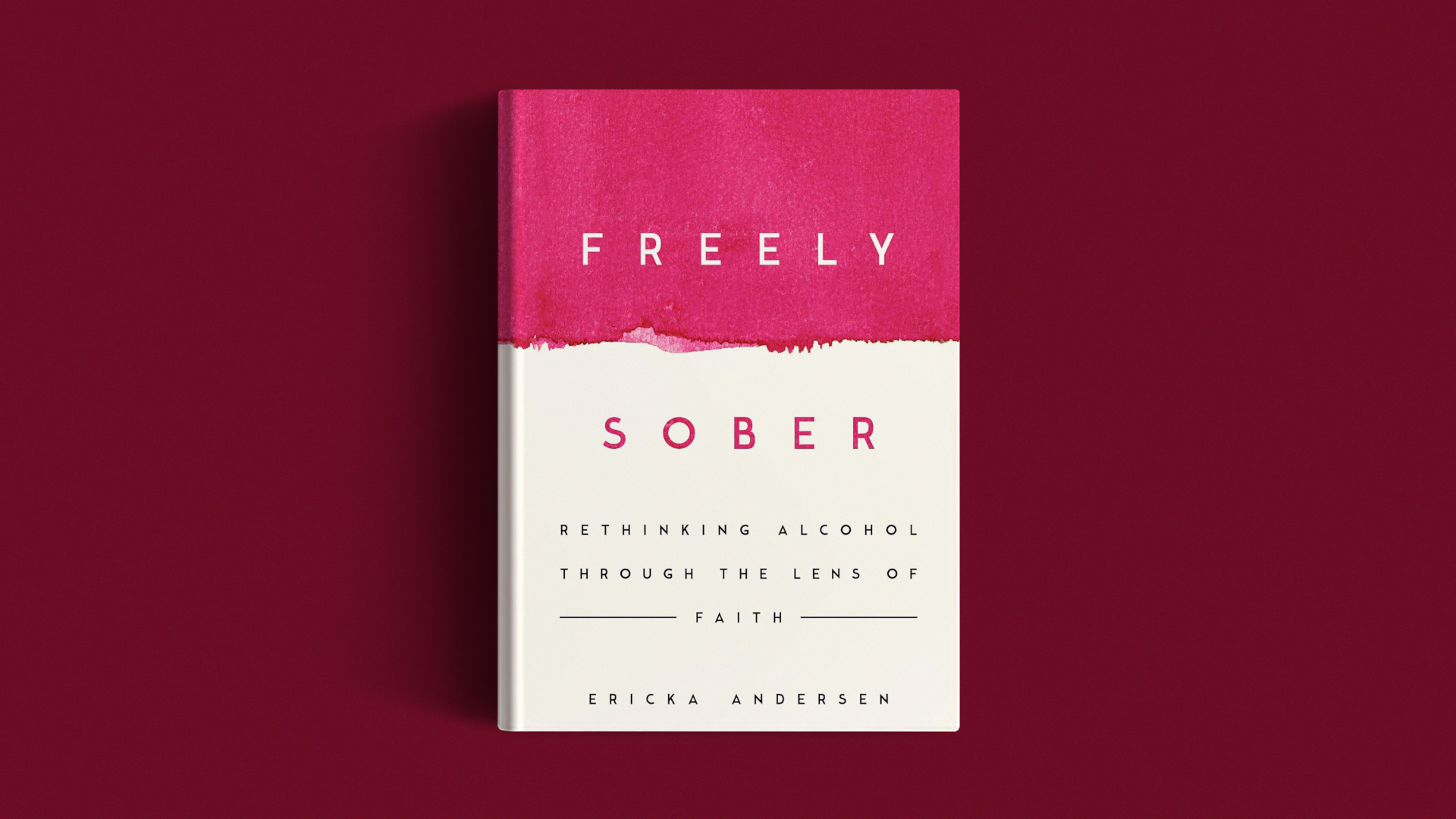
Adapted from Freely Sober by Ericka Andersen. Copyright (c) 2026 by Ericka A. Sylvester. Used by permission of InterVarsity Press.