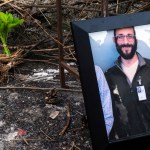
When word first spread that federal immigration agents had shot and killed Minnesotan Alex Pretti on Saturday in Minneapolis, a group of Hispanic evangelical pastors was meeting in a church basement nearby.
Minneapolis police chief Brian O’Hara was supposed to be there to talk with the pastors about security protocols at their churches, but his plans quickly changed. He needed to go to the scene of the shooting.
“They’re out there now trying to maintain order from the disorder the federal government has caused,” Dios Habla Hoy pastor Sergio Amezcua, whose church was hosting the meeting, said to the other pastors. Amezcua, once a Trump supporter, now says Latino supporters feel “betrayed.”
The pastors grabbed each other’s hands in a circle to pray. One woman there softly cried: “God, we need you. We need you to help us.”
“We know that you see us,” she prayed.
The Trump administration has pointed to a fraud scheme among the Somali community as justification for its recent immigration-enforcement surge in the Twin Cities, but most of those residents are US citizens.
Christians helping immigrants there told CT that enforcement operations have largely targeted the Hispanic community instead. Among their arrests, agents with Border Patrol and ICE (Immigration and Customs Enforcement) have been detaining legal immigrants as well as US citizens—and refugees who have legal status.
That has sparked fear among racial minorities in the Twin Cities that America’s immigration-and-asylum-processing system—and citizenship itself—no longer offers meaningful protection from a degrading or violent detention.
The Twin Cities are tense, but ICE agents aren’t visible everywhere. Minnesotans monitoring or peacefully protesting ICE are, even in arctic temperatures this past week. In the neighborhoods where ICE is more active, you’ll hear the unnerving whistles from ICE observers alerting residents to the presence of immigration agents. One evangelical CT interviewed said she sees the whistles as a way to get kids inside before any violent confrontations.
Pastor Héctor Andrade of Comunidad Cristiana Twin Cities told CT that most people in the Latino churches he knows have left. Even legal residents don’t want to meet with others in their homes. Many people avoid grocery stores, fearing they’ll be accosted if they step outside. Andrade carries his passport with him everywhere now.
“This is too big for us. It’s overwhelming,” he said. “There is a feeling of powerlessness.”
Upstairs at Dios Habla Hoy, volunteers schlepped boxes of food in 15-degrees-below-zero weather into waiting cars in the parking lot. This church, with the support of many non-Christian volunteers, has been delivering food six days per week for thousands of immigrant families who are staying home in fear. Two days before, the church had trained 600 new volunteers for food distribution, with a list now of 28,000 people who want food.
One room at the church was full of diapers. Another was packed with a mountain of toilet paper. Across the Twin Cities, neighbors pile supplies for immigrants into other churches, too, as well as restaurants and coffee shops, in scenes that look like a community recovering from a natural disaster.
In just a few weeks, churches have created a sprawling, informal network for grocery deliveries to immigrant families. On Saturday, one evangelical church in Minneapolis delivered food to 60 households. Christians are also raising funds to pay for rent for homebound immigrants.
These volunteers have adopted security measures to ensure ICE agents don’t follow them from the food-distribution site to immigrants’ homes. Due to heightened security concerns, some of them requested anonymity to speak with CT about their work.
One evangelical pastor, a lifelong Minnesotan granted anonymity to protect the identities of his congregants, has been driving two Hispanic members of his small church to work every day so they won’t be alone. They are legal immigrants. He is also driving one of his daughter’s friends to school after ICE agents came to their bus stop one morning.
“For people in the Hispanic community right now, there’s a lot of feeling of danger, for good reason,” he said. “These are the people God has placed in our lives. What can we do to help them out?”
He is extra cautious when driving his congregants: following the exact speed limit and turning off location services on his phone. He checks outside, scanning his surroundings for ICE agents before dropping off passengers.
“I never expected something like this to happen in the US,” he said. “There is a calling on Christians now to say, ‘What does it mean to love the sojourner?’”
CT confirmed some Hispanic churches in the Twin Cities are no longer meeting in person. Dios Habla Hoy now locks its doors for services and only allows in known churchgoers. Amezcua said the church has about 80 attendees now, down from 500 before.
Another evangelical, a mom with four kids, told CT she has been driving six Hispanic children in her neighborhood to school every day because their parents don’t feel safe sending them by foot or to the bus stop. She has also signed a Delegation of Parental Authority (DOPA) form saying she would temporarily care for two immigrant children if their mom is deported. Churches around the city have been assisting families with notarizing DOPA forms, and churchgoers themselves are signing up to take children as needed.
In addition to making food deliveries, churches are bringing immigrants to critical medical appointments. On Saturday, a volunteer took a toddler to a medical appointment while others monitored the area around the pediatrician’s office to make sure ICE agents would not try to take the child.
A local evangelical refugee resettlement agency, Arrive Ministries, has been coordinating with another group, The Advocates for Human Rights, providing emergency legal representation for people it never expected would be arrested: legally present refugees, resettled after years of vetting.
Rebekah Phillips, the co–executive director of Arrive, told CT the organization has concerns about reports it has heard from its refugee clients of their detention conditions in the last two weeks. “Those are really difficult stories to hear,” she said.
Arrive, which now operates with locked doors, is seeing growing interest from area churches that weren’t involved in immigration support before. The staff reported to CT that since the federal raids began, 35 churches new to Arrive’s work have asked the organization for information sessions.
“What the government is doing here is really, really bad, and that comes from a pastor that—I thought that this administration was going to be good for our community,” said Amezcua from Dios Habla Hoy. “It’s a nightmare we want to wake up from soon.”