In the early hours of January 3, airstrikes on Fuerte Tiuna, Venezuela’s largest military complex, woke up Ender Urribarrí and his family. From their Caracas apartment, they saw explosions as US forces sought the capture of Venezuelan president Nicolás Maduro and his wife, Cilia Flores.
“We managed to get out as soon as the first detonations occurred and before they closed off access to and from the city,” said Urribarrí, who leads Iglesia Evangélica Encuentro con Dios in Colonia Tovar. He quickly sent a prayer request to his church’s 24-hour WhatsApp prayer group and immediately received responses from several parishioners offering to pray for them.
“Right now, everything is a blur,” he said.
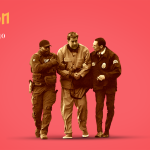
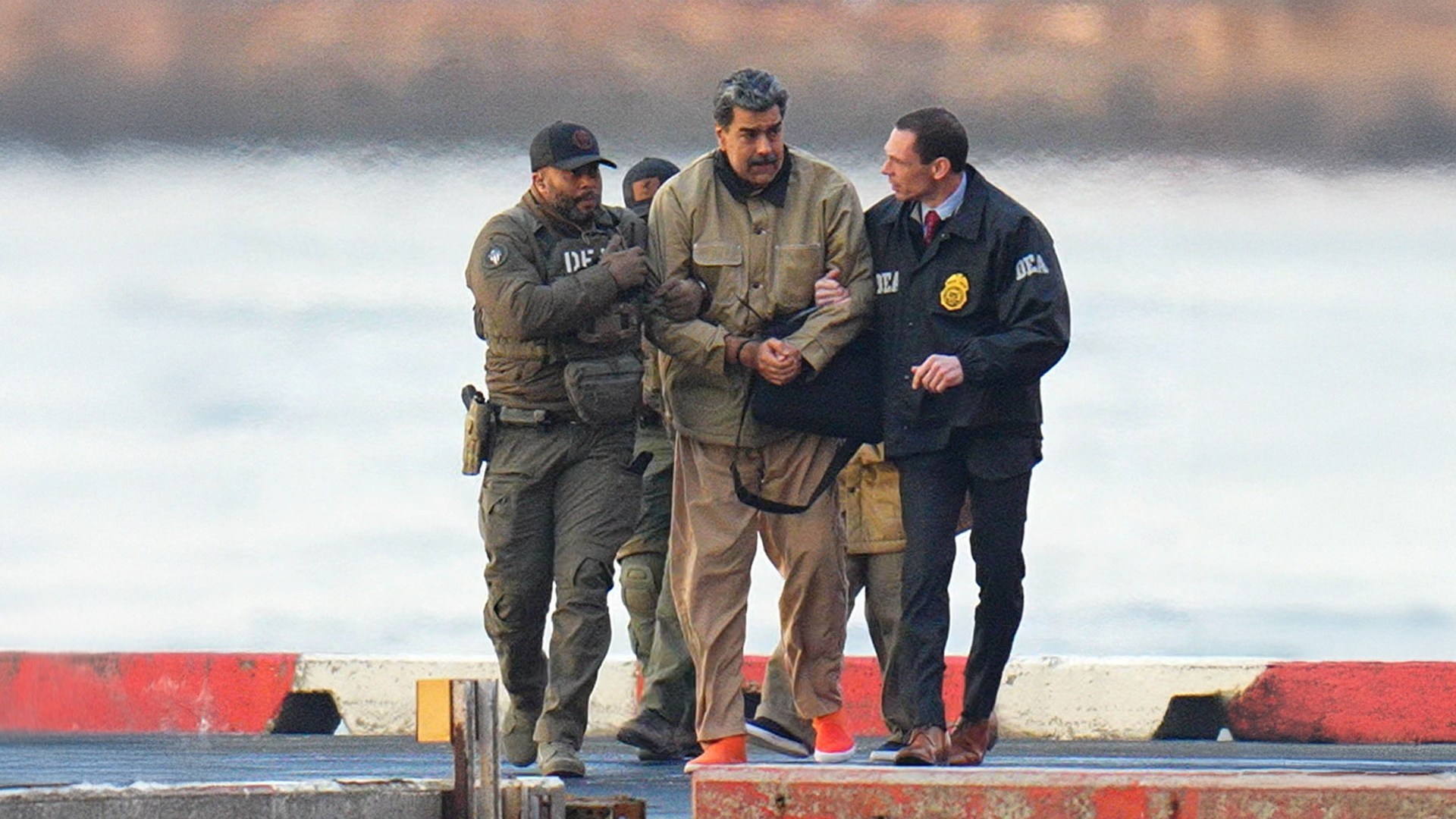
By Saturday afternoon, Maduro and Flores were en route to New York, where they face US federal charges of drug trafficking and terrorism. Maduro, who had governed Venezuela since Hugo Chávez’s death in 2013, was serving his third term as president after declaring himself winner of a disputed election in May 2024. Under his rule, 8 million people left the country due to hyperinflation, political repression, gang violence, and a shortage of food and medicine.
Exiled Venezuelans cheered Maduro’s ouster, gathering on the streets of the US and some Latin American countries to celebrate the news. Yet questions remain about the country’s future, and global leaders question the Trump administration’s handling of the strikes.
Meanwhile locals had a more muted response due to fear of reprisals from police forces and pro-Chávez groups. Several Venezuelan pastors with whom CT spoke declined to comment on Maduro’s capture, including Urribarrí, who stated that discretion is best until the storm subsides.
Since Saturday, a tense calm has prevailed in Venezuela. In many cities, the streets were deserted, as public transportation stopped over the weekend. Meanwhile, long lines formed outside stores as locals stocked up on food and gas.
“The country is at a standstill,” said pastor Georges Doumat of Apostolic and Prophetic Ministry of the Most High God on Venezuela’s Margarita Island. “Some people have gone out in search of food, in search of fuel, but we as a church are doing what we are supposed to do.”
Many churches in Venezuela decided not to hold in-person services on Sunday due to fears of further attacks. Doumat’s congregation, however, was able to meet because they gather inside a shopping mall. He added that many parishioners were unable to attend due to the lack of public transportation.
Doumat preached on Psalm 65, providing “a word of hope in the Lord about a new year that is beginning with all the … difficulties we are facing,” he said. “But we have the firm hope and faith that this year will be the year in which God will give peace and freedom to Venezuela.”
The US attack followed months of increased tensions between the two countries, including strikes on alleged Venezuelan drug-smuggling boats as well as a CIA-led drone strike on a docking area in Venezuela believed to be used by drug cartels.
Saturday’s operation involved more than 150 aircraft to dismantle Venezuelan air defenses so military helicopters could deliver troops, according to Gen. Dan Caine, chairman of the Joint Chiefs of Staff. He added that during the mission, no US military forces were killed. Meanwhile, a senior Venezuelan official told The New York Times that at least 80 Venezuelan military and civilians were killed.
Trump initially stated Saturday that the US would run Venezuela during the transition of power, yet Secretary of State Marco Rubio walked back the statement, adding that the US would continue to enforce an oil quarantine on Venezuela. The South American country has the largest crude oil reserve in the world.
Venezuelan vice president Delcy Rodríguez, who was sworn in as interim president Monday, criticized the US’s “illegitimate military aggression” and maintains that Maduro is still the president of Venezuela.
On Monday, Maduro appeared before a New York judge and declared his innocence. “I’m not guilty. I am a decent man,” he said. “I am still president of my country.”
Hours after Maduro’s arrest, the Evangelical Council of Venezuela issued a cautious message, avoiding celebration and calling for peace. “We encourage everyone to limit their exposure to social media and the constant flow of information,” said the statement, signed by executive director pastor José G. Piñero. “We suggest setting aside time each day to seek informed opinions and dedicating the rest of the time to prayer, fraternal communion, service, and other activities that build the well-being of our families and advance the kingdom of God.”
In contrast, many in the Venezuelan diaspora expressed excitement at the news. Around 25 percent of the Venezuelan population has left the country, with many migrating to Colombia, which shares a complex 1,370-mile border with Venezuela.
“The world was asking for [Maduro] to be removed because he continued to harm not only Venezuela but an entire continent,” said pastor Aristóteles López, the founder of March for Jesus in Venezuela, who now lives in West Palm Beach, Florida. “We are witnessing very relevant and historic changes for Venezuela and Latin America.”
López said that while he and his family haven’t joined the celebratory rallies in the streets, he is glad justice is finally coming for “one of the leaders of the dictatorship.” He added, “I think that beyond celebrating, we need to be careful about what’s coming for our country. I don’t think these are easy days.”
On X, Argentine-Venezuelan Christian singer Ricardo Montaner, who lives in Miami, posted a prayer for God to “watch over and bless the Venezuelan people, take away the wicked, and let peace reign, and let your love and mercy guide the future of all who love you.”
Christian leaders of other Latin American countries also expressed hope for change in Venezuela. “Days of restoration, of justice, of returning home, of hugs that heal, and of hope that becomes a song are coming,” said Colombian Christian singer Alex Campos in a video posted on Instagram. Mexican Christian influencer Daniel Habif posted a video of himself smiling with tears of joy in his eyes: “We’re not dreaming. It’s happening. It just happened!”
Meanwhile, the leftist leaders of Brazil, Mexico, Colombia, Chile, Spain, and Uruguay jointly denounced the US action, describing it as a contradiction of the United Nations Charter and a violation of Venezuela’s national sovereignty, a violation that sets a “dangerous precedent for peace and regional security.”
“We defend relations between states based on respect for sovereignty, dialogue, and collaboration, never on imposition or the use of force,” said Mexican president Claudia Sheinbaum. “Cooperation, yes; subordination, no.”
About 30 percent of the Venezuelan population are evangelicals. In recent years, Maduro intensified his strategy to favor evangelical leaders by giving them cash, sound equipment, and chairs for their churches as a political strategy to win votes in presidential elections. Yet the Evangelical Council of Venezuela rejected the political influence on the church, stating, “The evangelical soul is not for sale. It has already been bought with an infinite price.”
Over in Margarita Island, Doumat noted that even as many churches remained closed over the weekend, Christians still gathered online for worship. “Our trenches are everywhere; we don’t need to be in a building to cry out to the Lord and for the Lord to answer us,” he said. “It’s a tense time, a difficult time for us as a country.”