While any time is good for “out with the old, in with the new,” the New Year offers a fresh calendar page on which to plot out changes we hope to enact in our lives. Though research reports that most Americans make New Year’s resolutions for embodied life changes—better eating, more exercise, less shopping, and more socializing—ever-present digital technologies are obstacles to our success from day one.
The Bulletin’s Mike Cosper sat down with historian and author Christine Rosen to talk about this tension between the life we need and the life to which technology lures us. They discuss the disciplines of slowing down, practicing patience, and choosing embodied relationships over virtual ones. Here are edited excerpts from their conversation in episode 138.
What do you as a historian think is going extinct in our culture, and how is it dying out?
When my sons were working on handwriting in elementary school, I noticed how little time was spent teaching them cursive writing. I always struggled with handwriting as a left-handed person, and I wondered, Is this valuable for my kids?
My generation used to take for granted certain experiences, such as face-to-face interaction, waiting patiently without being entertained, the ability to do things with our hands. There weren’t many alternatives to these. Today, a vast range of digital experiences are supplanting the old ways of doing things.
From childhood all the way to adulthood, we form habits. Some of those are individual, but many of them are cultural and social. The questions that drive me are “How does taking away tactile, embodied experience change how we understand the world around us?” “How has technology changed the way we develop our habits of mind?” “How has it changed the way we solve problems and the questions we ask?” And in light of these questions, what’s worth preserving? What things might we be embracing too rapidly without asking important questions about the opportunity costs involved?
We carry devices with us everywhere we go. They are intimately part of our daily lives in a way that previous technologies never were. We have to ask tougher questions and have tougher boundaries because everything about technology is meant to infiltrate your daily life.
Because we’re human and we like to trust these objects and all the information on them, we start to seek wisdom from them rather than just information. We look to them to make judgments for us rather than just provide options or convenience. These are questions of value and virtue. That’s not what technology is supposed to do for us or to us, but it is something I think we have too often allowed it to do. And it’s not good for us.
What is the appeal of the mediation of a device for us?
There’s both the convenience and ease of the technology and a conceit that all the world’s information is available at your fingertips. These technologies have risen at the same time that society has become more mistrustful, lonely, and secular. Our mistrust of institutions has us looking around for easy answers, but the challenges are really about human nature.
Today, whether we’re surrounded by strangers on the bus or sitting in a meeting at work or with our loved ones around a table, when we begin to feel uncomfortable, we can remove ourselves mentally and emotionally. That has consequences.
When we didn’t have that option, we had to learn those human skills of “how to deal,” as the kids used to say. We couldn’t escape. Now that we can escape, we find ourselves doing it all the time. We are all prone to this.
Because of the design of the internet and search being driven by ad revenue, it is clear: We are the product. The devices are designed by people who know how the human mind works and what keeps us coming back for more. Monetizing our attention is the goal. It doesn’t matter if that attention is positive, negative, hateful, or happy. Because we are flawed creatures, we tend toward impatience, anger, fear, anxiety—the things that really fuel unsavory behavioral responses online. Is that true of the entire internet? Of course not. But over time, through passivity, we have relinquished ourselves to much of it.
Silicon Valley theorists and technologists are already trying to implement a tech utopia that overlays a virtual world on the real world. Their argument is that virtual reality is great because the real world’s too difficult for many people. A virtual world gives them more control.
However, trying to escape our physical reality cultivates certain anti-virtues. Control is a conceit: It’s created by the people who create the platforms. That vision of the future is deeply unhealthy and inhumane and also proto-totalitarian because it gives so much power to a few who create a world that many must live in with little control.
A lot of theorists are arguing that we can rebuild in different ways that allow for connection without so many of these negative side effects. I’m optimistic that we can move into a new era where architecture and design questions can come to the forefront and address human needs and human experiences.
We still live in physical bodies, and one day, those bodies will become weak or sick. Bodies of those we love will become weak or sick. Then, what do we owe to the other person? We cannot live by whim. We have to live by obligation and trust. We owe each other things if we’re healthy communities.
How might we think differently about the role of waiting in our everyday lives?
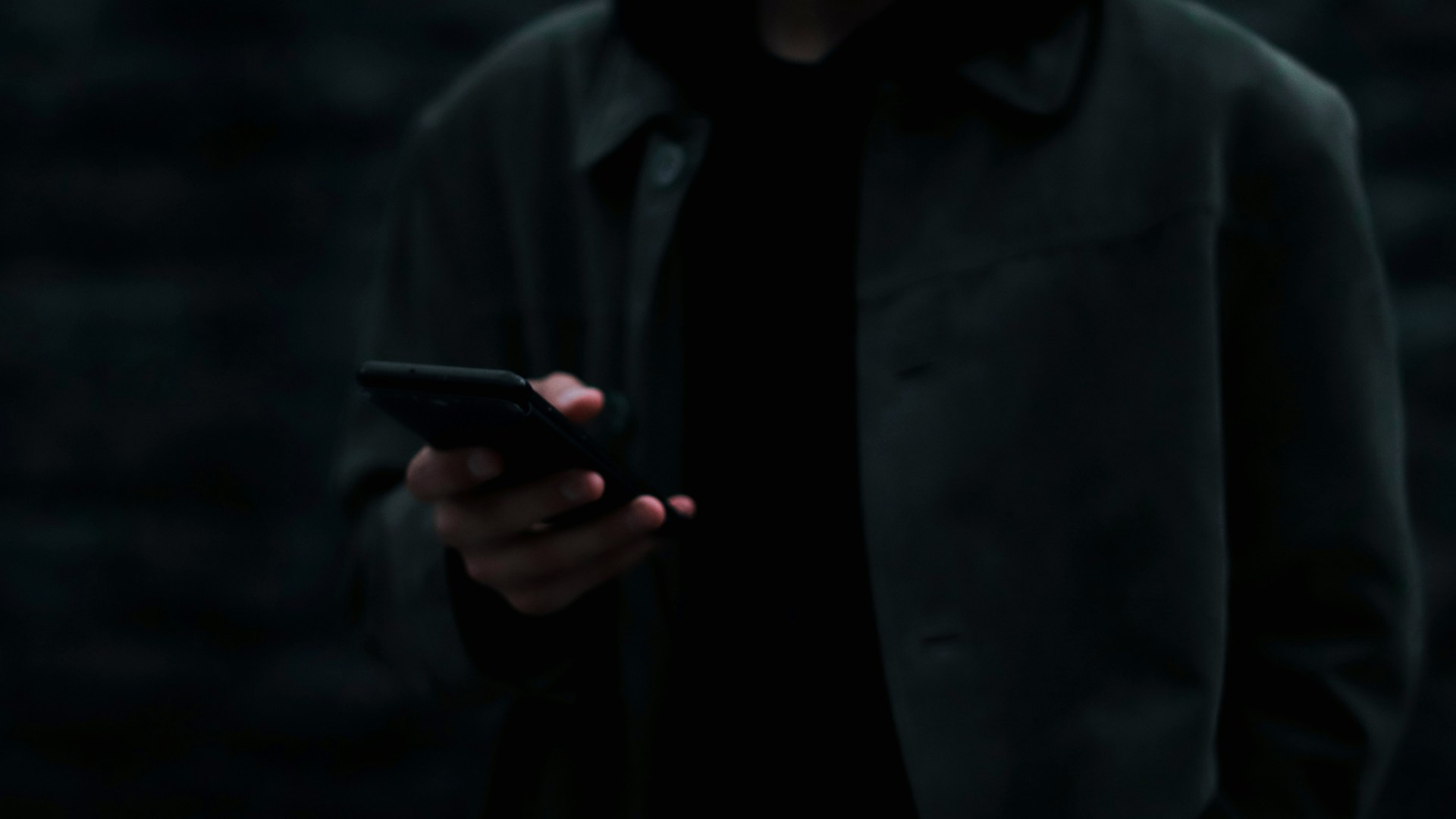
Some years ago, I realized that whenever I had a moment, waiting for the bus or waiting in line—or just interstitial time—I would pick up my phone and look at it. I would go online and waste time. Those minutes accumulate over a day, a week, and a lifetime.
Interstitial time is actually quite valuable. It allows your brain to rest from stimulation. It allows your mind to wander and maybe come across a new idea. It also teaches some form of patience.
When you scale up hundreds of millions of people who fill every single moment of downtime or boredom with entertainment, you are cultivating a population that has vast cultural impatience—and not just for each other but for solving difficult issues in politics or in communal life. You can see how it scales up.
Do I want people to sit around and be bored all the time? No, but boredom does teach some things. It teaches a kind of mental discipline. It teaches an acceptance that you can’t always control your environment, and it lets your mind have the fallow time that it needs in a world where you’re constantly bombarded with stimulation and information.
The availability of technology also creates a mindset where we’re expected to be productive at times in our life where maybe we shouldn’t. Our leisure time has now become something we measure and manage and want to feel productive doing. The self-tracking movement started a lot of this for people. It can be helpful for people who are trying to achieve certain physical goals or fitness goals or whatnot.
This idea that we should become more machinelike in our behavior—I’ve got 15 minutes. I’ve got to make my widget; I’ve got to answer all my emails—we feel efficient because we can do what we should. In some countries, however, workers rebelled against their employers, saying you cannot send an email after 6:00 p.m., because they were completely overwhelmed and burned-out and didn’t have a clear separation between their work world and their private world.
We do need boundaries. We need that backstage time where we can let down our hair
and be with our people and not have to worry about being productive. That impulse to productivity is also something that doesn’t allow for contemplation and rest. And these are things that humans need. We need time for those things.
Where are you encouraged by people’s recognition of embodied needs?
The most encouraging thing is that people are simply willing to be more skeptical and ask more questions before they adopt new technologies. I mean it sincerely: We have to actively defend human things.
For example, a smartphone wants to introduce an embedded sensor on your phone that’ll monitor your heart rate and your galvanic skin response on an app that tells you when you’re anxious. If you’re talking to someone who makes you anxious, you could possibly eliminate that person from your life because of this feedback.
But what if you look up and see your good friend? They’re just annoying because sometimes friends can be annoying. Do we need to outsource and externalize our own intuitions, our own emotional experiences, to machines, to algorithms, to the phone? This is where we should pause and evaluate.
The same thing is true with people at the most vulnerable stages of life, children and the elderly, where there’s a real push to outsource their care and feeding to technology. Do older people need monitoring, not by fellow human beings but by robots or constant surveillance cameras and sensors they can wear, so absent caregivers are alerted in the event of a person’s fall? No, that’s our job as humans. We owe that to each other.
My wonderful libertarian friends scold me for being pessimistic about where some of these technological horizons are taking us. They say, You’re just being a curmudgeon. You’re being too reactionary.
To them, I always say, Look at what Silicon Valley theorists think about humans. Humans are often described as obstacles to their bigger project. They talk about humanity, but they rarely talk about people. I care about people. I think we should care about people. Our gold standard should be human interaction, the thing that most people actually crave and need.
Related