CT readers learned that singers—including Bob Dylan, Sonny Bono, Bobby Goldsboro, and Paul Simon (mistakenly called “Pete Simon”)—were putting out music with a message.
Message music is not a style of music, like rhythm and blues or swing. It is a song in any style that speaks directly or indirectly to a basic problem of mankind. Not all rock ’n’ roll songs are message songs. Most of them are about the traditional topics of popular songwriters: love desired, love fought for, love gained, and love lost. But there are songs that are far more serious. They speak of fear, anxiety, war, loneliness, hope, and the difficulties and contradictions of life in the twentieth century. …
They lay bare hypocrisy, hidden fears, the doubts and inadequacies of our generation; they reveal the difficulties of living when the “times they are a-changin’.”
Some of the messages were alarming. On college campuses, a growing number of students embraced radicalism and calls for revolution. CT published FBI director J. Edgar Hoover’s 3,500-word analysis of the “New Left” and its dangerous “gospel of nihilism.”
To dismiss the New Left, as some do, as a collection of simpletons, eccentrics, and jocular fools is to commit a grave mistake. Its adherents should not, as so often happens, be judged strictly by their Beatnik dress and ways (repugnant as they may be to most Americans). …
Basic to the New Left’s mood is the idea that contemporary American society (contemptuously called the “Establishment”) is corrupt, evil, and malignant—and must be destroyed. To reform it, to change it for the better, is impossible. It must—along with its Judaic-Christian values—be liquidated. “Let’s face it. It is, to use the crudest psychological terminology, a sick, sick, sick society in which we live. It is, finally, a society which approaches collective insanity—a system of authority-dependency relationships which destroys life and health and strength and creates debility, dependency, and deathliness.”
For that reason, members of the New Left take great delight in desecrating the American flag, mocking American heroes, and disparaging American history. They contemptuously hiss and boo officials of our government and show scornful disdain for opinions with which they disagree (the New Left at heart is extremely totalitarian, intolerant, and opinionated in nature). They urge resistance to the draft (even on occasions try to interfere physically with the legitimate activities of armed-services personnel on college campuses present for the purpose of recruiting), burn or mutilate draft cards, endeavor to dictate to university administrative officials how these institutions should be run.
One evangelical group sought to engage students directly with the Christian account of what made society “sick, sick, sick” and tell them about the cure that could be found in Jesus. Seven hundred Campus Crusade for Christ staff members spent a week evangelizing students at the University of California, Berkeley.
CCC activists buttonholed students with straightforward, person-to-person gospel appeals. They staged noon rallies before thousands and conducted evening meetings in scores of residence halls. They infiltrated “The Forum,” a popular Telegraph Avenue coffeehouse frequented by hippies and budding political radicals, and scored many conversions there. Nightly they put on high-quality programs at a 3,000-seat theater. They saturated surrounding neighborhoods with a visitation campaign, and in the campus Plaza area they manned Christian literature tables next to tables run by such groups as the Campus Sexual Rights Forum, the leftist Students for a Democratic Society, and the Maoist-oriented Progressive Labor Party.
By the end of the week almost 1,000 decision slips were tabulated. … Widespread criticism resulted. The Daily Californian editorialized … “there are limits to these activities which should not be overstepped, and this group of zealots has managed to transgress those boundaries with gay abandon.” It complained that students had been roused from bed by early-morning telephone calls—a charge [Campus Crusade for Christ leadership] denied.
CT reported efforts to loosen legal restrictions on abortion and ongoing public debates about the ethics of abortion.
Prestigious leaders representing religion and ethics, law, medicine, and the social sciences disputed, debated, and defended the world’s abortion practices during a three-day International Conference on Abortion held this month in Washington, D. C. …
Dr. Herbert Richardson of the Harvard Divinity School, one of the conference conveners, summarized the ethicists’ closed-session discussions: Human life begins at conception, or at least no later than eight days after conception. Abortion should be performed—if at all—only in exceptional cases. Both theists and non-theists saw human life as qualitatively different from all other earthly life, and therefore worthy of special respect. And theists agreed among themselves that religious affirmations are relevant: God is creator of man and the author of life; man is created in the image of God; man is the steward of the gift of life and not its complete master.
Beyond this, opinion diverged. Some moralists deemed it morally possible to take the life of an unborn child under certain conditions as a “human response to God’s love and his neighbor.” Others held that the fetus has inviolable rights; no individual or society has the right to say which shall live and which shall die.
CT also looked at new developments in birth control and asked, “Which Methods Are Moral?”
The pill—which is relatively expensive and must be taken daily—is popular among affluent, sophisticated people, while the IUD is the most feasible means of mass birth control for developing nations. Though only about 95 per cent effective, the IUD is inexpensive and, once the small loop or ring is inserted in a five-minute operation, requires little attention. An estimated 1.3 million women now use the IUD in India, and South Korea credits 400,000 IUD insertions with a significant drop in its birth rate. …
The U. S. Food and Drug Administration is studying the safety and effectiveness of IUDs and should report by mid-year. Although ethical discussions on birth control tend to be divorced from biology, scientific evidence leads such Christians as William F. Campbell, a missionary doctor in Morocco, to fear that use of the IUD is “a kind of abortion.”
The biological question is at what point the IUD stops human life—before or after the male sperm fertilizes the female egg. The ethical question is whether a fertilized egg is a human being—whether the IUD may be the mechanism for microscopic murder.
Internationally, CT reported a revival in Indonesia.
“It’s too early to put all the pieces together,” says Dr. Clyde W. Taylor, executive secretary of the Evangelical Foreign Missions Association, “but there can be no doubt that revival has broken out.”
Taylor says the best estimates show at least 200,000 conversions from Islam to Christianity within the last eighteen months. Mission boards are assigning top priority to getting help to the workers in Indonesia, now the world’s fifth-largest country. Nowhere before has there ever been a comparable response from Muslims—missionary experts often regard them as among the hardest people in the world to reach.
The success of Wycliffe Bible Translators was also encouraging. CT reported that in 1967, Wycliffe had become “the world’s largest Protestant missionary organization.”
Evangelical breakthroughs almost invariably occur under strong leaders. Bob Pierce has been the Billy Graham of the evangelically rooted World Vision movement and through plaintive pleas and skillful promotion raises millions of dollars annually for orphan care and general relief work in the Far East. Dapper Bill Bright has led Campus Crusade for Christ, with its simple but intensive evangelistic zeal, into hundreds of colleges in the United States and abroad. In the case of Wycliffe, the genius has been that of soft-spoken W. Cameron Townsend, now 71, whose diplomacy has won him entrée to scores of traditionally anti-Protestant government residences in Latin America.
Fifty years ago this month, Townsend, product of a California farm family, arrived in Guatemala as a $25-a-month salesman for the Bible House of Los Angeles. The real challenge came with his discovery that the Scriptures were of no use to the Indians because they could not read Spanish. Prodded by their complaint that “God doesn’t know our language,” Townsend set out to translate the New Testament into the then-unwritten Cakchiquel dialect. Although it took twelve years, Townsend not only achieved that goal but also inspired similar projects across Latin America and subsequently in other parts of the world.
Out of these projects grew Wycliffe, which was incorporated in 1942 and today operates on a budget of about $5,000,000.
Several Communist countries seemed to grow more accommodating and tolerant toward Christians. As CT editors surveyed the global situation, they grew concerned that the temporary ideological compromises of dictators would deceive naive Christians.
Never has the religious situation in Communist countries been more confused and ambiguous than it is today.
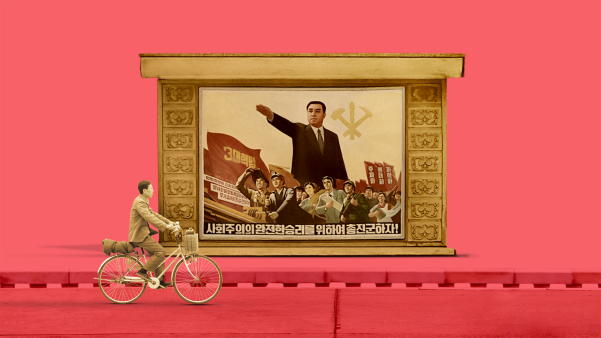
Except for Mao’s China, where the fury of the barbaric “cultural revolution” strikes hard against Buddhists and Muslims as well as Protestants and Catholics, a relative calm and a sort of “peaceful coexistence” now seems to prevail between governments and various religious groups. Church delegations from Communist countries visit the United States and other Western nations almost routinely. Various churches of the Soviet Union and other Communist nations have been permitted to join the World Council of Churches and international denominational bodies.
The greatest breakthrough in church-state relations in the Soviet Union was the first visit of the head of the Soviet Union to the Vatican in January of this year, the fiftieth anniversary of the Bolshevik Revolution. Church dignitaries are now more often invited to official state receptions in Communist capitals though they are not yet asked to say grace at banquets given by Communist leaders. …
A superficial observer might be easily tempted to misinterpret such phenomena. He might conclude, hastily and optimistically, that … a promising new era of a dialogue between Christians and Marxists is at hand. American churchmen, knowing neither the language nor the extent of complex problems in these areas, often make inaccurate and misleading appraisals of the religious situation. Their opinions tend to reflect wishful thinking rather than historical realities.
Evangelicals were struggling in Cuba, eight years after the takeover of Communist Fidel Castro.
The harassment continues more subtly than in 1965, when fifty-three Baptists were arrested simultaneously. Thirty-four of them were brought to trial and sentenced for a variety of offenses, from espionage to “twisting biblical texts for the purpose of ideological diversionism.” To go about with Bible in hand is still an offense. Informers have infiltrated the churches—a fact not only admitted but boasted about by Dr. Falipe Carneado, director of the government’s department of religious matters. Churches cannot build. Theological students are whisked away to military service or to work camps. Unbelievers have been known to attend a church service, stand up at a given moment and sing the national anthem, then accuse those who do not join in of disrespect.
A common device is the street plan. Both ends of a street where a church is located are roped off. …
All in all, the picture is dark. One Cuban expressed it this way: “Our experiences are very sour. We breathe an atmosphere of insolence, tyranny, blasphemy, hypocrisy, lies, betrayal, and indignity. Our palm trees are so sad that they seem to be weeping, and our rivers are dry one moment and flooding at the other. This island is a huge prison with international jailers. We have returned to the time of the Vandals. The only thing we can do is raise our eyes to our blue skies, to the shining sun, to the twinkling stars, and to our God.”
The Castro regime also imprisoned Christian missionaries. CT reported on the experience of two American evangelicals who went to Cuba to plead for their son.
The Rev. and Mrs. Clifton Fite returned to Waynesboro, Georgia, believing the Cuban government will “deal kindly” with requests to release their missionary son David from prison. …
The Fites had tried to see their son since he was imprisoned two years ago on charges of currency-exchange violations. They finally succeeded, through the Cuban ambassador in Mexico. Officials “listened with reverence and responded with courtesy” during the fifty-one-day stay in Cuba, Fite reported.
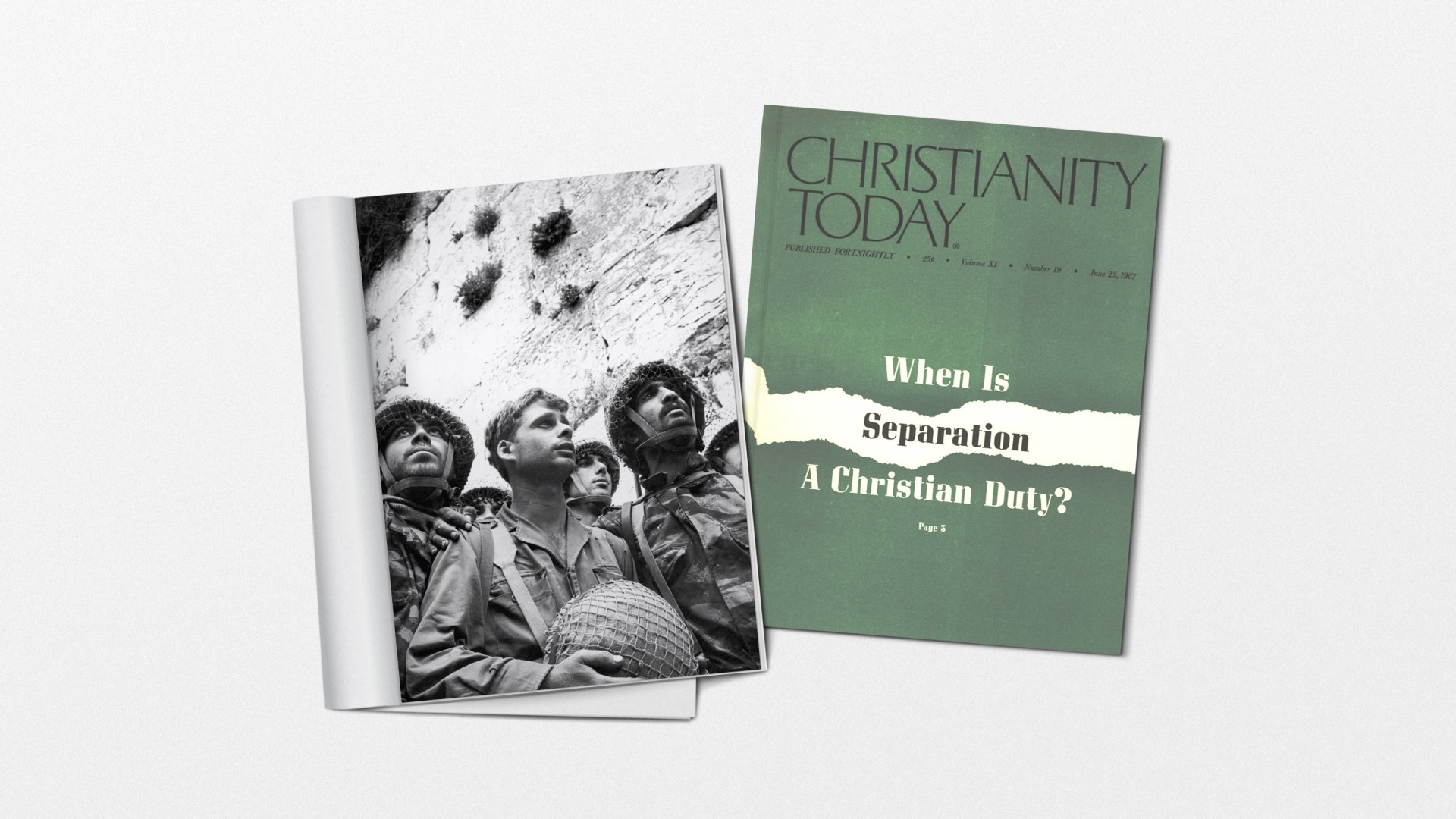
In June, Israel went to war with Egypt and a coalition of Arab nations. CT published firsthand accounts from evangelicals in Jerusalem and Beirut and analyzed the political, military, and eschatological context of the Six-Day War.
Israel, hedged on three sides by Arab foes and outnumbered twenty to one, began fighting to ensure its survival as a nation. After mounting swift air strikes against Egyptian forces, Israeli troops in three short days circled and captured the old city of Jerusalem, controlled the Gaza strip, reopened the Gulf of Aqaba and reached the Suez Canal. …
The Christian can best understand the imbroglio in the Middle East through his knowledge of the prophetic Scriptures. Although the Bible does not describe future developments in detail, it offers much in the way of broad prophetic outline. … The believer will not be bewildered by the tides that sweep the world, nor will he despair over the headlines. …
The prophetic clock of God is ticking while history moves inexorably toward the final climax. And as that clock ticks, the Christian believer lifts his head high, for he knows that a glorious redemption draws near.