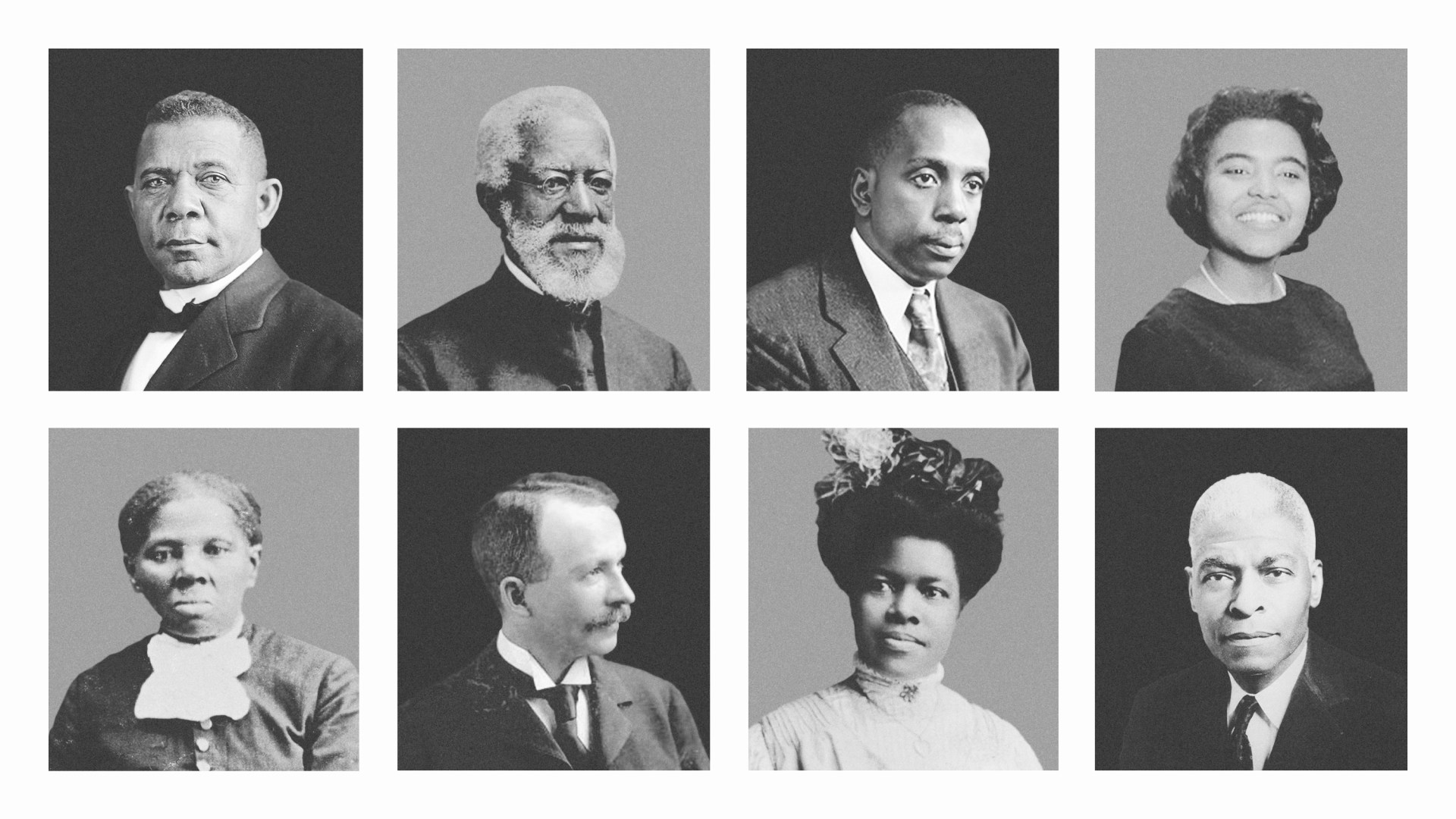
The Black church and Black Christians have played an indispensable role in shaping American and church history. For hundreds of years, African American congregations have operated as hubs of spiritual formation, community, and activism, fighting for the social change necessary to create a more just society—and helping Christians across the board think more deeply about the Bible, the spread of the gospel, and the call to pursue justice.
In honor of Black History Month, CT asked several African American leaders to share about the thinkers, pastors and theologians who have influenced their lives. Here is what they said.
Rebecca Protten (1718–1780)
Protten, a Moravian teacher and missionary of African and European descent, played a pivotal role in early Protestant missions. She converted through the Moravian movement and became a gifted educator, especially among free and enslaved African women in the Caribbean, where she taught Scripture, literacy, and Christian doctrine. Her ministry embodied the conviction that the gospel transcends race, economic status, and social hierarchy at a time when such beliefs were deeply countercultural. Protten was persecuted with other church leaders for missionary activities and modeled a lived theology of endurance, suffering, and hope in Christ. —K. A. Ellis, director of the Edmiston Center for Christian Endurance at Reformed Theological Seminary in Atlanta
James Earl Massey (1930–2018)
Massey was a pastor-scholar who stood out among his peers and was quite simply, different. He was best known as a holiness preacher whose voice crossed deeply entrenched racial and denominational boundaries—a rarity that’s difficult to grasp today. With near-perfect diction, he defied expectations often placed on African American preachers, combining biblical lessons with practical applications and relating to his listeners while also drawing them to a higher plane of thought. In 2006, Christianity Today named him one of the 25 most influential preachers of the past 50 years. At a time when public trust in pastors has diminished so significantly, we’d benefit from a renewed introduction to a man who so faithfully represented both God and his “skinfolk.” —James Ellis III, Baptist pastor and assistant professor of practical theology at Winebrenner Theological Seminary
Harriet Tubman (1822–1913)
Harriet Tubman has greatly shaped my theology. After I studied and preached from Romans 6, God helped me see the abolitionist—and the call on her life as a prophetic portrait of the gospel—in a new way. She helped people escape physical slavery, and the passage in Romans gave me greater clarity on my own calling as a natural and spiritual abolitionist. As Christians, God has given us the task of spreading the gospel and helping people escape spiritual bondage. Tubman reminds us that we only go back to plantations (in a sense) to help set people free, not submit again to the yoke of slavery. She refused to enjoy the fruits of freedom for herself and withhold that opportunity from others. May that type of heroism, commitment, sacrifice, and love mark my life, and all of ours as well. —Sarita Lyons, author, speaker, Bible teacher, and psychotherapist
Vernon Johns (1892–1965)
Johns grew up poor in Virginia and was able to receive a first-rate theological education, which was rare for his day. He later served as the pastor of Dexter Avenue Baptist Church in Montgomery, Alabama. Martin Luther King Jr., a friend of Johns, succeeded him in the role. Johns was in many ways a man of contradictions. He preached with insight and intellect, but often in dirty overalls, dispensing pearls of theological wisdom while tracking dirt from the farm into the sanctuary. He spent his ministry as a pastor ruffling feathers and offending the silk-stocking sensibilities of upper-middle-class African American congregations. —Daylan Woodall, writer and senior pastor of First Missionary Baptist Church in Decatur, Alabama
Caesar Arthur Ward Clark (1914–2008)
Clark was a mentor of Martin Luther King Jr. and pastored one congregation—Good Street Baptist Church in Dallas—for 50 years. Clark grew up in Louisiana. There, he encountered racism and poverty, which blocked his chances of being educated until much later in life. But those constraints didn’t stop him from flourishing. He was known for his theological imagination and rich biblicism and became an internationally renowned Baptist revivalist. He had a small stature but left a giant impression on African American preaching and Christianity. —Woodall
Charles Price “C.P.” Jones (1865–1949)
Jones was a pioneer of the Black holiness movement and the most prolific Black American hymnist of all time. He wrote that the Lord encountered him in the late 1890s and said, “You shall write the hymns for your people.” Jones went on to write over 1,000 hymns. His songs are sung primarily in holiness and Pentecostal settings. But I believe that the messages God gave Jones are indeed for “his people”—Black America—and for the global church. In turbulent times, we need Jones’s prophetic reminder as sung in one hymn: “I will make the darkness light before thee.” —Geoffrey D. Golden, director of worship and arts at The Park Church in Charlotte, North Carolina
Howard Thurman (1899–1981)
Thurman was a 20th-century spiritual luminary who named “the religion of Jesus” as the source of both spiritual and temporal freedom. His pioneering work Jesus and the Disinherited examined the Lord’s life as a member of a marginalized group, positioning Jesus as a model for people who live “with their backs against the wall.” His teachings on nonviolence earned him recognition as a sage of the Black Freedom Struggle, authoring what pastor and activist Otis Moss Jr. described as “the philosophy that creates the march.” Thuman also championed the multiethnic church and saw unity across social boundaries as “the pragmatic test of one’s unity with the Spirit.” —Tryce Prince, writer and director of Abilene Christian University’s Carl Spain Center on Race Studies & Spiritual Action
Nannie Helen Burroughs (1879–1961)
Burroughs dedicated her life to creating educational opportunities for Black women and pursued that ministry through civil rights activism and hands-on classroom instruction. Interestingly, her extraordinary social justice efforts were matched by her commitment to promoting moral improvement in America generally and in her community. Burroughs’s high view of Holy Scripture informed her that an undisciplined, pleasure-seeking lifestyle was just as much of an impediment to true liberation as external injustice was. Today’s Christian would be wise to recapture her willingness to challenge corruption in the American power structure while pushing her people toward a more honest and thorough form of self-examination. —Justin Giboney, president of the AND Campaign
Alexander Crummel (1819–1898)
Crummel was a clergyman, teacher, and missionary who cofounded the American Negro Academy, an organization for Black intellectuals who sought to promote higher education, art, and science among African Americans. Another founding member of the academy was the famous sociologist and writer W. E. B. DuBois. The academy sought to push back against the racism African Americans faced and also reform ethical and moral behaviors within the Black community. —Brian L. Johnson, former president of Warner Pacific University and Tuskegee University
Charles Chesnutt (1858–1932)
Chesnutt was a writer who documented the 1898 Wilmington race riots through his novel Marrow of Tradition. He was a Christian and wrote several novels and essays that communicated biblical themes. The Colonel’s Dream, his most sophisticated novel, tells the story of racial violence in the post–Civil War South through the eyes of a white protagonist. —Johnson
related

Gardner C. Taylor (1918–2015)
Taylor served for 42 years as pastor of Concord Baptist Church in Brooklyn, where his preaching combined profound theological depth with prophetic clarity on racial justice. Taylor, who is called “the dean of American preaching,” marched alongside Martin Luther King Jr. and maintained relationships across denominational and racial lines—which was rare in his era. He was respected in both Black churches and white evangelical institutions, mentoring generations of pastors and demonstrating that the proclamation of the gospel and the quest for justice are inseparable. Taylor spoke truth that challenged Americans while always pointing to Christ’s redemptive work, refusing to let either the church retreat from justice or activism retreat from the gospel. —Nicole Martin, president and CEO of Christianity Today.
Prathia Hall (1940–2002)
Hall was a civil rights activist and theologian whose courage and voice shaped both the Civil Rights Movement and the church. In 1962, after white supremacists burned down Mount Olive Baptist Church in Terrell County, Georgia, Hall stood in the charred ruins and prayed a passionate vision of freedom. She began with “I have a dream”—Martin Luther King Jr. heard that prayer, and many believe it inspired his famous speech. Hall organized voter registration drives in the segregated South, survived multiple threats to her life, and later became one of the first African American women to earn a doctoral degree from Princeton Theological Seminary. Her legacy reminds us that the most powerful prayers can echo through generations and movements far beyond their original utterance. —Martin
Clay Evans (1925–2019)
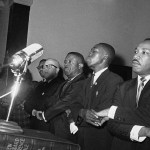
Evans was the planting pastor of Chicago’s Fellowship Missionary Baptist Church. He was unable to speak for the first three years of his life. But his inimitable voice became the trumpet for justice and righteousness in Chicago. In 1966, he defied the edict of then-mayor Richard J. Daley and allowed Martin Luther King Jr. to preach in his pulpit. As a result, institutions that were supporting the construction withdrew financing, which resulted in a nearly decade-long delay in the construction of the church’s new sanctuary. Evans reminds us that standing by the word we preach might cost us more than we had scheduled to pay. —Charlie Dates, senior pastor of Progressive Baptist Church and Salem Baptist Church in Chicago.
Gowan Pamphlet (1748–1807)
After his conversion to Christianity, Pamphlet risked his life to proclaim the gospel of redemption and freedom. He was one of the first ordained Black ministers in the American colonies. And he was determined to challenge church practices that prevented Black people, whether slave or free, from becoming members. He understood the evangelical gospel was for everyone and was thus a forerunner in multiethnic church ministry. —K.J. Washington, lead pastor of New Valley Church in Waynesboro, Virginia


Benjamin Elijah Mays (1894–1984)
Mays has impacted African American theologians by influencing our understanding of the “long civil rights movement.” He trained one of the brightest generations of theologians, many of whom were shaped by his writings on “all of life” theology—the belief that our faith applies to all areas of our lives. Mays engaged the public square and built strong institutions, all for God’s glory. —Washington
George Washington Carver (1864–1943)
Carver is often lauded for his innovation and brilliant mind, but this polymath is rarely recognized as a faithful Christian witness. He refused to claim patents of his inventions because he believed the Lord gave him insights that should not be withheld from others. Luminaries across the globe from Mahatma Gandhi to Franklin D. Roosevelt sought his expertise for their personal lives. His skills were courted by Henry Ford and Thomas Edison. And despite facing discrimination under Jim Crow, he helped Southern farmers by advocating for crop diversification because cotton and tobacco had exhausted the soil. I believe his tombstone states its best: “A life that stood out as a gospel of self-forgetting service. He could have added fortune to fame but caring for neither he found happiness and honor in being helpful to the world.” —Sho Baraka, editor director of CT’s Big Tent Initiative
Tom Skinner (1942–1994)
Skinner was a pioneering evangelist, author, and speaker who bridged the worlds of urban ministry, racial reconciliation, and mainstream evangelicalism. He became a leading voice for a socially engaged, biblically based faith that addressed systemic injustice. He is perhaps best known for his powerful address, “If Christ is the Answer, What are the Questions?” at the 1970 InterVarsity Urbana Student Missions Conference, which challenged a generation of evangelicals to confront racism and poverty. —Jeff Wright, CEO of Urban Ministries Inc.
Melvin Banks Sr. (1934–2021)
Banks was the visionary founder of Urban Ministries Inc. (UMI), one of the largest African American–owned Christian education publishing companies in the United States. After graduating from Moody Bible Institute and Wheaton College in the 1950s, he saw that there was a lack of curriculum that reflected the experiences, culture, and images of Black Christians. In 1970, he started UMI from his basement to fill this void. His work provided biblically sound materials that affirmed Black identity and addressed relevant social issues, all of which bolstered Christian education in Black churches and created a legacy of empowerment and representation. —Wright
Booker T. Washington (1856–1915)
Washington was the founder and president of Tuskegee Institute, a historically Black institution later named Tuskegee University. Washington was a principled Christian leader who advocated for racial uplift, self-determination, and hard work. —Johnson
Charles E. Blake Sr. (1940–present)
Blake was the former presiding bishop of the Church of God in Christ, one of the largest African American denominations in the US. He pastored West Angeles Church of God in Christ, a Pentecostal-holiness congregation in south Los Angeles that I attended as a child. Under his leadership, the church grew from 50 to more than 20,000 members. Blake believed that the Good News addresses both spiritual and physical needs. Because of that belief, he spearheaded many local and international programs, including the West Angeles Christian Academy and a community development corporation. —Chanté Griffin, journalist, author, and artist