Sometimes it seems our opinions on the most polarizing issues have been decided for us before we can examine and reflect.
When a tragedy or cultural rift appears, each faction in American public life rapidly latches on to a consensus opinion. Like smoke from the flaming trash heap of our toxic political and racial discourse, these reactions smother the search for truth well before all the facts are available.
Unaware or unconcerned about the angles our algorithms and cultural biases are hiding from us, we see the complicated as easy and the unknown as obvious, all conveniently aligned with our preconceived notions about who’s good or evil, oppressed or oppressive. In a flash, we’re foolishly convinced that we know what we cannot know—or at least cannot know yet—like who initiated a stare-down, whether the election was stolen, or if someone deserved to die.
And thou shall not get caught on the wrong side of whatever issue is virusing through social media! Even commercial products like Super Bowl halftime shows can become high-stakes litmus tests where one must assent to a meaning assigned by the mob. Don’t let your tribe take any blame. Always accuse the other side of the most sinister motives. Suppress your deeper questions. Accept lies if that’s what it takes to keep your status in your group.
What does this system of perverse incentives, stereotypes, and partiality look like in practice? It looks like conservative officials and influencers conflating protests with riots and dismissing protesters’ causes out of hand. It looks like progressive custodians of culture comparing every other conflict to Jim Crow and daring anyone to question it. It looks like downplaying the violence done by us to exaggerate the violence done by them. It looks like only selectively recognizing immorality and injustice.

Or ask Beth Moore, Russell Moore, and J. D. Greear what happens when you refuse to condone colorblind and MAGA myths moving among white evangelicals. We become our friends’ enemies by telling them the truth (Gal. 4:16). In some circles, having the right politics or the right race narrative has become more important than right doctrine and right ethics. Religious heretics may be condoned, but cultural dissidents are unforgivable. We pronounce right and wrong according to identity and ideology instead of honestly testing the spirits (1 John 4:1–3) and assessing the fruit (Matt. 7:15–20).
John the Baptist took a sledgehammer to this kind of thinking. “Prove by the way you live that you have repented of your sins and turned to God,” he exhorted his people. “Don’t just say to each other, ‘We’re safe, for we are descendants of Abraham.’ That means nothing, for I tell you, God can create children of Abraham from these very stones” (3:8–9, NLT).
Here, John was engaged in righteous but dangerous business. He was knocking down a pillar that upheld his people’s sense of uniqueness—maybe even supremacy—to reveal a truth they did not want to see. Telling the descendants of Abraham that their lineage didn’t make them right with God was cultural blasphemy, and in saying it, John modeled the very kind of courage we need. He put himself squarely outside what C. S. Lewis called the “Inner Ring,” instead choosing truth over ease and “conquer[ing] the fear of being an outsider.”
Anything less would have been cowardly, uncaring, and courting corruption. For, as Lewis knew, “Of all the passions, the passion for the Inner Ring is most skillful in making a man who is not yet a very bad man do very bad things.”

Are we willing to follow John’s example? To be shunned and forgo prominent associations to give useful lies a public death? Only by telling the whole truth and enduring the blowback can we effectively do God’s will and be known for our love for one another.
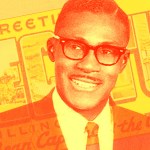
In the 1960s, Rep. Shirley Chisholm provided a model for us too. Chisholm rejected false and self-serving claims from all parties and all races. When she challenged Black militants, they reacted by calling her a sellout—among other things. “The easiest thing for anybody to do is to label you,” she answered. “I’m not concerned about labels. I’m concerned about what my behavior and my actions indicated to the Black people … [and] whites in this country. I see myself as a potential reconciler on the American scene.”
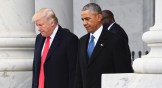
Last week, I wondered aloud whether conservatives would try to justify President Donald Trump’s demeaning social media post about the Obamas. Some did, but I was encouraged to see conservatives like Sen. Tim Scott, Sen. Katie Britt, and commentator Erick Erickson take a principled stand against such vile behavior.
It’s tempting to reduce reality to self-serving narratives the size and depth of bumper stickers. It makes our arguments effortless and our opponents easier to hate. But the breadth and depth of Jesus’ grace and the universality of human sin must always complicate such convenient story lines. The fact is our worst enemies are always redeemable—and we ourselves are never free from mixed motives and prejudice.
To renew our public discourse, love one another, and hold ourselves accountable, we must risk ostracism from our own tribes to seek the truth with patience, diligence, and mercy. In the church and politics alike, lying may be the cost of some associations. Bold truth is the cost of discipleship.
Justin Giboney is an ordained minister, an attorney, and the president of And Campaign, a Christian civic organization. He’s the author of Don’t Let Nobody Turn You Around: How the Black Church’s Public Witness Leads Us out of the Culture War.