Data consistently show that most women facing unexpected pregnancies do not turn to their churches for help. Even though 7 in 10 post-abortive women identify as Christian, many say they would never tell a pastor or fellow believer they were considering abortion or seek support from their church afterward. They are twice as likely to report receiving a judgmental response than a compassionate one.

Angela Weszely is cofounder of ProGrace, a ministry that has spent years listening to such women—and she’s increasingly uncomfortable with practices she witnessed in some pro-life pregnancy centers. She felt some centers sought to “persuade or manipulate women regarding their pregnancy decision and religious beliefs,” which she considers unhelpful to women in vulnerable situations. Ultimately, these experiences led her to reevaluate the church’s posture on abortion overall.
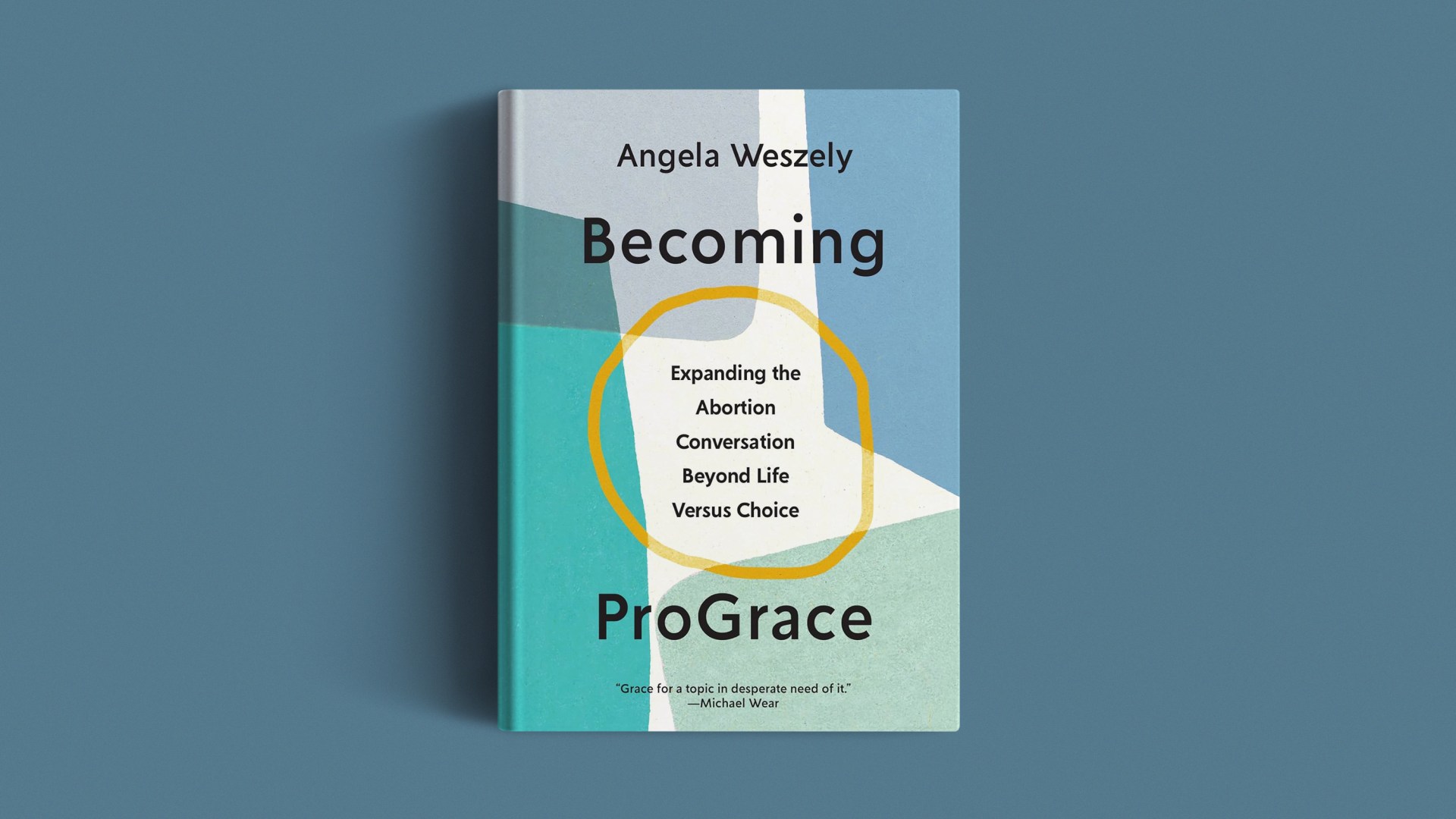
In Becoming ProGrace: Expanding the Abortion Conversation Beyond Life Versus Choice, Weszely urges Christians to move away from polarizing political positions when it comes to abortion and instead adopt what she calls a “pro-grace” mindset that gives women and their babies equal significance.
For Weszely, abortion is a “complex moral, political and social issue,” requiring more than a simple life-versus-choice framing. She argues that in pro-life contexts, “a woman’s agency seems to be at odds with a child’s well-being,” which makes it difficult for Christians to genuinely uphold the equal worth of both mother and baby.

Guest writers reinforce this theme in an essay at each chapter’s end. Wheaton College’s Amy Peeler suggests that God honored Mary’s agency when Gabriel announced Jesus’ birth: Gabriel “waits to hear what she says” before departing. Another contributor argues that “part of human dignity is human agency,” even in cases of unintended pregnancy.
Weszely also highlights the profound identity shift that occurs when a woman learns she is pregnant. She quotes one woman who said, “I don’t get to keep my life either way,” capturing the way pregnancy immediately reshapes a person’s future. These moments are among the book’s strongest, helping readers understand why women facing crisis pregnancies often feel scared, isolated, and ashamed.
The chapter on adoption is equally compassionate. Weszely notes that giving a baby up for adoption involves “the death of a woman’s identity and the death of the potential relationship with the child,” which explains why mothers often feel it is more painful than abortion or the choice to parent. She rightly challenges simplistic portrayals of adoption as a tidy, pain-free alternative.
The book cites research showing that many Christian women believe forgiveness does not extend to terminated pregnancies or that church members will gossip about them if they reveal they’re pregnant out of wedlock. Weszely argues that church culture often signals judgment more than grace, leaving women to struggle alone. Her call for churches to become safe, supportive communities even before a pregnancy is an important corrective.
While Weszely highlights genuine failures in Christian discipleship and community, the framework she proposes contains theological and practical weaknesses.
The book includes arguments about agency, most notably Peeler’s claim that Mary’s consent to pregnancy by the Holy Spirit parallels modern questions of reproductive autonomy. Yet this analogy falters. Women (in the vast majority of cases) with unexpected pregnancies have already consented to the possibility of pregnancy by having sex—something Scripture doesn’t treat as an intrusion on agency. If Weszely disagrees with Peeler’s framing, she does not take the opportunity to make that clear.

More importantly, the book doesn’t sufficiently grapple with the fact that another human life is involved, sometimes focusing on the mother’s emotions and experience at the expense of recognizing the reality of the child. Human agency, after all, ends where another person’s life begins. A framework that does not hold this moral reality at the center cannot offer the full Christian truth about abortion. Weszely’s work makes clear that she is committed to the value and dignity of the unborn child, but her messaging here is muddled.
She’s also critical of those who would influence women one way or another in their decision. Weszely writes, “The end goal of our listening is not to influence the people we listen to, but rather to be influenced ourselves by their experience and the connection we share.”
This posture of listening has pastoral value, but taken as the primary guiding principle, it loses the moral guidance necessary for scriptural leadership. Christians are called to listen with humility but also to speak truth in love, especially when a child’s life is at stake. Framing influence as inherently manipulative misunderstands the nature of Christian discipleship.
Helping a woman affirm her child’s life is a good and necessary thing, though Weszely is right that Christians don’t always do this as gently or wisely as we should.
Weszely critiques the church’s “50-year history of communicating a primarily political approach to abortion” and suggests this approach has divided Christians and pushed younger generations away from the faith. She warns that “laws … are not designed to build a community that can facilitate grace-led conversations.”
Yet she simultaneously encourages Christians to advocate for policies such as paid maternity leave, expanded health care access, and childcare support to reduce the pressures that drive women toward abortion. These suggestions are wise, but they reveal an inconsistency in one of the book’s main arguments: If policy solutions matter for supporting women, they matter just as much for protecting unborn children. Her reluctance to apply her own logic to pro-life legislation leaves a theological and ethical imbalance that the book never resolves.
Weszely also questions pregnancy centers that advertise services without explicitly stating they do not provide abortions. This criticism fails to acknowledge the crucial, sacrificial role these centers play in providing diapers, formula, counseling, clothing, emotional support, and community for women—resources that Planned Parenthood does not provide.
And while Weszely writes that “grace and truth are not contradictory,” the book suggests that pro-lifers are wrong to bring “an agenda” into conversations with women considering abortion. Weszely is right to call pro-lifers to prioritize listening to women and sharing the truth of God’s love, but her wariness of seeking to persuade or “change the thoughts and behavior of others” may signal to readers that abortion is a morally neutral choice. We can have deep grace for both pre- and post-abortive women without underplaying the truth that abortion takes the life of a child made by God.
To her credit, Weszely pushes Christians to remember what God is for, not only what he is against. She rightly reminds readers that God’s grace makes it possible to leave a life of sin and challenges churches that celebrated Roe v. Wade’s overturning without also mentioning support to vulnerable women as well.
Compassion alone cannot replace clarity, and empathy cannot replace discipleship, even in those precious few moments available to save the life of an unborn child. Abortion is both political and theological, and Christians must be able to hold both realities without fear or apology.
Even with inconsistencies, Becoming ProGrace contributes meaningfully to the church’s ongoing self-examination. It reminds us that women facing crisis pregnancies need more relational, practical, and spiritual support than many churches currently provide. If the body of Christ can become a place where women already know they—and their babies—are valued, more of them might seek help before choosing abortion. The challenge for the church is not choosing between woman and child but offering compassion and understanding for both.
Correction (March 9, 2026): This review has been updated to more accurately reflect the book’s argumentation.
Ericka Andersen is a freelance writer living in Indianapolis. She is the author of several books, including Freely Sober: Rethinking Alcohol Through the Lens of Faith.