Moonlit ribbons danced across eddies before being swallowed by raging waters. The river sounds—amplified by his solitude—filled his mind with sacred symbolism. Twenty years reflected in dark and restless waters. Twenty years of cheating, running, and dreading the brother he wronged.
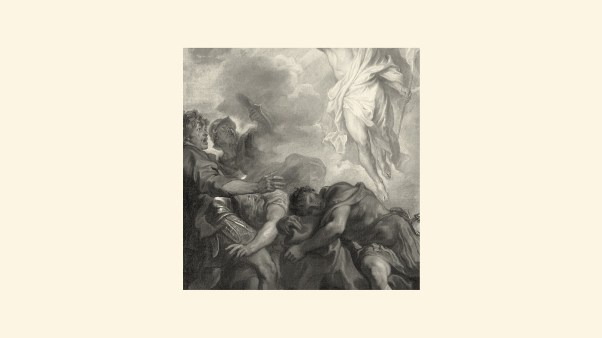
Suddenly, a presence. Without a word, the confrontation began. Jacob strained every muscle in his body. Sweat and raw earth mixed to mud on his skin. As dawn broke, the Man put Jacob’s hip out of socket. Jacob screamed in agony—but held fast.
The Man said, “Let me go.” Jacob, who always cheated his way into blessings, wanted to get this one honestly. He cried, “I will not let you go unless you bless me” (Gen. 32:26).
In an instant, the wrestling God transformed Jacob into Israel.
Holy Tuesdays Are For Fighting
A lot happens on Holy Tuesday in Matthew 21–26—including some feel-good classics like the greatest commandment and Jesus’ heartfelt desire to gather Jerusalem under his wings like a mother hen (22:37–39; 23:37).
One theme won’t let up, though: confrontation. Jesus had flipped some tables on Monday (21:12–17). Now the religious leaders try to entrap him with questions about his authority, politics, and the resurrection (21:23–22:33).
When confronting Christ in their rebellion, the religious leaders lose. With a brilliance and boldness that few could imagine wielding, Jesus stays the course, rebukes the proud, warns of judgment, and invites all who are humble to join the wedding feast. The religious leaders are unmoved, and digging in their heels, their hearts are moved to murder.
This Holy Tuesday, we would do well to let Jesus’ warnings travel across space and time and move us to consider the following questions: What are we doing with our frustrations toward Jesus? Are we following the path of these blind guides? Are we digging in our heels at the invitations of Jesus?
Yet I have to ask—is it wrong to confront Jesus?
Followers Fight Too
We don’t want to be like the religious leaders. So we sometimes struggle to be honest with Jesus about our resistance. But consider the following:
In their disappointment, Mary and Martha cried, “Lord, if you had been here, my brother would not have died” (John 11:21, 32).
In his disillusionment, Peter rebuked Jesus, “This shall never happen to you” (Matt. 16:22).
In his doubts, Thomas pledged, “Unless I see the nail marks in his hands … I will not believe” (John 20:25).
In their despair, the storm-stressed disciples screamed, “Teacher, don’t you care if we drown?” (Mark 4:38).
When confronting Christ in their confusion, followers of Jesus win. Correction may come, but Jesus never condemns, shames, or rejects. In some cases, he weeps (John 11:35). This Holy Tuesday, we would do well to consider whether Jesus is waiting for us to finally be honest about what confuses us.
The Struggle That Shapes Us
Moonlit shadows danced through an olive grove before being swallowed by agonizing prayers—sweat mixing to mud as Jesus pressed his forehead into the ground. The Son of God wrestled with the Father in the Garden of Gethsemane.
Like Jacob, he wouldn’t escape without scars. Unlike Jacob, Jesus would take on a curse so that we could be blessed. Yet we’re getting ahead of ourselves.
Because in that moment, God struggled. And if Jesus struggled, then we can too.
In the confusion of this Lenten world as we await the Easter age to come, you will experience some resistance to God’s ways. Rather than expecting perfect surrender from yourself, confront Christ this Holy Tuesday.
Confront him with your confusion, frustration, and resistance. Speak honestly and with humility about what you don’t like. Allow him to correct and comfort you. Repent, seek forgiveness, and walk with a limp—knowing it is the mark of God’s resurrecting grace.
Rusty McKie (MDiv) is the men’s director of CrossPointe Church in Altamonte Springs, Florida, a trained spiritual director and somatic coach, and the author of Sabbaticals and The Art of Stability. He is also the founder of Steadfast Ministries and ManSchool.