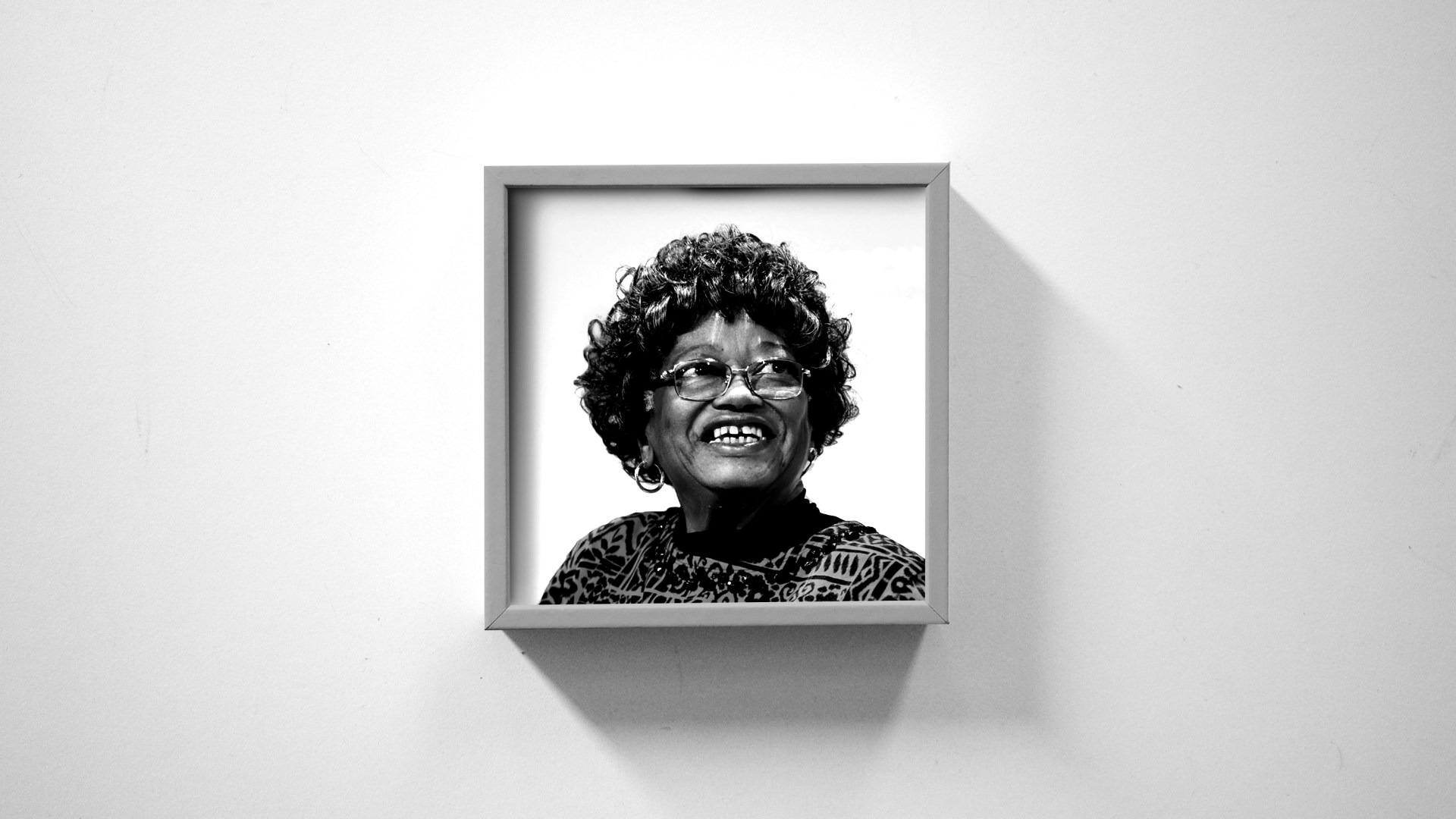
On a March day in 1955, 15-year-old Claudette Colvin boarded a segregated city bus in Montgomery, Alabama. Under Jim Crow laws, Black riders were forced to sit in the back or give up their seats if the white section became full. Colvin sat with other Black passengers. But when a white woman boarded the crowded bus, the driver ordered the teen and three other passengers to move out of their row. Some moved, but Colvin remained seated.
The Birmingham native has often said she couldn’t move because history had her glued to the seat. The bus driver called the police, who dragged Colvin off the bus and arrested her. She was subsequently taken to a local jail. “Because I’m Baptist, I started praying. I recited the 23rd Psalm and the Lord’s Prayer,” Colvin once recounted to a group of students at Boston College. She was released from jail three hours later after she made bail.
Colvin’s arrest generated buzz. In the aftermath, Martin Luther King Jr. and other Black leaders met with city and bus-company officials. But Black leaders also chose not to make Colvin the symbol of their cause. Instead, they waited nine months until a similar act by Rosa Parks sparked the Montgomery bus boycott and galvanized the Civil Rights Movement.
In the decades that followed, Colvin’s contributions to civil rights were mostly overshadowed by Parks’s, and Parks became one of the most widely renowned figures of the movement.
During an interview with NPR in 2009, Colvin said Black organizations felt Parks would be a better representative for the movement since, unlike her, Parks was an adult at the time.
Black leaders were also considering other factors. After Colvin was arrested, she became pregnant by a married man. That soured her case even more among civil rights leaders who believed making a young, single mother the face of the movement would attract negative attention. (Later on, Colvin said was the pregnancy was the result of statutory rape.)
By contrast, Parks was a secretary for the Montgomery chapter of the NAACP and was already well-known among organizers. She also had a lighter skin tone and was middle-class, unlike Colvin, who grew up poor and had darker skin. Colvin believed those things, namely colorism and classism, also contributed to her being sidelined. “Her skin texture was the kind that people associate with the middle class,” Colvin told NPR. “She fit that profile.”
But over time, the unsung civil rights pioneer also came to terms with her “raw feelings” about the situation, she told The New York Times in another interview in 2009. “I know in my heart that she was the right person,” she said of Parks, whom she remembered as a kind woman who let her spend some nights in her apartment after the March arrest.
Even though Colvin didn’t become the face of the movement, she did testify as a plaintiff in a landmark case that made its way to the US Supreme Court and outlawed racial segregation on public transportation.
Shortly after her arrest, Colvin moved from Alabama to the Bronx, in New York City. According to her family foundation, she worked 30 years as a nursing assistant at a Catholic nursing home. She died last month, at age 86, in Texas.
Until her death, she remained “grounded in faith,” a representative of the foundation told CT. She was last a member of St. Matthew Baptist Church in Corpus Christi, Texas.
People gathered to celebrate and commemorate Colvin’s life in late January at Greater Shiloh Missionary Baptist Church in Birmingham, Alabama. During a eulogy at the service, Arthur Lane, the pastor of the church Colvin attended in Texas, read from Psalm 37 and drew parallels between Colvin’s life and the life of David. Lane said despite the struggles both went though, the Lord did not forsake them.
“Although [Colvin] was overlooked for decades, she is a testament that history could forsake you, but God in heaven could never forsake you,” he said.
Lane added that Colvin testified God was with her in her different seasons, whether that was in jail in Alabama, during her move to the Bronx, or in her successful attempt to expunge her juvenile record in 2021.
“God does not forsake the righteous who stand up for others,” he said, “because God remains faithful to the righteous [even] when society and its system fail to celebrate them.”