A scene in the new film Wake Up Dead Man: A Knives Out Mystery offers a glimpse of what a good pastor looks like.

Without giving too much away, I can tell you that the film is about Father Jud Duplenticy, a Catholic priest who finds himself in the center of a murder mystery at his new parish. Father Jud is a prime suspect. His reputation, freedom, and future are at stake, and he does what any reasonable person would do: He tries to clear his name. To do this, he must solve the murder. This leads him to call the construction company that provided burial equipment connected to the crime scene. The call is meant to be a quick, fact-finding conversation, but it doesn’t go as he planned.
On the other end of the line is Louise, the woman who processes orders for the company. To Father Jud’s frustration, she’s chatty and not particularly helpful. As he tries to get off the phone quickly and politely so he can get back to his “real” work, she interrupts.
“Hey, Father, could I ask you somethin’?”
“Yeah, it’s—though, I mean—well, if you can make it quick.” …
“Father Jud, would you, uh—could you—”
“Louise?”
“Oh, God.”
“Louise?”
“Will you pray for me?”
In the brief silence that follows, Father Jud is deciding what kind of pastor he’s going to be. Despite his personal crisis, he does the priestliest thing imaginable: He takes a deep breath and says yes.
Father Jud pauses his plans—as urgent and important are they are—and takes time for this woman who is sharing her heart. For a few spectacularly unspectacular minutes, he becomes fully present to the sorrow of a stranger.
He offers no brilliant words of wisdom. As far as we know, the grieving woman doesn’t have a breakthrough. Yet it is one of the most moving and faithful depictions of the beauty, simplicity, and complexity of pastoral ministry I’ve ever seen in a film.
What does it mean to be a good and faithful pastor? I think it looks like Father Jud. It has little to do with great sermons and nothing to do with big platforms. Instead, it is about interruptions to our grand plans and the choice again and again to see those interruptions as the holy ground of ministry—much like Jesus did.
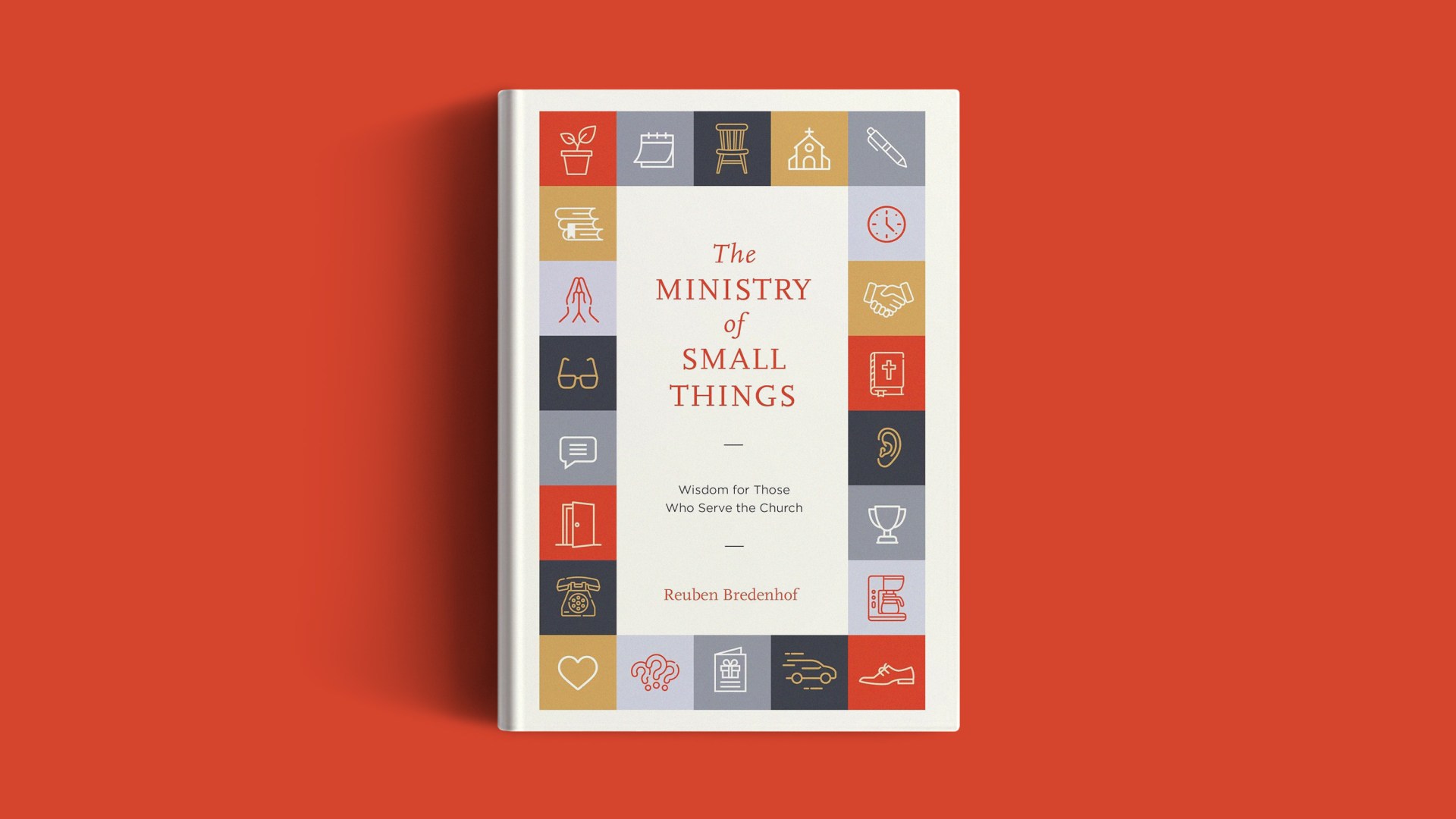
I watched the film as I was reading The Ministry of Small Things: Wisdom for Those Who Serve the Church. That scene shows us what this book invites pastors into. Rather than offering a vision of leadership built on platforms and influence, Reuben Bredenhof turns our attention to the small acts of faithfulness that are at the heart of pastoral ministry.
related

It is commendable for pastors to desire to “rise above the ordinary,” he writes, “but we don’t have to be notable or do notable things.” He adds, “In the pursuit of meaningful service for the Lord, we should remind ourselves that oftentimes the little things are the big things.” The late-night phone calls and hospital visits, the conversations that never make it into sermons or annual reports: These are the seemingly small things that end up being a big deal for the people we serve.
Like Father Jud on the phone, the book gently and compellingly insists that the core of ministry is found not in the fireworks but in the unremarkable, easily overlooked acts of presence through which God so often does his deepest work.
Bredenhof is professor of mission and ministry at Canadian Reformed Theological Seminary in Ontario. He previously pastored Reformed congregations in Canada and Australia. Both “hats”—professor and pastor—come through in this deceptively simple book that oozes with thoughtful and hard-won pastoral wisdom.
The Ministry of Small Things is an accessible and practical book on the art of pastoral ministry. It is composed of 30 short chapters, each of which is four to seven pages long. Every entry focuses on a different aspect of pastoral ministry, and all 30 have roughly the same flow. The chapters, with titles like “Just Show Up” and “Be Ready for Surprises,” each include a Bible verse that serves as a springboard. Bredenhof develops the themes through a combination of anecdotes and biblical reflection, ending each chapter with a question for further thought. Some entries resonated with me more than others did, but each offers a nugget of wisdom.
Bredenhof covers a lot of ground, but two key themes emerge. The first is the importance of presence. He writes, “In my eighteen years of being a pastor, I came to learn that a good portion of my work was a ministry of presence. God’s people need you to be there for them, literally.” Woven throughout the pages are example after example of how pastors can and should be present with their people in both joys and sorrows.
On the theme of presence, Bredenhof describes how important it is to be “the predictable pastor.” God’s people should come to expect their pastors to be there. They should know that pastors will visit in the hospital or at home. And, he adds, when pastors do visit, they should have clear and intentional plans to make the best use of the time while also remaining flexible enough to navigate the inevitable surprises.


Bredenhof is aware of the limitations of time, space, and capacity. A pastor can’t be in two places at once. His or her ability to be present really does depend on factors like the size of a congregation and the number of pastors on the church’s team.
The second clear theme in the book is the importance of the Scriptures for the work of a minister. Bredenhof believes the Bible is the bedrock of pastoral ministry. He writes, “This is what ministry is all about, bringing the Word of God to bear on the pressing matters of their heart.”
The book is full of stories showing how God’s Word can do the slow work of transformation. This is why Bredenhof makes the case that Scripture is the most powerful tool and resource for pastoral care. He writes, “No matter how compassionate or intelligent you may be, you cannot [yourself] feed the sheep of Christ effectively, much less tend to their spiritual heartaches and bruises. What you need—and what they need—is the unchanging truth of God’s Word.”
Bredenhof repeatedly encourages pastors to feast on God’s Word and feed God’s sheep with that same life-giving food. If pastors want to love and bless the people under their care, they must first know and love the Scriptures.
As I read this good little book, I’m not sure I discovered anything new about pastoral ministry. That is by no means a criticism or a weakness. Bredenhof’s aim is not originality. His goal is to offer encouraging, convicting, and compelling reminders of what really makes a good minister.
This book encouraged me as a pastor. Still, I want to highlight one weakness and one note for consideration.
The central weakness of the book relates to the author’s treatment of the Holy Spirit.
There is a common and wry criticism of certain corners of the evangelical tradition related to a pattern of downplaying the importance of the Holy Spirit in the Christian life. The criticism is that evangelicals often worship the Father, the Son, and the Holy Scriptures. I think that is an apt criticism of this book.
related


As a pastor, I affirm so much of what Bredenhof emphasizes in the book. What’s missing, however, is a clear and sustained emphasis on the role of the Holy Spirit in a pastor’s life. In addition to being present and relying on the Scriptures, good pastors also learn how to walk in step with the Holy Spirit as they shepherd God’s people.
For instance, Bredenhof urges pastors to branch out beyond bread-and-butter passages like Psalm 23 and Romans 8 when they encourage parishioners with God’s Word. Instead, pastors should try to share a word that speaks to each individual’s situation. He writes, “To speak a word ‘in season’ requires that we think carefully about the person we are going to visit. We should reflect on their circumstances and consider what might be a needed word from God.” Bredenhof acknowledges the ministry of the Holy Spirit in applying the word to the parishioner’s life but makes no mention of the Spirit in the pastor’s work of discernment. Asking the Holy Spirit for wisdom would certainly help!
Similarly, in his chapter “Ask the Questions You Don’t Want to Ask,” Bredenhof addresses the common situation where pastors feel they ought to press further and dig deeper in a conversation. He describes this intuition as a “gut feeling,” something that is “not quite the tingling of Spiderman’s ‘spidey-sense,’ but more like the prompting of a pastor’s ‘shepherd sense.’” As I read that, I thought, Why not just call this what it is, my brother? This is the voice of the Holy Spirit in our hearts and minds and bodies. Why not give it the right name so we can develop this attunement?
Perhaps, as I suspect, Bredenhof assumes the Holy Spirit is working in ministry. It is still a miss not to spell this out or develop it more fully.
To be fair, Bredenhof is not totally silent on the Holy Spirit. He sprinkles helpful mentions and commendations along the way. But in general, the ministry of the Holy Spirit came across more as seasoning used to add a little flavor than the meat and potatoes of pastoral ministry.
I initially chalked this up to the fact that Bredenhof writes from the perspective of a Reformed tradition that may not talk about the Holy Spirit the same way more charismatic traditions do. But then I read his postscript, in which he shares a key verse that has shaped his ministry from the beginning: “Not by might, nor by power, but by my Spirit, says the Lord of hosts” (Zech. 4:6, ESV). What he writes in the postscript makes clear that he believes the Holy Spirit is indeed what enables anyone to be a faithful and fruitful pastor. I wish he would have said more about the Spirit.
One last point of consideration: Bredenhof does not hide the fact that he wrote his book with men in mind. He doesn’t say it outright, but we can assume as much based on his exclusive use of male language (brothers, his, him, etc.). This is not surprising given that his branch of the Reformed tradition has only male pastors.
This review is not the place to debate women in church leadership, nor do I want this aspect of the author’s theology to detract from the value of the book. Bredenhof’s ideas can still be applied to female pastors.
Overall, The Ministry of Small Things offers a kind of pastoral theology in miniature, where the small things add up and the sum is greater than the parts.
Kevin Antlitz is an Anglican priest at a Pittsburgh church positively overflowing with kids. He and his wife have three children under ten, whom they pray will never know a day apart from Jesus.