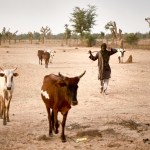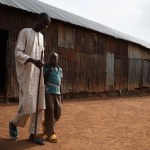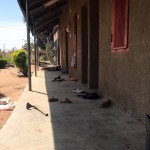
Raymond Na’allah said worshipers were dancing to praise songs and giving tithes on Sunday, January 18 when armed kidnappers surrounded Cherubim and Seraphim (C&S) Church 2 in the Kurmin Wali community in Kajuru Local Government Area, Kaduna State, northwestern Nigeria. Around 11 a.m., a female church member went outside to use the outhouse, saw the kidnappers, and ran back inside, shouting warnings. Worshipers rushed around in confusion, attempting to escape or find places to hide.
Na’allah said the kidnappers had swept through the area, first targeting two other churches in the village—the local Evangelical Church Winning All (ECWA) branch and C&S Church 2’s sister congregation, C&S Church 1—rounding up worshipers as they went. Na’allah’s church was the last stop before kidnappers—who didn’t bother to hide their faces—took their victims into the forest.
In the confusion, Na’allah managed to escape to a nearby house. He hid in the restroom, so the kidnappers didn’t find him. “Maybe because they had already taken so many people,” he said. He watched, agonized, as the young male kidnappers severely beat his neighbors and family members. He said the attackers took captives’ phones from them “probably … to discourage people from trying to escape.”
Kidnappers took 177 people, including 29 members of his family—his mother as well as siblings, nieces, and nephews. Then they contacted him and the other villagers through a representative and demanded 250 million naira (about $186,000 USD) and 20 motorcycles for the return of all hostages.
“Our hope is in God, because where will we see that amount of money?” Na’allah lamented.
At first, the state government and police denied the abductions happened, damaging the already-eroding trust in Nigerian leadership’s ability to address ongoing security challenges.
Kaduna state officials only retracted the denial after the Chikun/Kajuru Active Citizens Congress (CKACC) published the names of the 177 victims in a statement on January 21. The Kaduna governor Uba Sani then visited the area and assured residents that his government is “resolute in its determination to secure the safe and dignified return of all those taken from their homes.”
Then on January 25, kidnappers snatched six more victims, this time in the town of Maraban Kajuru.
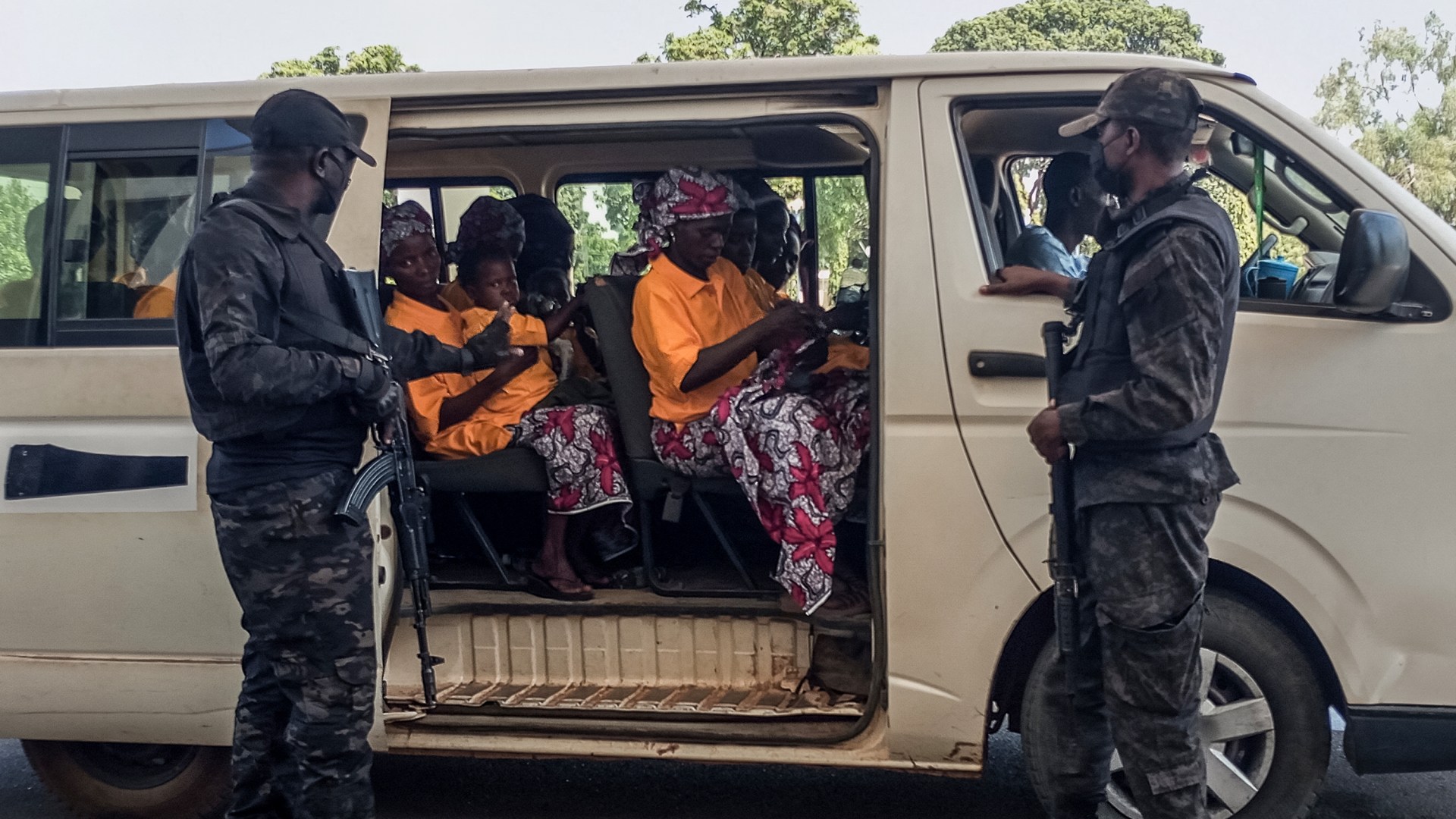
On February 2, the government announced that 80 of the 177 people initially listed as victims from Kurmin Wali had actually fled to neighboring villages to hide but had returned home, according to Reuters. Na’allah’s family members and others remained in captivity, but by February 5, the military secured their release.
Though Christian Association of Nigeria (CAN) leadership disagreed with some aspects of the government’s account—reporting that only 11 victims escaped while 166 had remained missing—it confirmed that the military helped free all abducted church members and no one had to pay a ransom.
The Maraban Kajuru victims remained unaccounted for by last report.
Individual and mass kidnappings have risen across Nigeria in recent years as jihadist groups and criminal gangs turn to abductions as a source of income, with Kaduna being among the worst-hit states. The rise of banditry in the Kajuru and Birnin-Gwari local government areas in Kaduna has intensified since 2016, partly fueled by high youth unemployment and vast savannah forests ideal for bandits’ hideouts. The Nigerian National Assembly passed a law in 2022 to make paying ransoms illegal, hoping to withhold incentives from kidnappers. Still, abductions have continued.
Christians in neighboring states suffer too. As CT covered in September, kidnappers in Kwara State refused to return a pastor to his family after receiving the agreed-upon ransom. He died of a health condition while waiting for his release. Parents in Niger State spent the days leading up to Christmas praying for the safe return of their children after a mass kidnapping at a Catholic school. Kidnappers returned the children after the government threatened to attack them.
The Nigerian government insisted this year it’s working with United States leadership to improve security and reduce violence in the country.
Enoch Kaura, the chairman of the CAN branch in Kajuru Local Government Area said the government knows about the chronic kidnappings and should live up to the responsibility of securing Nigerians’ lives and property. He believes the government should also include community members in the solutions, such as civilian-led intelligence gathering or joint civilian-security force patrols—measures already used in Borno State. “If the locals can defend themselves, I think these people cannot attack them anyhow again,” Kaura said.
As Christians struggle to trust official responses, they rely on prayer.
One Christian woman told CT the kidnappers took her brother and his wife in the Maraban Kajuru raid days after the church attacks. She heard about their abduction on social media then confirmed it by calling a sister-in-law. The kidnappers have now demanded 70 million naira ($52,000 USD) for her brother and sister-in-law’s safe return.
The local government chairman visited her and her parents, retirees aged 81 and 69, to commiserate with them and gather firsthand information about the abductions, but the woman said she hasn’t heard anything since. Waiting for news is painful: “We wake up hopeful, but it is difficult to sustain as the day grows.”
Her local CAN chapter has organized prayers for the release of kidnapping victims, she said. Because kidnappers are well-armed, villagers like her can’t mount a rescue—they must wait for the government to act or illegally pay ransoms in hopes of getting their loved ones returned.
“We don’t have power to change anything, but we so much believe in the One who has power to turn things around,” she said.
While many still wait, Raymond Na’allah no longer must. Na’allah recalled his days passed in a blur as he wondered how his family members were faring after being taken from Kurmin Wali. He told me his home village no longer feels safe, but he has nowhere to go.
When Na’allah heard the news of the release, he was staying with relatives in Kaduna’s state capital. He recalled that inwardly he wanted to shout and laugh, but he only smiled. Na’allah said he looked forward to returning home and reuniting with his relatives. He added that the governor assured them of adequate protection in the future.
“If government can keep to its promise of ensuring security, then maybe we can return to our farms,” he said.
Though Na’allah and his neighbors avoided paying a ransom this time, their resources are still depleted from the ongoing kidnapping crisis. Na’allah, a farmer, said he is struggling to survive off what remains of last year’s harvest. He sold much of his crop already to help community members raise ransom money for an earlier kidnapping.