With all the bad news around, here’s one piece of good news: A contender three years ago for the worst neighborhood in America has improved.
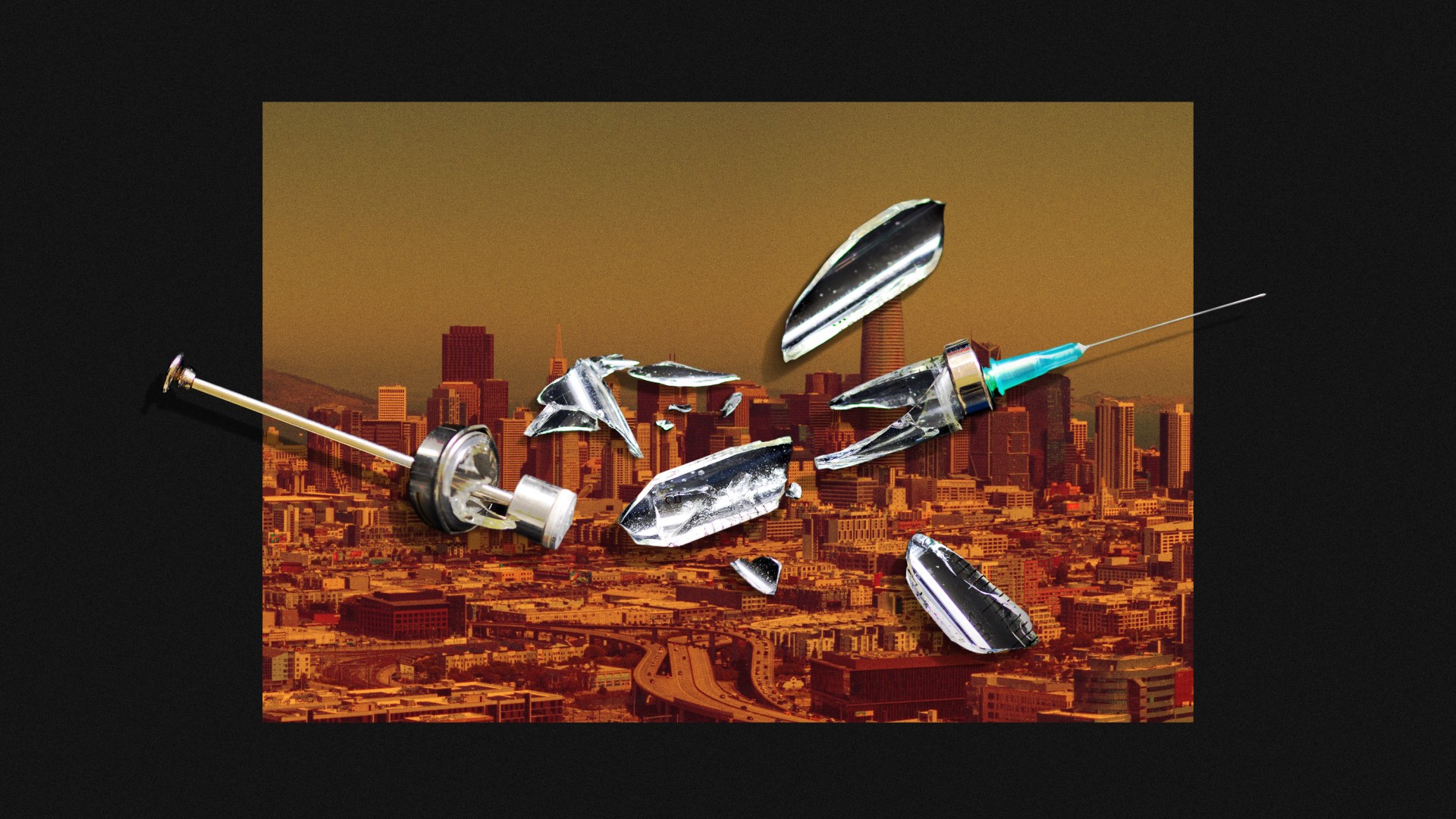
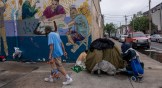
In 2023, San Francisco’s historic Tenderloin, an area just blocks from City Hall, sported homeless encampments with addicts openly inhaling fentanyl through straws. As I walked through the area during a visit that year, I had to navigate around catatonic users, their bodies and arms twisted in the “fentanyl fold,” a position they might hold for 20 minutes or more. Dealers tried to sell me drugs.
Many users were missing teeth. Some were missing pants. Two government-funded “harm reduction” workers came by pulling what looked like a Radio Flyer wagon, calling out in singsong, “Harm reduction! Need anything?”
It was bizarre. The purported harm reducers seemed like Good Humor ice cream sellers with circus music, except bearing gifts: foil, straws, glass pipes, clean needles, granola bars, bottles of water, and naloxone to counteract the overdoses they were enabling.
Last month, when I visited again, the Tenderloin was different. Although the results of the San Francisco January 29 PIT count (its biennial survey of homelessness) isn’t published yet, my January 25 Tenderloin count showed only a few dozen men on cardboard, particularly on Jones Street between Ellis and O’Farrell. Some blocks still displayed feces and dead mice but no restless sleepers. Six San Francisco police cars displayed their “Safety with Respect” slogan.
related
Homeless men were no longer in front of the bar at 501 Jones with its “Anti-Saloon League San Francisco Branch” sign—it was a speakeasy during the 1920s—or across the street in front of the Golden Gate Cannabis Co. Nor were any in front of Brenda’s French Soul Food on Polk, with its “Beware of Pickpockets and Loose Women” sign.
Caveat: Come spring, drug sellers and users might migrate back. But public tolerance of them fell in 2024 as even London Breed, then the ultraliberal mayor of San Francisco, declared that “this compassionate citymakes it too easy for people to be out there on the streets using drugs.” She said she was moving out of her “comfort zone” while “thinking about those who died for drug overdoses.”
The big move came last year when Daniel Lurie, a Jewish heir to the Levi Strauss fortune, viewed in San Francisco as a “moderate Democrat,” became mayor with 56 percent support in San Francisco’s ranked choice voting. His campaign pitch: “We’ve been too lax. We’ve been too laissez-faire. There are families, there are kids walking down these streets every day seeing people openly use—and, frankly, die.”
Lurie as mayor pushed forward a Fentanyl State of Emergency Ordinance that the city’s ruling Board of Supervisors approved 10–1. He ordered anyone city-paid not to distribute fentanyl paraphernalia: “We stopped freely handing out drug supplies and letting people kill themselves on our streets. It is not a basic right to use drugs openly in front of our kids.”
The Board of Supervisors said the city drug policy’s is “the cessation of illicit drug use and attainment of long-term Recovery from Substance Use Disorders.” Supervisor Matt Dorsey, a former drug user, spoke of “reversing years of perverse incentives that have done more to exacerbate problems than solve them.”
related

The end to “harm reduction” on the streets did not increase harm but did not lower deaths either: The numbers of fatal drug overdoses in 2024 and 2025 were similar. San Francisco voters have supported the new measures, with 58 percent passing a measure requiring drug screening for city welfare recipients and 64 percent voting for felony charges and increased sentences for possessing some drugs if a defendant has two prior drug convictions.
With support from the supervisors, Lurie also strengthened proof-of-residency requirements for homeless people who receive monthly city payments of $714 (for adults without children). His goal is to stop San Francisco from being a “drug tourism” destination and “magnet for the homeless.” (In better days, the Tenderloin—which in 2008 received a spot in the National Register of Historic Places—was instead a magnet for musicians: It had a famous jazz club, the Black Hawk, at which Dave Brubeck, Miles Davis, Thelonious Monk, and others recorded live albums.)
Lurie said his administration would “fundamentally transform The City’s health and homelessness response and break these cycles of homelessness, addiction, and government failure.” We’ll see: Mary Ellen Carroll, director of San Francisco’s Department of Emergency Management, equated the changes in homeless and addiction to a wildfire—“when we sort of contain an area and we see that there’s movement to others.”
One justification for the laissez-faire approach Lurie decried is “respect for personal autonomy.” Yet if we understand sanity as the capacity to think and act rationally, fentanyl users are insane. They don’t want to die, but the desire for another hit is strong enough to overwhelm sane behavior, even though the high might lower them into a grave. Instead of offering the tools for suicide, Christians and others should intervene to promote real harm reduction.
Three years ago, walking around the Tenderloin, I often saw notes like this one posted on lampposts: “Mimi—5’, 100 lbs.—we miss you terribly. Please call any family member. Please call [phone number].” I saw no such notes last month.