This piece was adapted from CT’s books newsletter. Subscribe here.

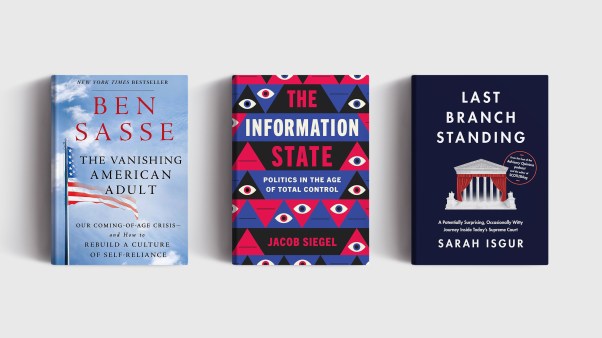
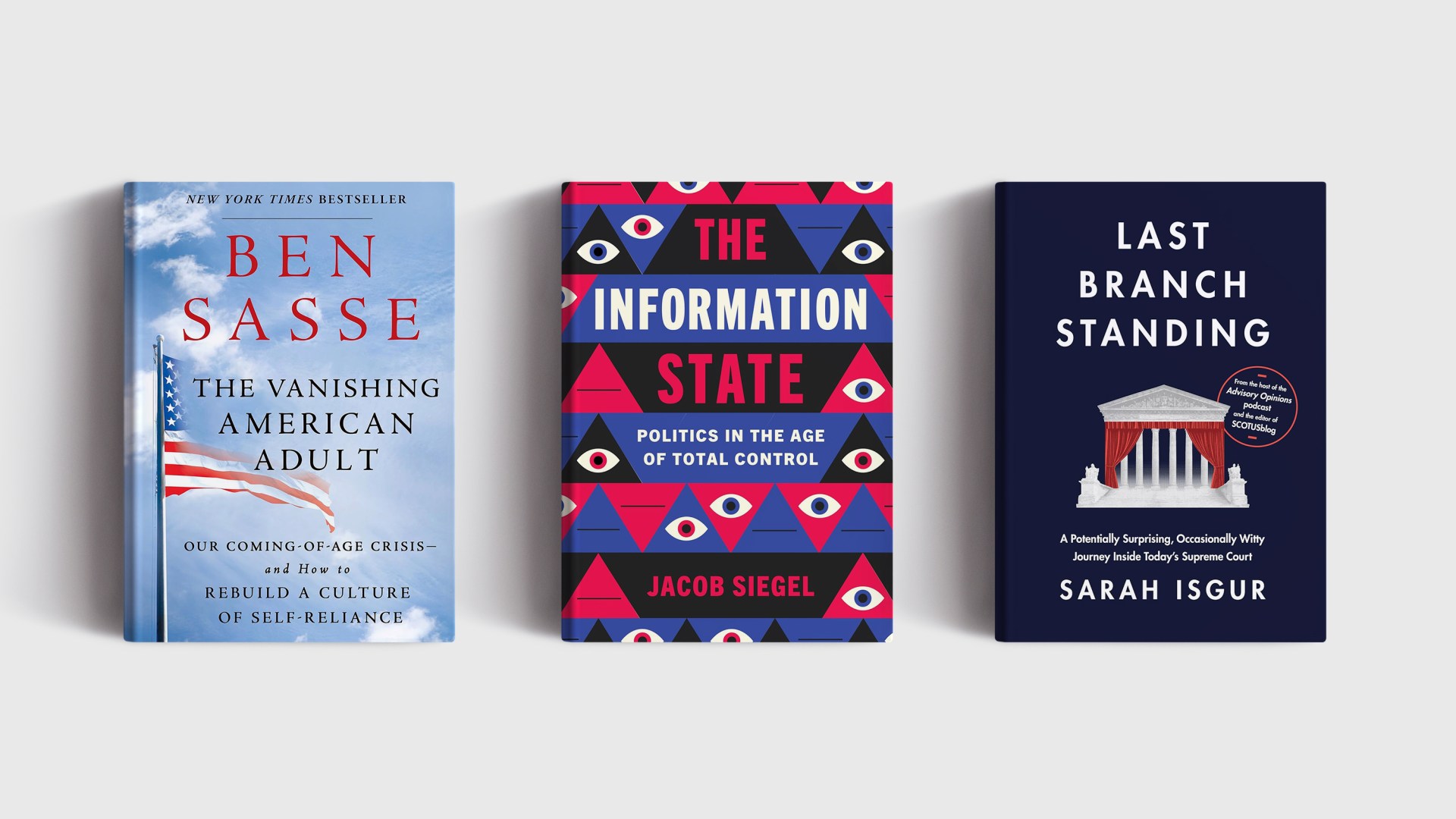
Sarah Isgur, Last Branch Standing: A Potentially Surprising, Occasionally Witty Journey Inside Today’s Supreme Court (Crown, 2026)
With a purported 6–3 conservative majority, why is it that the Supreme Court is taking on fewer cases and overturning fewer precedents? Why is the Trump administration more likely to lose than win its cases that reach the high court?
Sarah Isgur would love to tell you. Isgur, an editor at SCOTUSblog, has served in all three branches of government. Legal nerds will recognize her as host of The Dispatch’sflagship podcast, Advisory Opinions. (I overlapped with Isgur during my employment there.)
With the legislature mired in dysfunction and the executive branch making audacious power grabs, Isgur invites readers to better appreciate the Supreme Court’s role in preserving the rule of law. She acknowledges that the countermajoritarian institution is guaranteed to make all sides mad at some point or another, which is exactly what it has done. Currently, more Americans disapprove of the Court than approve of it.
But using her signature entertaining style to demystify both the high court and the justices who serve on it, Isgur mounts a defense of the court that is as credible as it is disarming. While an outspoken conservative herself, Isgur wants readers to take into account more than just the justices’ political dispositions and also measure their orientation to upholding institutions versus disrupting them. While pundits and partisans are quick to reach for a 6–3 split to explain the court’s ideological makeup, Isgur makes the case that it looks more like 3–3–3. That’s only one of many valuable insights in what I found to be an entertaining and informative read.

Jacob Siegel, The Information State: Politics in the Age of Total Control (Henry Holt and Co., 2026)
In his book debut, Tablet special features editor Jacob Siegelargues that modern society is in the grip of a surveillance state perpetuated by Big Tech, politicians, and a technocratic elite.
The boogeymen of Siegel’s work are primarily presidents (early on, Woodrow Wilson, and in the latter half of the book, Barack Obama), the national security complex (particularly the CIA), Silicon Valley tech companies (primarily Google), a technocratic elite (various figures), and the media (though there is little mention of the apparatus of right-wing press).
Under the guise of combating misinformation, this public–private partnership promotes sanctioned messages with the unquestioning devotion of religious zealots. Siegel cites examples of shifting public health messaging during the COVID-19 pandemic and social causes like Black Lives Matter. Those who run afoul of orthodoxy may find themselves the target of conspiracies themselves (like Donald Trump with Russiagate) or deplatformed. Meanwhile, the media suppressed damaging information on political allies.
Siegel raises legitimate questions about the reach of Silicon Valley giants, the actions of the national security apparatus, and the ability of the national press to hold experts and elites sufficiently accountable. But the book’s interesting premise undercuts its own effectiveness through selective and unbalanced anecdotes. It is largely silent on Republican errors while hypersensitive to Democratic abuses. Although Siegel decries the dangers of echo chambers, his work seems unlikely to make much headway outside its own.

Ben Sasse, The Vanishing American Adult: Our Coming-of-Age Crisis—and How to Rebuild a Culture of Self-Reliance (St. Martin’s Griffin, 2017)
When I was a cub reporter, one of my early assignments was to cover Supreme Court Justice Brett Kavanaugh’s confirmation hearing. Calling the hearing contentious is an understatement; the upshot of that assignment was that I rapidly became familiar with the judiciary committee. I still remember one rant from a wonky, young senator from Nebraska who concluded that really, Americans needed to watch more Schoolhouse Rock! That senator was Ben Sasse.
A few years later, Sasse would leave Congress to become president of the University of Florida. Today, having taken on the behemoths of politics and education, he’s now facing a different beast entirely: a diagnosis of metastasized, stage-four pancreatic cancer. It’s not often that politicians do hourlong interviews that I would universally recommend as worth your time, but Sasse’s recent interview with Sola Media on mortality is a must-watch.
After you’re done with the interview, you may be inclined to pick up one of his books. I recommend The Vanishing American Adult. In it, Sasse contends that there is a “coming-of-age crisis” among American youth. This generation of unprepared adults, he argues, poses a great threat to the health of the American experiment. The uptick in mental health diagnoses, entertainment media addictions, and vices like pornography and overconsumption are pervasive challenges. The last few years have shown his prescient thesis undersold these issues.
Some of his corrections to encourage the cultivation of virtue and discipline for children are out of reach for all but select families: Not everyone can send a 14-year-old to a cattle farm or take the family abroad for a month. But other remedies are actionable. Expose kids to hard work, to people older and wiser, and to excellent literature. Do what you can to cultivate virtue, and that sometimes includes learning to suffer well.
While his remedies for these ills are too modest to combat the scale of the problems, his current vivid example of enduring suffering shows that he has done what many politicians have not––to practice what he’s preached.
Harvest Prude is national political correspondent at Christianity Today.