This piece was adapted from CT’s books newsletter. Subscribe here.
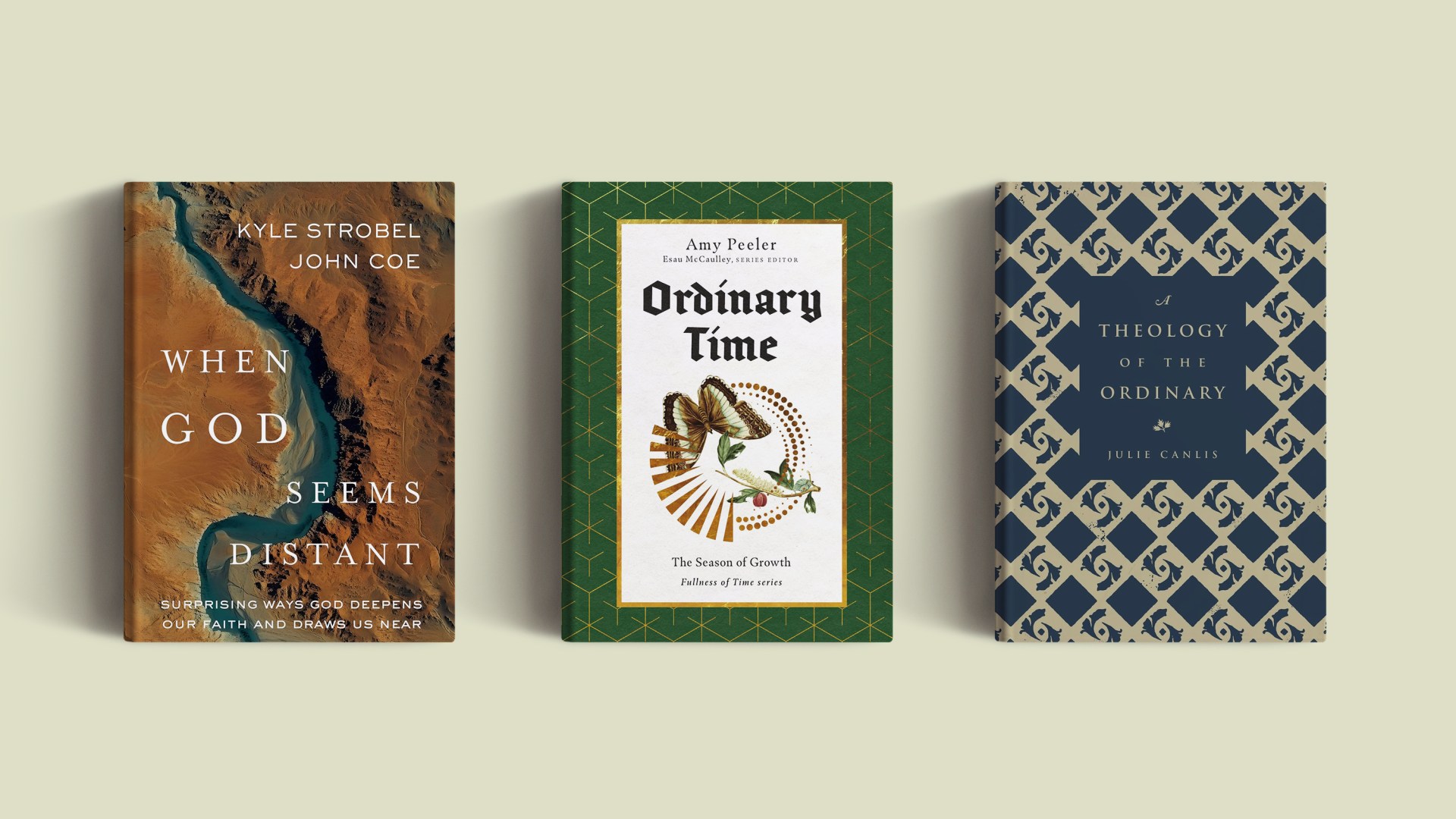
When God Seems Distant: Surprising Ways God Deepens Our Faith and Draws Us Near
Baker Books
224 pages
Kyle Strobel and John Coe, When God Seems Distant: Surprising Ways God Deepens Our Faith and Draws Us Near (Baker, 2026)
What do we do when it feels like spiritual life has stalled? During just such a season in my early 30s, I discovered a lecture by theologian John Coe. I was surprised to hear him describe the feeling of God’s distance as a gift, a chance to face the truth about my need for Christ. I wished for a book-length treatment to share with others.
Fifteen years later, I’m glad to report that it has arrived, cowritten with his colleague Kyle Strobel (see their earlier volume Where Prayer Becomes Real). This new volume reconnects with a neglected Protestant tradition that makes sense of spiritual dryness: a mind that wanders in prayer, boredom with the Bible, coldness in praise.
The authors argue that when spiritual practices stop providing excitement, they become mirrors, showing us our hearts. Mistaking emotional warmth as the mark of a healthy spiritual life, we go looking for a shot of adrenaline. But this search for feelings is a mark of immaturity! Newborn babies drink out of bottles, but for greater growth to occur, their parents must wean them. Likewise, God must give us experiences that are hard to chew for us to know him more deeply.
Unless we are willing to face the truth and journey with Christ into the brokenness, seeking better feelings may become a strategy to avoid God, leading us to miss the gift of the dry season.
Amy Peeler, Ordinary Time: The Season of Growth (InterVarsity, 2026)
Peeler’s Ordinary Time is the final book in InterVarsity Press’s Fullness of Time series, which views the seasons of the church year as an instrument for discipleship. Peeler writes as one who has lived and led others through the seasons, but as a “convert to liturgical worship,” she is an ideal guide for Christians less familiar with the church calendar.
Early in the book, she observes that over half the year is classified as “ordinary time,” which means it is neither a season of fasting (like Lent) nor one of feasting (like Eastertide). As such, ordinary time might feel like a season to rush through on the way to the “excitement and change” we crave. Yet this balance between seasons is a gift. “God does a radical thing,” she writes, “and then grants us time to reflect on it. If every day were radical, we could not take it in.”
Moving gently through the weeks of the calendar, Peeler pauses to reflect on the prescribed prayers, lectionary passages (like readings from Genesis), and celebrations (like Trinity Sunday, Christ the King Sunday). Each calendar season has a color, and Peeler notes that green is the color of ordinary time, reminding us that growth happens in the midst of everyday rhythms and common means of grace.
Julie Canlis, A Theology of the Ordinary (Godspeed, 2017)
Julie Canlis’s Theology of the Ordinary is short, but I have yet to find another book that contains so much depth for its page count. Drawn from a lecture series presented to undergraduate students, Canlis’s writing counters the “cultural obsession with greatness” that tilts spiritual formation toward supercharged emotions, radical discipleship, and measurable impact. Although these emphases can correct a faith “devoid of sacrifice or hope,” she wants to offer a theology of the ordinary that “will not undermine being passionate or sold-out but will ground and purify it.”
Canlis organizes her book in three movements: the blessing of the Father on ordinary life (creation), the inhabitation of the Son in ordinary life (redemption), and the work of the Spirit to shepherd our everyday lives toward their intended goal (new creation). Alongside this Trinitarian story, she describes three lesser “counter-stories” that stand in as substitutes. The “Gnostic Story” rejects God’s original blessing on creation. The “Docetic Story” seeks redemption apart from the humanity Jesus wants to heal. The “Platonic Story” places the spiritual life on a higher plane, splitting the ordinary from the extraordinary.
In the last decade, some of the cultural tilt toward exciting spirituality has leveled out, whether from weariness, cynicism, or recovery work found in popular books like Tish Harrison Warren’s Liturgy of the Ordinary or Douglas McKelvey’s Every Moment Holy. Yet we always need the call to offer our everyday, “walking-around life,” (Rom. 12:1, MSG) to the God who remains faithful in every season. Indeed, these books testify that what feels like nothing is often the ordinary work of God.
Justin Ariel Bailey is a professor of theology at Dordt University. He is the author of Interpreting Your World: Five Lenses for Engaging Theology and Culture.