


In 2019, the United Methodist Church (UMC) approved an exit plan for congregations that chose to disaffiliate from the denomination over its stance on sexuality and same-sex relationships. The subsequent schism led to the loss of 25 percent of its US congregations and the founding of the Global Methodist Church (GMC). Methodist churches that changed their affiliation to the GMC or other denominations have had to reestablish their congregational identities, and in some cases, purchase new hymnals.
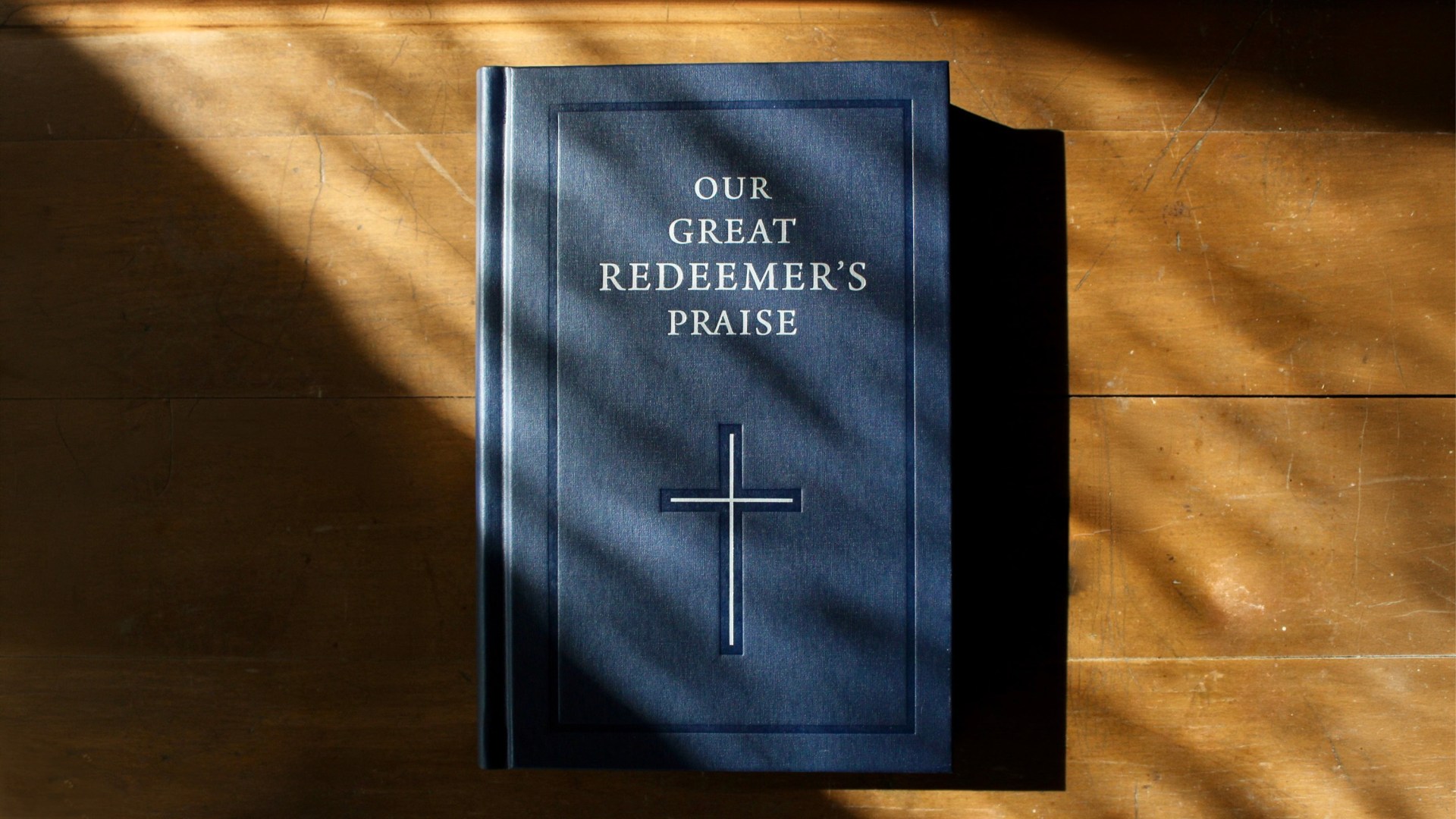
Some UMC jurisdictions have directed disaffiliated churches to stop using UMC hymnals. While the UMC doesn’t seem to be enforcing that mandate, many of these churches are eager to find a new hymnal that preserves their Wesleyan roots and allows them to continue singing the songs of their tradition. One resource they are turning to in large numbers is the new ecumenical Wesleyan hymnal, Our Great Redeemer’s Praise.
“In some cases, churches were forced to get a new hymnal,” said Powers, associate professor of worship at Asbury Theological Seminary and one of the collection’s editors. “But a new hymnal also helps solidify a new identity.”
Our Great Redeemer’s Praise is the first new print edition of an ecumenical Wesleyan hymnal in over 30 years. It is a production of Seedbed, a Wesleyan ministry resource publisher started by Asbury Seminary, which began developing the project in 2019. Copies of the book are now in the pews and seatbacks of churches in a variety of denominations that have roots in the Wesleyan tradition. Published in 2022, the hymnal has now been through five print runs.
“Interest has far exceeded our expectations,” said Andrew Miller, director of publishing for Seedbed. “Hymnody isn’t dead.”
The majority of churches purchasing Our Great Redeemer’s Praise have left the UMC and joined the GMC. But churches across denominations are purchasing the hymnal; in the United States, the Wesleyan tradition encompasses Methodist denominations as well as the Church of the Nazarene and the Salvation Army. According to Seedbed, some nondenominational churches have purchased the hymnal as well, and individual consumers are purchasing copies for devotional use.
Matt O’Reilly, lead pastor at Christ Church Birmingham in Alabama (which disaffiliated from the UMC in 2022 and is now part of the GMC), said that the decision to purchase Our Great Redeemer’s Praise for the church was driven in part by the disaffiliation, but also by the community’s commitment to hymnody. Christ Church has a traditional service and a contemporary service every Sunday morning; the traditional service usually sees more attendees (and is growing).
“In the Wesleyan tradition, hymn collections are major theological resources,” O’Reilly said. “In the early days, Methodists weren’t writing systematic theologies; they were writing sermon collections and hymn collections.”
O’Reilly also said the new hymnal is supporting his church’s move away from screen dependency and toward more tactile, embodied practices in musical worship. “I think the church needs to be ahead of the curve in providing embodied experiences,” he said. “These days, when everything is digital, it’s not bad for us to have a book in hand.”
Seedbed and Asbury Seminary aren’t officially affiliated with either the UMC or the GMC, and Powers said the hymnal is intended for use by any Wesleyan church or community looking for an updated collection of congregational music.
“The Methodist movement was about singing the faith,” the hymnal’s general editor Jonathan Powers told CT. “And hymnals are an important part of that tradition.”
In the late 18th century, John and Charles Wesley’s Methodist movement was the catalyst for the widespread production and use of hymnals in England. The first Wesleyan hymnal, printed in 1780, bore the title A Collection of Hymns for the Use of the People Called Methodists. Understandably, it became more commonly known simply as “the large hymnal.” The first hymn in that first edition was “O, for a Thousand Tongues to Sing”—all 18 verses of it.
The Wesleys, both Anglican ministers, led a revivalist movement within the church, and hymn-singing societies cropped up as followers began seeking opportunities to sing their faith in community, outside of formal liturgical services.
These societies throughout England helped fertilize an industry, creating demand for more printed hymnals. Methodists, as the Wesleys’ followers came to be known, purchased hymnals for personal use, carrying them to and from society gatherings where they sang verses written by Charles Wesley (a prolific writer who constructed metered verses as a devotional practice) set to preexisting hymn tunes. Many of Charles Wesley’s hymns, such as “Christ the Lord is Risen Today” and “Jesus, Lover of My Soul,” have become beloved congregational songs across denominations in and outside of the Methodist tradition.
“We don’t want to serve just one denomination and tradition. We want [the hymnal] to be Wesleyan,” said Powers.
To that end, Powers and his team surveyed leaders from churches across Wesleyan denominations, asking which hymns they considered significant to their history and identity and which ones ought to be left behind.
Powers said respondents suggested omitting patriotic songs such as “America the Beautiful,” which he and the editorial team decided to follow.
“Someone didn’t want ‘In Christ Alone’ to be included because of its Reformed theology and mention of ‘the wrath of God,’” Powers said. “We worked through that. It’s easy to forget that one of the first questions John Wesley would ask those who wanted to join his society was ‘Do you desire to flee the wrath to come?’”
The success of Our Great Redeemer’s Praise, the Gettys’ recent Sing! hymnal,and other recently released boutique printed hymnals suggest that interest in singing from books might be growing in the US. Churches and individuals are buying new hymnals.
“It’s amazing to me that people are hungry for the hard-copy hymnal again. This isn’t a tradition that’s passing away,” said Julie Tennent, managing editor of Our Great Redeemer’s Praise. “When I would visit churches and start talking about the project, people’s eyes would light up.”
There is a wealth of historic hymnody in the Wesleyan tradition, some of which hasn’t been reproduced in recent Wesleyan and Methodist hymnals. Our Great Redeemer’s Praise includes exactly 100 hymns written by Charles Wesley. Powers said that previous volumes have generally included 40 or so.
“We have more of Welsey’s voice in there,” Powers said. “There is a lot of great music that has been forgotten or lost.”
Powers mentioned the hymn “Love Divine, All Loves Excelling” as an example of one that hasn’t received the modern attention or reinvention of songs like “Amazing Grace” or “Come Thou Fount” but merits not just preservation but reintroduction to the church.
“This is a canon of songs that represents who we are, and what we want to pass down to the church,” he said.
That canon doesn’t just preserve the old; it also contains songs that impacted the church at the time of its compilation. Our Great Redeemer’s Praise does start with the traditional “O for a Thousand Tongues to Sing,” but it ends with “The Blessing,” a contemporary worship anthem that became globally popular during the pandemic.
“Ending with ‘The Blessing’ felt like an important way to capture a moment in time,” Powers said. “The hymnal is thoroughly what we are now, and where we’ve come from.”