A pastor in a remote village in India’s largest state of Uttar Pradesh remembers the Sunday in March 2023 when persecution became real to him. He was leading a group of 13 people in worship as they sat cross-legged on a mat covering the cement floor in his home. In time with the music, he shook a tambourine while parishioners clapped loudly.
Suddenly, about 20 men dressed in saffron entered the small room shouting, “Jai Shree Ram! (Hail the Lord Ram).” They dragged the pastor by his collar out the door as they beat him. Police quietly waited outside as the mob chased out the worshipers. Soon after, authorities booked the pastor under Uttar Pradesh’s anticonversion law, claiming he was forcibly converting Hindus. CT agreed not to use his real name or identifying information, as he fears reprisals for speaking out.
After nearly three years and multiple court hearings, he secured bail under stringent conditions. Charges against him are still pending, even as a Christian relief organization aids him in his legal battle. He is currently stuck in a limbo, neither cleared of the case nor convicted of any wrongdoing. Since he is on bail and charges against him are still being heard, he is cautious about divulging specific information.
Until that fateful morning, violence against Christians seemed distant to the pastor, something that he would read in the news involving big churches. “I never imagined they would find us,” he said. “We were just worshiping quietly in a remote village in our own home.”
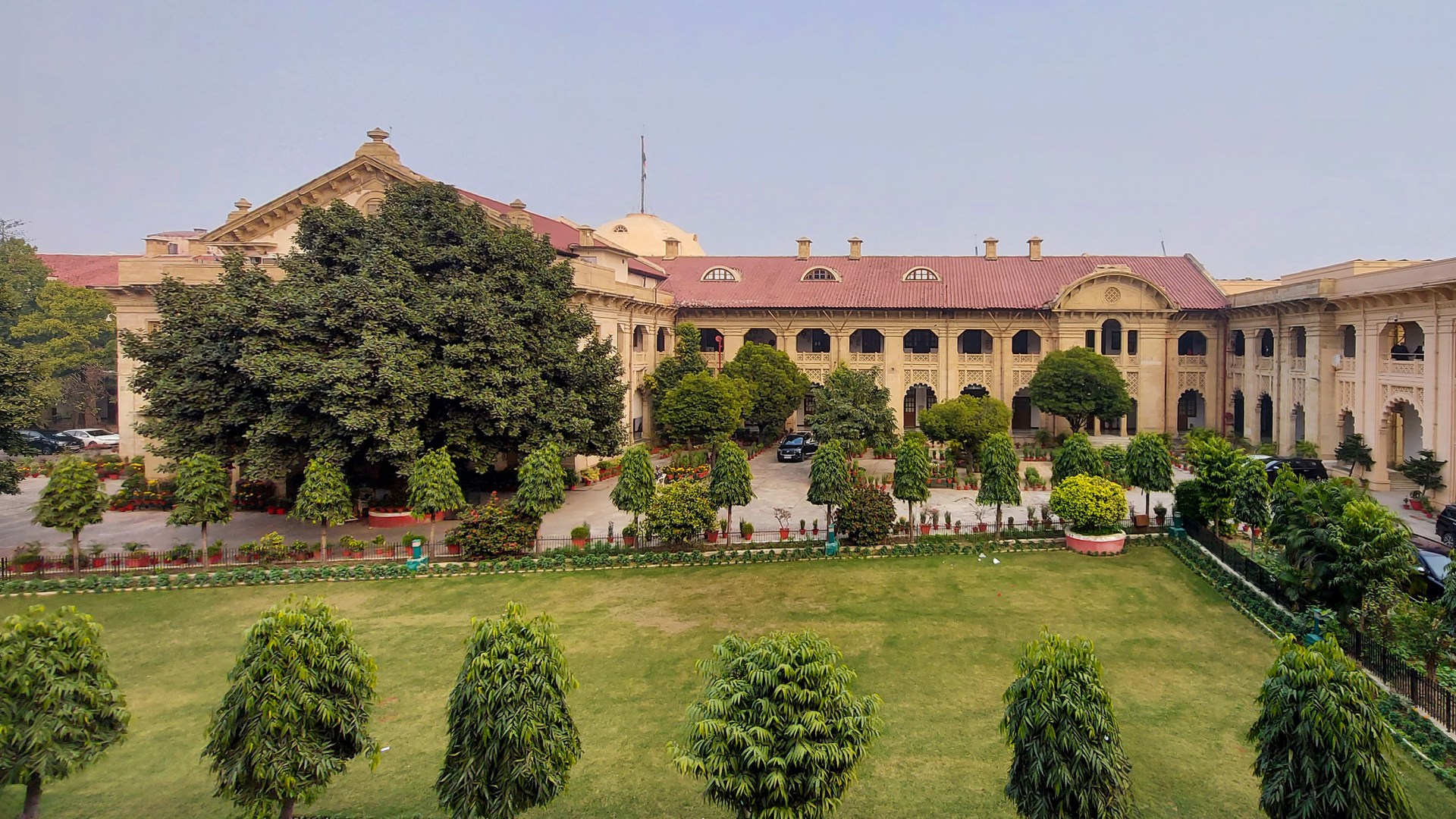
Last month, the Allahabad high court, which has jurisdiction over Uttar Pradesh, ruled in a separate case that prayer meetings held on private property do not require any prior permission. The ruling has encouraged the pastor as well as other Christians arrested for house church gatherings.
The high court invoked Article 25 of the Indian Constitution, affirming that freedom of religion is a fundamental right and religious prayer meetings within one’s own private premises are not unlawful.
The ruling is significant given that the number of violent incidents against Christians in Uttar Pradesh has ranged from 100 to 300 in the past five years, according to the United Christian Forum (UCF). Since 2014, when the Hindu nationalist Bharatiya Janata Party (BJP) came to power across the country, Uttar Pradesh has recorded a total of 1,317 incidents, much higher than any other state in India. The real figures could be even higher, as the UCF’s data is based on self-reporting by the victims of persecution.
“Most attacks are meant to halt the spontaneous and organic growth of Christian faith happening through house churches,” said A. C. Michael, the national coordinator of UCF.
Some hailed the verdict as a landmark development. Others described it as “a warning against arbitrary police action.” A few reacted with more cautious optimism, stressing that reining in vigilante groups and enforcing the court’s order remain a challenge.
Yet it doesn’t assuage Christians’ main concern: the government’s abuse of anticonversion laws. “I see Christians celebrating the high court verdict, but the elephant in the room is unconstitutional anticonversion laws,” said a Christian lawyer who practices in the Allahabad high court who asked not to be named for security reasons.
In the same week as the Allahabad ruling, the Supreme Court of India issued notices to the central government and 12 states, including Uttar Pradesh, asking for their response to a petition by the National Council of Churches alleging that anticonversion laws violated Christians’ fundamental rights. The development signals a potential constitutional review of the laws. Of the 12 states where these laws are operational, nine are governed by the BJP.
Called the “Freedom of Religion Act” in most states, the anticonversion laws criminalize any form of religious conversion away from Hinduism. Central to these laws are underlying assumptions that conversion to non-Hindu religions is forced and individuals can never accept another faith voluntarily. As a result, the words converted or conversion in India now have pejorative connotations.
Broad and vague language in the acts, such as forced conversion, fraud, and allurement has emboldened Hindu nationalist groups to accuse any gathering of Christians as breaking the law and led police to make arbitrary arrests.
These laws mandate that individuals who want to change their faith must submit a preconversion declaration to local authorities 60 days prior. Police then look into the reason and circumstances leading up to the conversion. Post conversion, the individuals must submit a secondary declaration to formalize their new faith with the state authorities.
These laws reverse the burden of proof, requiring the accused to prove that the conversion was not fraudulent or forced. Anyone can initiate police action over a conversation.
“The Acts which are in challenge, they are structured in such a manner that it incentivizes certain vigilante groups to take action, because there are rewards out there,” argued Meenakshi Arora, the lead lawyer for petitioners challenging these laws in the Supreme Court. In some instances, Hindu nationalists have even offered bounties for killing Christians. “So even if there is really no case at all,” she said, “someone will make a case, somebody will be arrested, etc., because there is a reward for those on the vigilante side.”
Since the offenses are considered criminal, police can make arrests without a warrant and obtaining bail is extremely difficult. Convictions can result in jail terms ranging from one year to life imprisonment, along with hefty fines.
For instance, the state of Rajasthan enacted the most stringent anticonversion law, punishing offenders with life imprisonment for mass conversion (when two or more people are converted) and fines up to 10 million Indian rupees (about $100,000 USD). Penalties are harsher when the people converted are women, minors, or members from marginalized communities, such as Dalits and Adivasis (Indigenous people).
Yet conviction rates are extremely low. This supports the claim made by Christian leaders that these laws are merely instruments of intimidation meant to disrupt religious activities and prolong the legal battle for the accused. Between November 2020 and July 31, 2024, only four out of 835 conversion cases registered in Uttar Pradesh ended in a conviction. Still, police in the state made 1,682 arrests on charges of unlawful conversion.
In several states, anticonversion laws now shape ordinary Christian life. Pastors organize prayer meetings knowing that it could lead to detention. Social workers live in the shadow of fear, hoping their acts of service are not misread as an inducement to convert someone. Even Christian prayers at birthday parties can lead to arrests, police action, and criminal charges.
Amid the persecution, new converts continue to embrace the Christian faith and find strength in the communities forged through house churches, according to local pastors.
“There is real fear among Christians,” said Vijayesh Lal, general secretary of the Evangelical Fellowship of India. “Yet faith continues. Churches continue. Our posture as Christians is not adversarial. It is constitutional. We seek neither privilege nor exception, only equal protection under the law.”