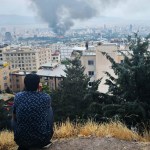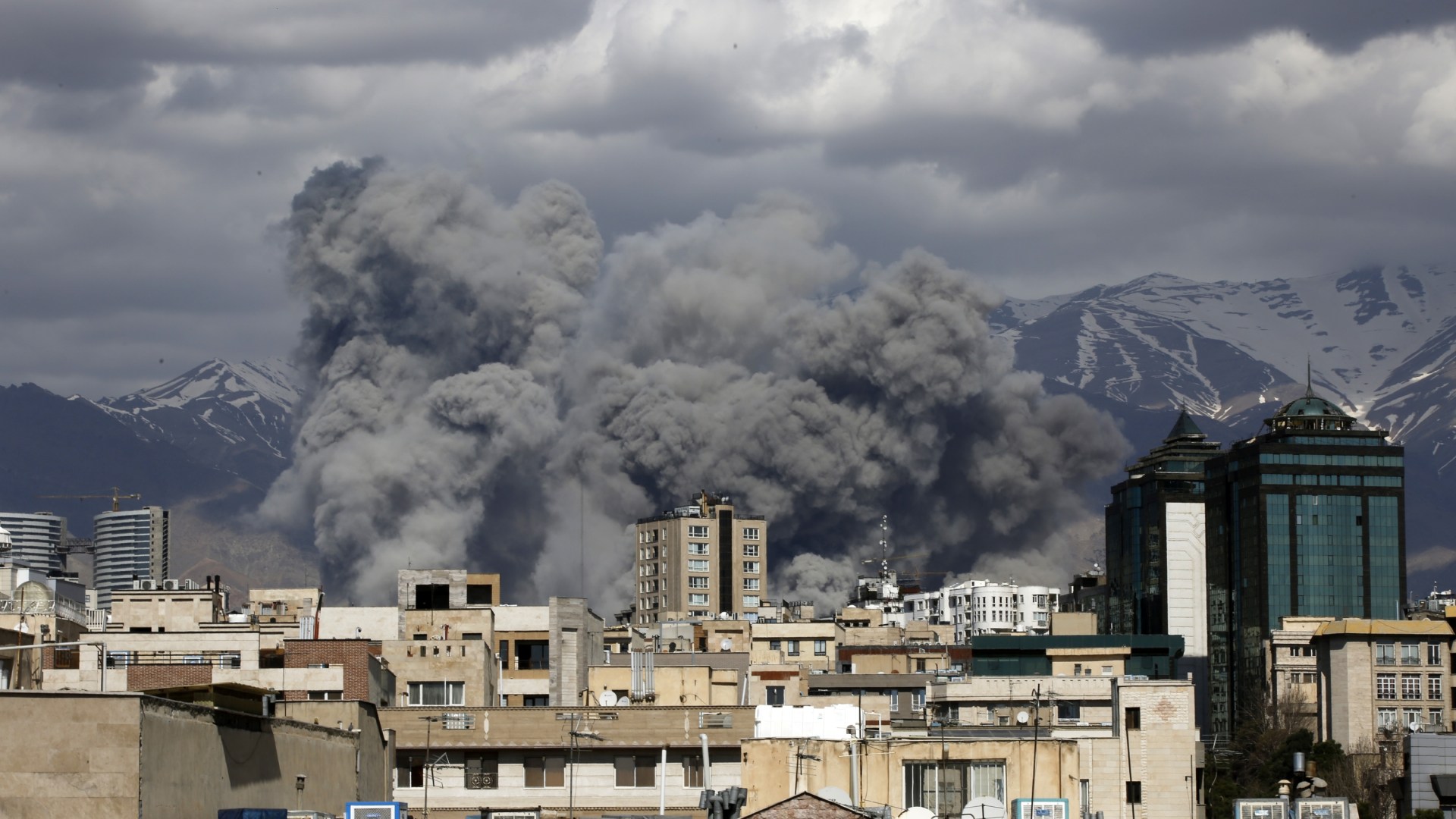
The United States and Israel launched a major coordinated campaign against Iran Saturday, killing Iranian supreme leader Ayatollah Ali Khamenei and striking more than a thousand targets across the country, according to the US military.
Since then, diaspora Iranian Christian ministries have struggled to connect with the church in Iran. Mansour Borji, director of the London-based Iranian religious freedom advocacy organization Article 18, has received only a few messages from Christians in the country due to the near-total internet blackout.
Most of the messages that did get through celebrated the news of the attacks and the “anticipation of an end to the tyranny,” Borji said. Other messages expressed concerned about the days ahead. “Some fear the United States may try to reach a deal and extend the life of a ‘wounded wolf,’” he said.
Meanwhile, Hormoz Shariat, founder of Iran Alive Ministries, struggled to get Christian programming into the country. Since Thursday, two days before the war began, Iranian authorities have blocked satellite television channels and restricted internet access. Shariat noted that his ministry had recently seen a surge of Iranians coming to faith in Christ.
“They do not want people to be influenced, informed, and led by outside influencers,” Shariat said.
He is concerned the communication blackout might isolate Iranians in their homes and prevent them from uniting because they have no way to connect or obtain news updates. It’s part of the government’s plan to “feed them lies and control them with fear, confusion, and isolation,” he said.
Following the US-Israel joint attack, Iran retaliated with drones and waves of ballistic missiles directed at Israel and US military bases in the region.
Iran fired at nearby Arab countries as well, and debris from missile intercepts rained down in countries including Qatar, Jordan, Kuwait, Saudi Arabia, and the United Arab Emirates, where a hotel caught fire in Dubai’s Palm Jumeirah district. Seven countries across the Middle East, including Israel, closed their airspace.
Three US service members were killed in the operation, according to US Central Command. Iran’s state broadcaster reported 201 dead, citing the Iranian Red Crescent Society. The figure could not be independently verified.
President Donald Trump urged Iranians to seek shelter and later rise up to take over their government, describing this moment as likely their “only chance for generations.” Roughly 14 hours after the operation began, Trump announced the death of Khamenei, who was 86 and had ruled since 1989.
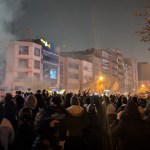
Many Iranians—both in the country and overseas—celebrated. In London, Jews and Iranians in the diaspora celebrated together.
“Khamenei, one of the most evil people in History, is dead,” Trump posted on Truth Social. Israeli and US intelligence agencies identified a rare opportunity to attack senior political and military leaders gathering for three meetings and launched a surprise daylight attack, according to The Wall Street Journal. Israeli prime minister Benjamin Netanyahu said dozens of senior Iranians officials died in the strikes.
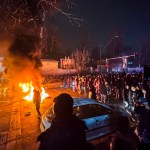
Days after Tehran massacred tens of thousands of protesters on January 8–9, Trump posted on social media that help was on its way. For weeks afterward, Iranians watched the buildup of US military assets in the region, wondering if Trump would strike the Islamic regime in Tehran.
After negotiations between Washington and Tehran failed to produce a nuclear deal Friday, the United States and Israel launched their assault.
Trump cited a litany of terror operations committed by the regime as justification, including the 1979 American hostage crisis, the 1983 US Marine barracks bombing in Beirut, attacks on US forces and vessels in the Middle East, Iran’s nuclear weapons program, and the funding of terrorist proxy groups, including Hamas.
Democrats and a few Republicans, including Rep. Thomas Massie of Kentucky, opposed the strikes because Trump acted without the approval of Congress and a plan for what comes next. Many fear a protracted conflict like the US involvement in Iraq. Next week, Congress plans to vote on measures to rein in Trump’s power to wage war against Iran, seen as a referendum on the conflict.
“Congressional debate and authorization is important to define the scope and objectives of the war for our military,” Massie said. “We owe this to our soldiers.”
After the strike, many Iranians gained a newfound hope. “Those being treated secretly at home for bullet wounds they received during protests are hopeful that their ordeal may be over soon,” said Borji. Many injured protesters had been afraid to seek medical help at hospitals.
According to multiple Christian ministry leaders, Iranians—including many Christians—have been advocating for a regime change and calling for a targeted strike on the Islamic government. Calls for the return of the former shah’s son, Reza Pahlavi, have grown.
Meanwhile in Israel, Elisha Lazarus—a Messianic Jew and reservist in the Israel Defense Forces (IDF)—was off-duty and checking on his parents when the war began.
Like millions of Israelis, Lazarus and his family moved in and out of their bomb shelter multiple times over the weekend. An Iranian ballistic missile evaded Israel’s defense system on Sunday, striking a synagogue and nearby shelter, killing at least nine people.
Khamenei had repeatedly threatened to destroy Israel. “It’s so easy to just let fear come in and let it take you over, but as a soldier who believes in Yeshua, I’m out here, and I have peace, even in this uncertainty,” said Lazarus, who serves in Israel’s Iron Dome defense unit.
Lazarus returns to his base on Thursday and anticipates long days and nights ahead. The military call-ups, he said, are often hard on mothers caring for young children. Lazarus has a 7-year-old daughter, and his commander’s wife is pregnant with her family’s fourth child. Some of the religious soldiers he serves alongside have as many as seven children. “I think the wives carry this country the most,” Lazarus said.
He praised Israel’s defense systems but said his ultimate confidence lies elsewhere. “I hold on to Psalm 9—God is my refuge and my fortress—and I stand on that promise as I’m sure millions have been standing on that promise for centuries,” he said.
David Zadok, pastor of Grace and Truth Congregation in Kanot, Israel, said he moved his Saturday-morning worship service online. After opening with Psalm 91, he cut his sermon short due to incoming rockets that forced him and his congregants to hurry to bomb shelters. Later, he drove his son back to his military base as part of a massive reserve mobilization.
“The three countries that I have loved most and lived most of my life [in] are in a war with each other,” said the pastor, who lived in Iran with his aunt and uncle from the ages of 3 to 16. Zadok’s relatives, fearing his safety as an Israeli Jew, sent him to California several months before revolutionaries toppled Iran’s secular monarch and established an Islamic republic in 1979.
Zadok completed high school in the United States and attended San Diego State University, where he became a Christian through the campus ministry The Navigators. After graduation, he moved to Israel for his mandatory military service.
Zadok served in the IDF for nearly two decades. “In most countries, there are two or four seasons,” he said. “In Israel, we have three: winter, summer, and war.”
He prays for regime change and increased freedom for the people of Iran but feels some reservation about what that could mean for the country’s growing Christian church—which numbers about 1 million people, according to some estimates. “History teaches us that when prosperity and too much freedom comes, people have a tendency to get away from the church, from the faith, and from God,” Zadok said.
Tymahz Toumadje, policy analyst for the National Union for Democracy in Iran, told CT that Iranian Christians have long suffered under the Islamic republic. A December report by his organization said Iran’s Ministry of Intelligence labels Christian converts as “Zionist missionaries” and claims to have arrested 53 converts after the June war on trumped-up charges of accumulating weapons.
“Even as Iran’s underground church is widely regarded as one of the fastest-growing Christian movements in the world, hundreds of thousands have been forced to live in secret, fearing persecution while praying for the day they can openly and freely live out their faith,” Toumadje said.
As strikes weaken the regime in Tehran, he believes a free Iran will “pave the way for an even greater blossoming of Christianity in the country than we’ve seen in recent years.”
In the meantime, Shariat asked the global church to pray. “Please pray that fear and confusion will not control the hearts and the minds of the Iranian Christians in Iran,” he said, “that they will be led by God’s love and empowered by the Holy Spirit to boldly share the gospel and lead tens of thousands of souls to Christ.”
Related