





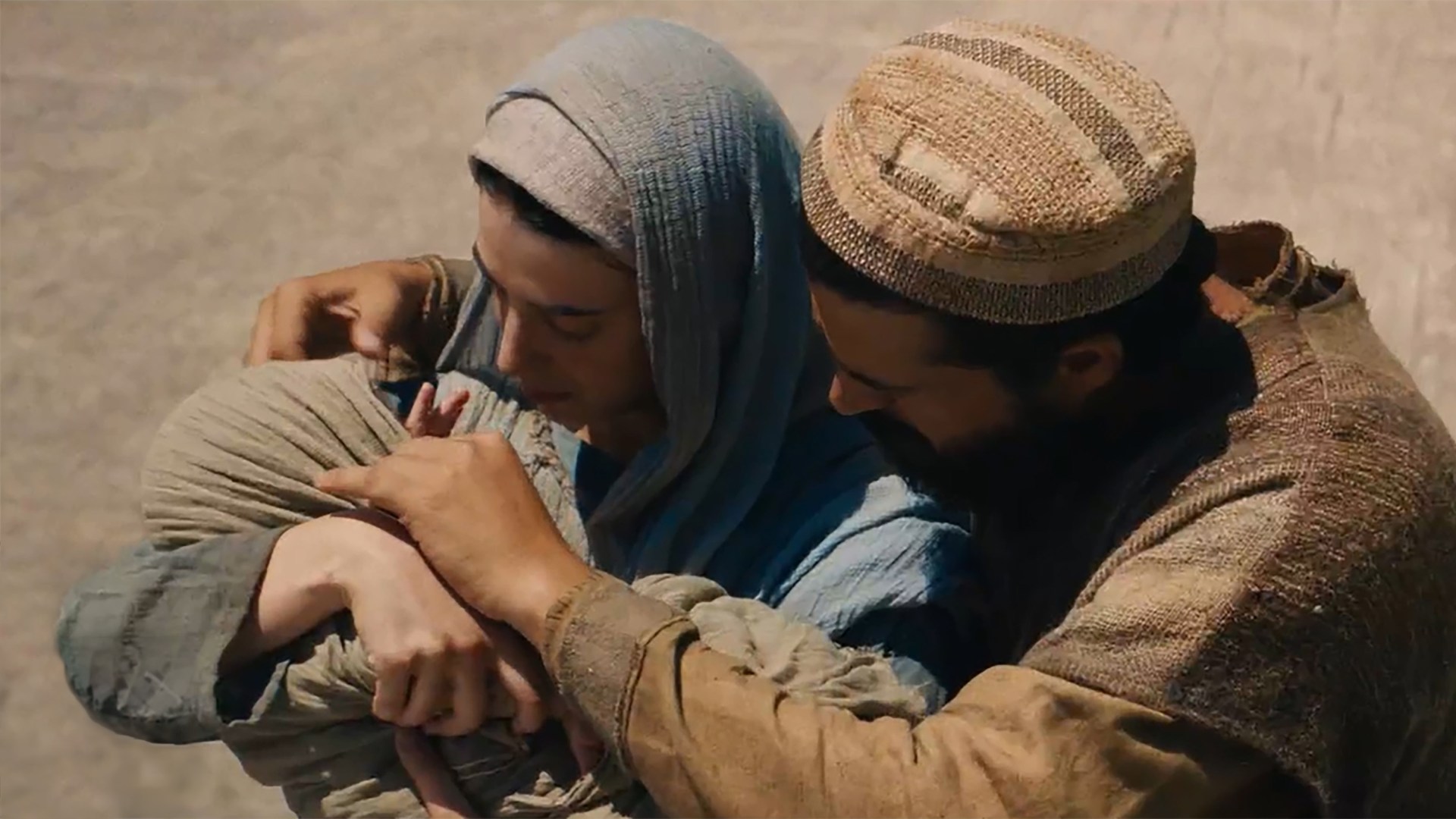
Elizabeth Barrett Browning’s “The Virgin Mary to the Child Jesus” (1838), published at the beginning of her poetic career for a believing Victorian audience, is an attempt to imagine the difficulty of settling on nomenclature for the Son of the Most High when he currently lies in your lap, immobile and vulnerable.
“Holy One,” “Lord,” “saving One,” “Incorruptible,” “Christ,” “Jesus,” “darling,” and “Son” all vie for primacy as Mary gazes at the sleeping infant. She must somehow play the roles of nurse, guardian, and teacher to her future Savior, navigating a tension between awe and protection of one who will depend on her for years to come. Though her height as an adult means she will look down on the child for roughly half his life, she positions herself as his lowly inferior. And when she remembers Isaiah’s prophecy that her son will one day be “despised and rejected” by society (Isa. 53:3), she anticipates falling dead on the spot: I “could not live—and see.”
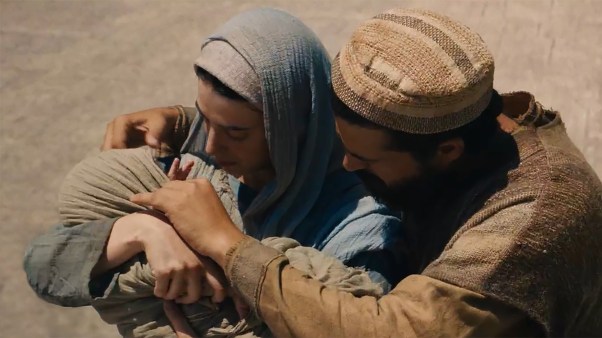
With “Mary,” a new episode of Martin Scorsese Presents: The Saints that will air before Easter, the renowned filmmaker tackles the same subject toward the tail end of his own career, for a decidedly secular age.
The avuncular voice of Martin Scorsese opens the episode by explaining the immaculate conception, a key Marian dogma codified for Catholics by the papal encyclical “Ineffabilis Deus” (1854) which declared Mary “ever absolutely free of all stain of sin, all fair and perfect.” The notion that Mary was free from all taint of original sin, language that recurs over ten times in the encyclical, means for many that Mary never sinned. This idea the Scorsese directly refutes, humanizing Mary through camerawork and dialogue that underscores her vulnerability and imperfection.
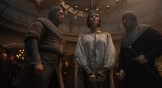
Midway through this latest entry, Joseph asks his son and apprentice carpenter, “How will you know that the angle is true?” Jesus throws the bob of a plumb line over his latest project to demonstrate, then the camera cuts from a close-up to a long shot that centers the two in their woodshop. This slightly low-angle shot “looks up” at Jesus from the same height as the seated Mary, whose hidden presence behind a corner Jesus will sense moments later.
Filmmakers customarily capture an actor from a lower angle to empower the subject, forcing the viewer to look up at someone who wields greater authority than the character whom a high-angle shot asks us to look down on. In this case, high-angle shots of Mary alternate with low-angle shots of Jesus, establishing a disequilibrium that may surprise those expecting hagiographic veneration of Mary from the famously Catholic executive producer, host, and narrator. In this series, the “true angle” in any scene containing Jesus is that which grants him more agency—more implicit power—than anyone else, even his mother.
Many a painter’s imagination has placed Gabriel at a similar or diminished height when rendering the Annunciation, that moment when the angel informs Mary about her impending, miraculous pregnancy (Luke 1:26–38). Such artists appear more intent on symbolic exaltation than realism, downplaying her recorded bewilderment and subservience to a will far greater than her own. The two figures’ waists and necks bend to similar degrees in paintings by Fra Angelicoand Sandro Botticelli, preventing either figure from rising above the other, while Simone Martini grants the future mother both elevation and an expression resembling skepticism more than fear. Leonardo da Vinci takes matters further, assigning Mary an upright posture and transcendent calm that receive the angel’s apparent deference as her just due.
related


When Gabriel visits Scorsese’s Mary, she falls to the floor and backs against the wall, wonder and exhilaration playing across her features as a pulsing light washes over her from above. In a scene that conflates the Annunciation with conception via the Holy Spirit—an extended shot likely informed by the rapturous tenor of Gian Lorenzo Bernini’s most famous sculpture, “Ecstasy of Saint Teresa”—the supine Mary appears at her most vulnerable and human.
Becoming a mother brings a host of additional vulnerabilities to the surface, some more expected than others. Gazing stolidly up at her crucified son as distress collapses the women about her, she appears to have silently accepted the destiny Jesus prophesied for himself. After cradling him in a shot that recalls Michaelangelo’s Pieta, however, her trust momentarily buckles. As two other women cast a shroud over his corpse in the tomb, she keens, her words echoing the sentiment of Browning’s poem: “How can the sun set and rise another day on this earth without you? How can my heart keep beating?”
A similar reaction occurs two decades earlier in the narrative, when Mary and Joseph realize the 12-year-old Jesus has not accompanied them out of Jerusalem. Assurance of his divine nature does not preclude agony when Mary thinks him lost. Running back through the long caravan, each query prompting only blank looks, her desperation grows until she remembers the temple. The trauma of nearly losing Jesus to mass infanticide during Herod’s reign years earlier, she explains, returned with a vengeance when her son disappeared. In this instance, faith does little to quell fear.
Like Mary, the audience is repeatedly reminded that we occupy a different plane than the triune God: Jesus humbled himself to human form yet remains Savior of us all, including Mary. As a Catholic priest in the post-episode roundtable affirms, “She’s pointing always to her son.” In “Mary,” this gesture is always upward.
Paul Marchbanks is a professor of English at California Polytechnic State University. His YouTube channel is “Digging in the Dirt.”
Related



#/media/File:Angelico_-_Annunciation_-_San_Marco_north_corridor.jpg)