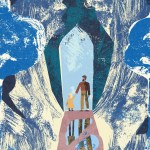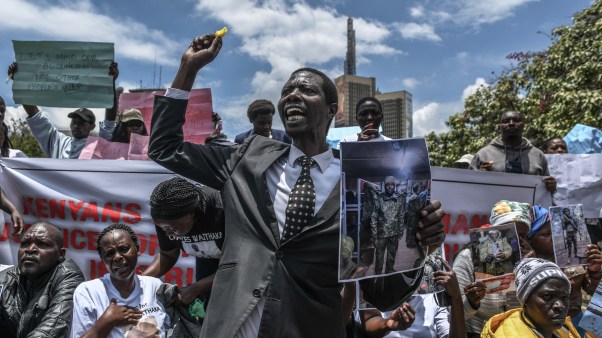
Rather than calling God our Father, “we’ve come to prefer a picture of God as good ol’ Dad,” writes theologian Kirsten Sanders in the essay “God Is Not Your Dad.” And “by seeking to make God more accessible and emotionally warm, we have ended up with a picture of God that resembles a great man in the sky more than it does the God of the Bible.”
One Instagram commenter agreed with Sanders’ diagnosis of a problem with how we picture God but disagreed with her dad angle. “The solution to our confusion is to restore a more well-rounded idea of what a dad should be from the demonstrated character of God,” the commenter wrote. “A good dad has authority and requires respect. … But if we saw a father saying to his kids, ‘I’m your father, not your dad,’ I think we would be appropriately concerned about the emotional health of those relationships. A good father is warm, loving, approachable, and familiar with his kids.” Another commenter seconded the critique, saying God “is both the Father, whom I revere, and my daddy, whose lap I can climb into whenever I please.”
“God is, of course, not only dread and acts of awe,” Sanders acknowledges in her essay. “He is also provision and sustaining care. But God cannot be one without the other. That God is present to provide care for the widow and the orphan depends on God’s ability to act and to intervene, at all times and in all places.”
Perhaps different Christians, reasoned one Facebook commenter, need to focus on different aspects of God’s character in different seasons: “Some people need to be reminded of God’s fatherly majesty. Some people need to be reminded of God’s Abba-like care.”
Kate Lucky, senior editor, features.
They Led at Saddleback’s Hispanic Ministry. ICE Said They Were Safe.
Thank you so much for the heartbreakingly revealing article about the Gonzalezes. Most Americans do not personally know anyone in such a situation, and many have no idea that this kind of thing is happening every day. When we hear administration representatives continue to claim that they are going after “the worst of the worst,” I hope articles such as this one will help folks realize the truth. The government is going after the easiest of the easy, people who have been living here for a long time, contributing to their communities—not hiding but complying with the rules they have been given for many years. Suddenly, when they report as they have always obediently done, they get arrested. I pray for the thousands of families devastated like the one in the article. And I pray for major changes in the years to come, for Christian leaders to be at the forefront in turning our nation back toward compassion.
William Fenstermaker, Cornwall, PA
This article is incredibly eye-opening to the complexities of legal immigration. I probably know more than the average US citizen (fourth-generation Texan, been on several Mexico mission trips, anti-trafficking advocacy work), and even I was dumbfounded by the underbelly of immigration swindlers. Thank you for reminding us two things can be true: We need more secure borders, and we need immigration policy reform.
@dr.christinacrenshaw
I hope they are doing well. I hope they choose to pursue all legal avenues that might be available to them. But asking what we gain from enforcing the law seems odd.
@johnmcgowan
Sounds like Colombia got some great missionaries.
@thejakegiffin
The ‘Unreached’ Aren’t Over There
A pastor friend with a real zeal for evangelism said to me that it never made sense to him that while he was taking off from his local Midwest airport to fly to some distant land to reach the lost, his plane was passing over thousands and even millions of people who had never heard the gospel.
Dan Edelen
From its online publication: A Declaration of Principles
Thank you for your clear and thoughtful declaration of principles. I heartily agree with, and affirm, your statement. This thoughtful, clear, and reasoned decla-ration is sorely needed and immensely refreshing in our world today.
Kathy Mast, Richmond, VA
As a retired pastor in the Wesleyan tradition, I used to occasionally take a look at CT. First, it was the paper copies in my seminary’s library back in 1988–91. I had a positive view of it. Some time later, when I’d look at it online, things seemed to go south. It was like I was supposed to feel guilty about being a white male. It turned out that those were the years when Mark Galli was editor. An admission from you that CT strayed pointlessly and foolishly into woke territory (a far cry from the original intention of Billy Graham that the magazine be a conservative counterpart to the liberal The Christian Century) would go a long way with me. That would be much better than merely asserting that you print various viewpoints.
Dean Coonradt, Sherwood, OR
I might be one of the few Indonesians who frequent CT’s website almost daily. I noticed the shifts to more global coverage. Last year, after I completed reading Mindy Belz’s piece on Congo’s wars and their victims, I was sobbing and praying at the same time. CT raised the awareness and allowed us to weep with those who weep. Thank you for standing with global evangelicals. Thank you for fairly representing the views of the wider body of Christ.
Mario Kaseh, Indonesia
Corrections: In the January/February article “Nursing Home Revival,” Christine Hill’s name was misspelled as Christina. Stephanie Smith first came on staff at Twilight Hope in 2013. Mike, the 90-year-old Bible study participant, was not abused at his Catholic school. Jennifer Bute, the source who spoke with him, said he described his own experience as poor treatment, though others shared stories of abuse with her. Also, in the article “Tarot Cards, Shrines, and Priestesses,” Day Sibley’s step-grandmother received a cancer diagnosis, not her stepmother.
This article appeared in the March/April 2026 issue of Christianity Today as "Responses to Our November/December Issue".
Related