We modern people have a tendency to give in proportion to what we get. If I reach out to someone else to grab coffee and catch up, I expect that person to initiate next. If I give someone a book recommendation, it becomes the other person’s turn to give me one. If I drive some friends to the airport, then they will (hopefully!) give me a ride when I need one.
Some of these patterns are not inherently bad, but deep friendships—ones that can combat the hollowness of modernity and our own loneliness—require risk and discomfort.
I thought a lot about friendship and sacrifice, puzzling through how to form rooted relationships, in an unlikely place recently: while seated in a movie theater, watching an astronaut and his alien friend save the world.
Project Hail Mary, an earnest science-fiction novel from Andy Weir, author of the hit book-turned-movie The Martian, captured hearts when it came out in 2021. The film will do the same, with a wholesome story, pitch-perfect casting, and gorgeous effects. And it emphasizes exactly what many people need in this moment: the courage to forge true, sacrificial friendships.
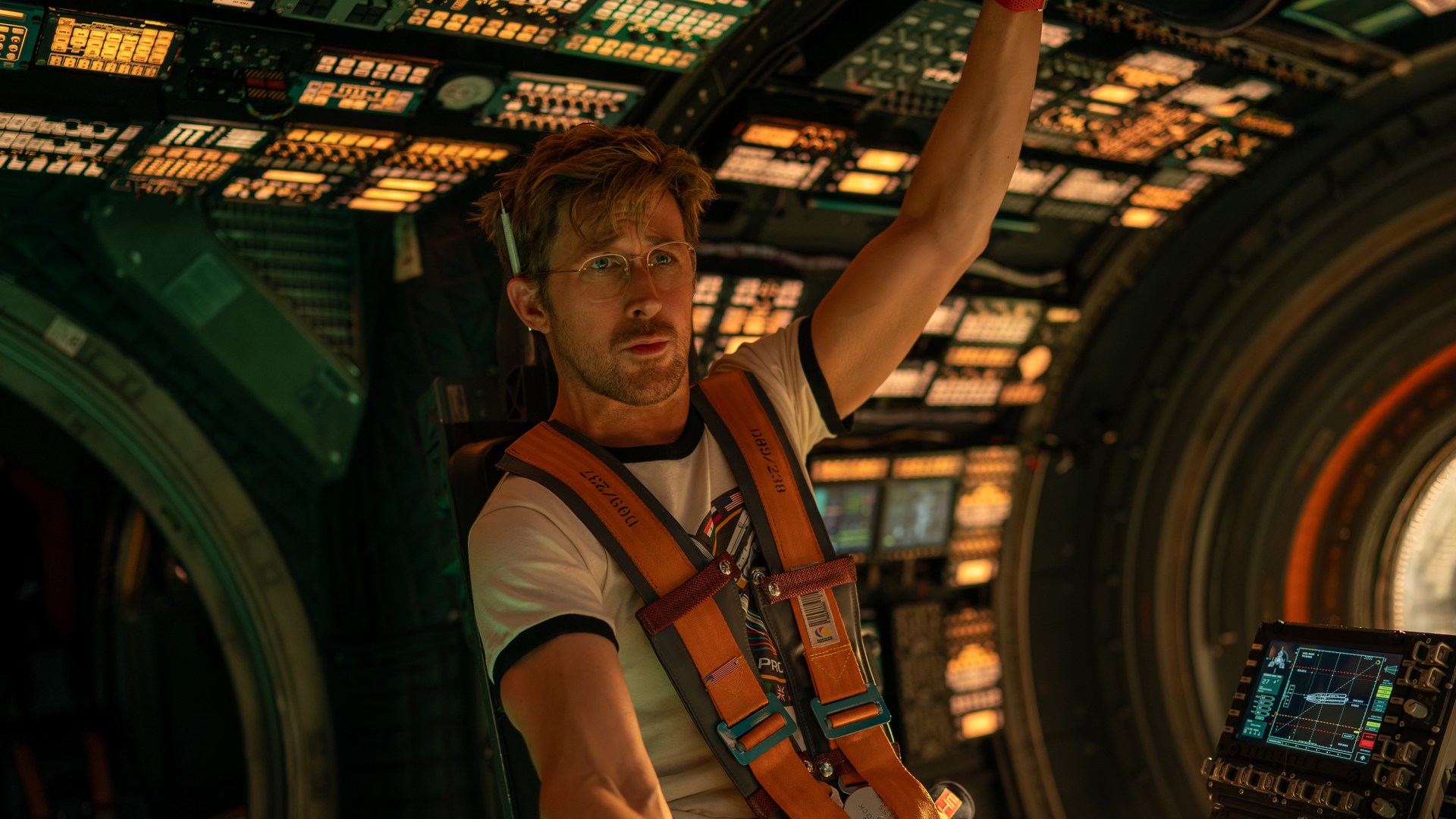
The film’s main character, Ryland Grace—a brilliant science teacher who stumbles into a last-ditch space mission to save humanity—doesn’t necessarily start out as the sacrificial type.
At one point, before being pushed to the brink, Grace (played by Ryan Gosling) doubts his ability to put his own life on the line, saying he does not have the gene that would make him brave. Another astronaut retorts, “You just need someone to be brave for.”


Grace finds that someone far out in space: a helpful alien named Rocky, a large spider-y creature with no face and stone-like skin. Together, they model something countercultural and beautiful throughout Project Hail Mary: a friendship that includes sacrifice.
Rocky and Grace meet after having been alone in space for years. They work across interplanetary cultural divides—vastly different languages, gravities, atmospheres, biologies, and assumptions about life and science—to cultivate a friendship while also trying to save both of their worlds.
Defying all odds, they learn to rely on each other. They are vulnerable with each other. They sacrifice for each other. Their survival and the survival of their planets end up in the hands of the other to varying degrees. They give without expectations of getting something in return. Their friendship alters how they view their missions, themselves, and their lives. They show love to one another by dying to themselves.
This is the heart of the film. It’s not a preachy movie, to be clear. It’s completely charming, with the cast easily carrying a high-stakes premise convincingly, grounding its science-fiction elements in truly human performances. Gosling is hilarious, and Sandra Hüller as the stonefaced coordinator behind saving the entire planet humanizes the blunt character Eva Stratt from the book.
Grace is also relatable as an ordinary person picked for an extraordinary task, much like Frodo in The Lord of the Rings. Our hero is flawed, scared, and sometimes stupid, which makes the film all the more entertaining.
The film’s score is also masterfully done, adapting to various environments subtly so as not to distract the audience while still drawing out the cultural differences between characters. The use of practical special effects instead of CGI to depict Rocky was charming and made for an impressive showing by the artists who worked on the film. The cinematography and visual effects are beautiful. The editing brings humor to an apocalypse.


The story takes place in a not-too-distant future. A strange substance called astrophage is eating the sun’s energy, threatening human life as we know it. Scientists and governments from around the world work together to come up with a solution, and their best option is—well, a Hail Mary.
Literally, they send a ship called the Hail Mary on a one-way mission to another planetary system that is also infected with astrophage but has a sun that is not losing its energy. The astronauts on board are signing up for a suicide mission in a last-ditch attempt to learn what secret this other system knows, hopefully saving the entire human race in the process.
Christians can find plenty to love in that story line alone, with the mission itself a dim echo of Christ’s saving death that really did rescue the world—although Grace is a very reluctant savior. The film’s exploration of Grace’s friendship with Rocky pushes the theme even further, demonstrating a love that lays “down one’s life for one’s friend” (John 15:13) and carries “each other’s burdens” (Gal. 6:2).
It’s a beautiful sight to behold, especially in an era that has exaggerated the importance of emotional boundaries, transactionalism, and self-care over self-sacrifice.
It is much safer to give only what you expect to receive in return. And in this day and age, we harbor so many reasons to cut off relationships that we are often on edge with new friends. What if I find out my small group leader voted for someone different than I did? What if the person I chatted with at a meet and greet at church has a different stance on vaccinations? What if the person sitting across from me at work or at school uses artificial intelligence in a way I do not see as ethical?
Emotional boundaries are important, but our overuse of them in forming friendships might inhibit our relationships from maturing beyond offering reciprocal airport rides. Relationships shouldn’t be like objects we review every once in a while under some Marie Kondo philosophy, throwing the ones that don’t spark joy into the trash.
This is true particularly for Christians: “This is how we know what love is: Jesus Christ laid down his life for us. And we ought to lay down our lives for our brothers and sisters” (1 John 3:16).
Like Grace, we need to learn to see the people around us as worth our lives—and worth dying to ourselves.
It’s easy to slip into fear: fear of unreciprocated love, of looking foolish, of sacrificing too much. But a friendship based on quid pro quo won’t get much deeper than the surface—it will only get to a point of knowing about people rather than truly knowing them.
Relationships are how we experience the gospel and Christ through one another. We just need to be brave enough to be known and to know one another. With God’s help, we don’t have to go to outer space to learn how to do it.
Mia Staub is editorial project manager at Christianity Today.