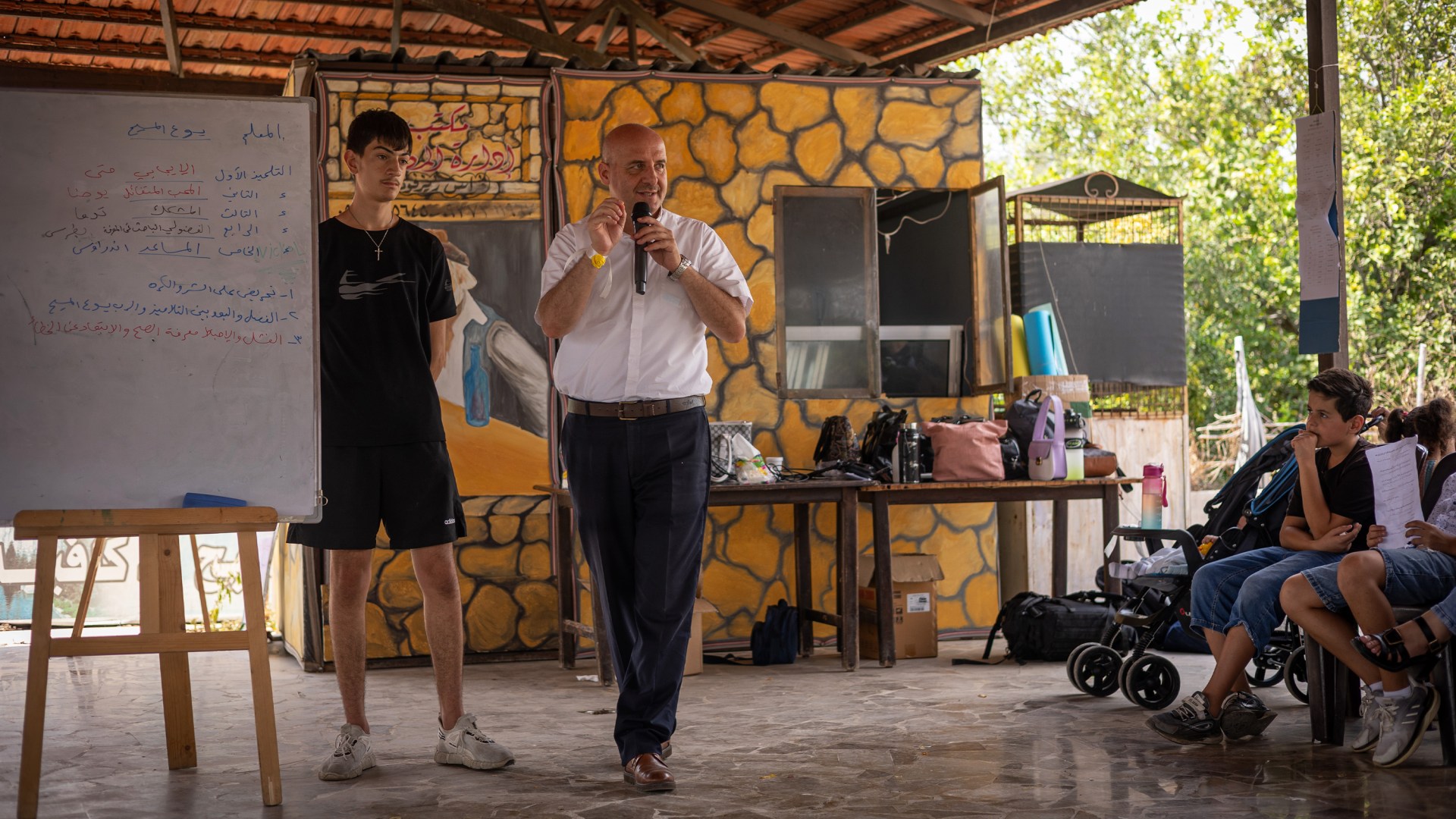
For pastor Valentine Hanan, war and displacement have been a part of his life since the Syrian civil war began in March 2011. Raised in Aleppo, he has moved four times with his family to escape the fighting. During the overthrow of President Bashar al-Assad by a coalition of Islamist rebel forces in December 2024, he returned to Aleppo, where he serves believers from the Kurdish minority group at Christian Evangelical Alliance Church of Aleppo.
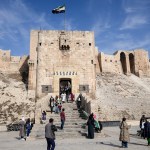
Throughout 2025, Hanan and his church weathered sporadic armed clashes in the city. But in January this year, tensions between the Syrian government and Kurdish militants escalated to new heights. Fierce fighting in the Aleppo neighborhoods of Sheikh Maqsood and Ashrafieh forced Hanan and other church members living in the area to flee their homes.
The Kurdish-led Syrian Democratic Forces (SDF) previously controlled those areas, yet the new government led by Ahmed al-Sharaa has been negotiating with the SDF since last year to integrate its military into the Syrian army. As political disagreements caused talks to drag on, intense fighting erupted, first in Aleppo and then across SDF-held territory in north and east Syria.
Under bullets and sniper fire, Hanan took his wife and children to his parents’ home in a different part of the city. He then joined the church in opening its doors to the displaced, providing refuge, meals, and medicine for more than 50 families.
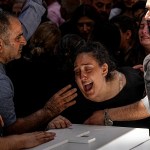
On January 11, after days of clashes that left at least 23 people dead and another 150,000 displaced, the SDF withdrew from Sheikh Maqsood and Ashrafieh as the Damascus government announced its control over the area. That night, Hanan and a friend made their way back to Sheikh Maqsood to inspect the impact of the fighting. As he passed destroyed homes, he smelled the stench of blood and saw bodies strewn on the streets.
“For four days, I struggled with the images of the bodies I saw,” Hanan said.
Some church members found their homes pillaged and destroyed when they returned. The church bought mattresses, kitchen utensils, and other items for those in need. Church services and meetings soon returned to normal, although church leadership initially decided to limit the size of home groups as they assessed the situation, cautious that large gatherings of Kurds could raise suspicion.
The ongoing armed conflict in Syria has driven out much of the country’s historic Christian community over the past 15 years. Before the war, an estimated 2.1 million Christians lived in the country. Today, only about 300,000 remain, according to Open Doors. While there is no reliable data on how many Syrian Christians have migrated since the end of the civil war, church leaders note an uptick in emigration due to the current violence and instability.
Despite the Christian exodus, Hanan and other Syrian pastors say they believe it is their God-given responsibility to stay and serve their church communities. Hanan stresses that although he recognizes the risks and challenges he faces as a Kurdish Christian in post-Assad Syria, he has never considered leaving.
“My vision is the salvation of my people,” Hanan said. “I feel that it’s a responsibility. God put me in this place. It’s not a coincidence that I’m here.”
Since the end of Syria’s civil war, government forces have carried out attacks on minority groups like the Alawites in the western coastal provinces and the Druze in the southern Sweida region. The violence has led to widespread fear and distrust of Syria’s new Sunni Islamist government, casting doubt on its promises to form an inclusive state that respects and protects the rights of all its citizens.
As Kurdish Christians, Hanan and his congregation have even more reason to be cautious. Kurds have long faced marginalization and discrimination in Syria. Furthermore, Hanan and all the members of the Kurdish ministry in the church come from Muslim backgrounds. Given the government’s Islamist roots, some church members are concerned about how government forces would react to Kurdish converts.
Hanan, however, noted that thus far, he and his congregation have not faced any persecution from the authorities for their faith. To the contrary, Hanan said local authorities treat him with respect because he is a pastor. Although government forces have not systematically targeted Christians, extremist groups have. The bloodiest incident occurred in June, when an obscure Islamist group carried out a suicide bombing at a Greek Orthodox church in Damascus, killing at least 25 people and wounding dozens more.
The attack shook the Christian community, increasing their fear and unease that the government would not protect them, church leaders told CT. With Christians now in the cross hairs, pastors note that Christians are once again considering leaving the country.
“For many years, emigration decreased and kind of stopped in the Christian community,” said an assistant pastor of an evangelical church in Jaramana, a town on the outskirts of the capital, Damascus. He asked not to be named due to worries he could be targeted for criticizing the government. The slowdown in emigration among believers stemmed from a resignation they felt about the situation in Syria and the challenge of resettling in other countries, he added.
“But with the arrival of this government, more people have left, and this was multiplied by the ongoing massacres and attacks on various Syrian communities, including the church explosion,” he added.
The assistant pastor said he knows several Christian families who have recently left Syria and another who is planning to leave due to concerns about safety and security.
In addition, the war left Syria with a ruined economy, abysmal services that leave people with only several hours of state-provided electricity each day, and poor living conditions. Over 90 percent of the population lives below the poverty line, according to a 2025 report by the International Federation of Red Cross and Red Crescent Societies. For the past several years, economic hardship has been another leading driver of emigration, especially for young people who see no future in the country.
Mazen Hamate, pastor of Redeemer Evangelical Baptist Church in Tartus and Safita, noted that people desire to leave Syria—either temporarily or permanently—“due to the accumulation of frustrations, disappointments, the deterioration of living conditions, and the lack of job opportunities as a result of the sanctions that were imposed on the country.”
Much of Hamate’s prewar congregation left the country, and among the new members attending today, some are also looking to emigrate. While foreign investment and the lifting of sanctions have brought some hope, he noted that people have yet to receive any meaningful relief from Syria’s dire economic crisis.
Most Syrians stay because they don’t have the money or means to emigrate, the assistant pastor in Jaramana said. Others stay because they don’t want to leave their families or businesses behind. Still others, like the pastors with whom CT spoke, stay because they feel called to serve in churches and ministries.
“We believe that we live once. That’s why it’s important to live a worthwhile life,” the assistant pastor said. “To live this worthwhile life is to follow God’s calling, even if that’s not what’s most comfortable for us.”
In the past two years, he has shepherded his congregation through violence and hardships. In late April 2025, clashes broke out between Sunni and Druze gunmen in Jaramana after an audio clip of a man—allegedly a Druze leader—criticizing the Islamic prophet Muhammad went viral. The fighting forced the church to temporarily suspend its meetings, and for a few days it became difficult for people to get food and other provisions. The assistant pastor and his wife took shelter in the center of their home, away from the windows in the rest of the house that were exposed to the fighting. Although friends in Damascus invited them to stay in their home, the couple felt it was important to remain in Jaramana to be close to members of the church.
“The vast majority of the church members live in Jaramana,” he explained. “We decided to stay here to try and give people reassurance that we are with you, we are not leaving, we’re here—especially since most of them didn’t have any other place to relocate to.”
Since he started serving in ministry some two decades ago, the assistant pastor has been inspired by Matthew 4:24, which notes how Jesus’ reputation spread throughout Syria as he healed people.
“My prayer is that not only the news but the power of the gospel will spread, change, and transform Syria,” he said.
Back in Aleppo, Hanan shares a similar vision for Kurds, as Christians make up only a small percentage of the ethnic group.
Despite the recent fighting in Aleppo and northeast Syria, Hanan is hopeful. He sees how previous conflict and displacement led to the establishment of a new Kurdish church in Hasakah, a city east of Aleppo. As a result of the fighting in January, he said, more Kurds are looking for an alternative to Islam and are believing in Jesus. Church meetings are now full of members and new faces.
“Our vision is to change history,” Hanan said. “Before in history, there was no such thing as Kurdish Christians. Now this has become a reality.”
Related