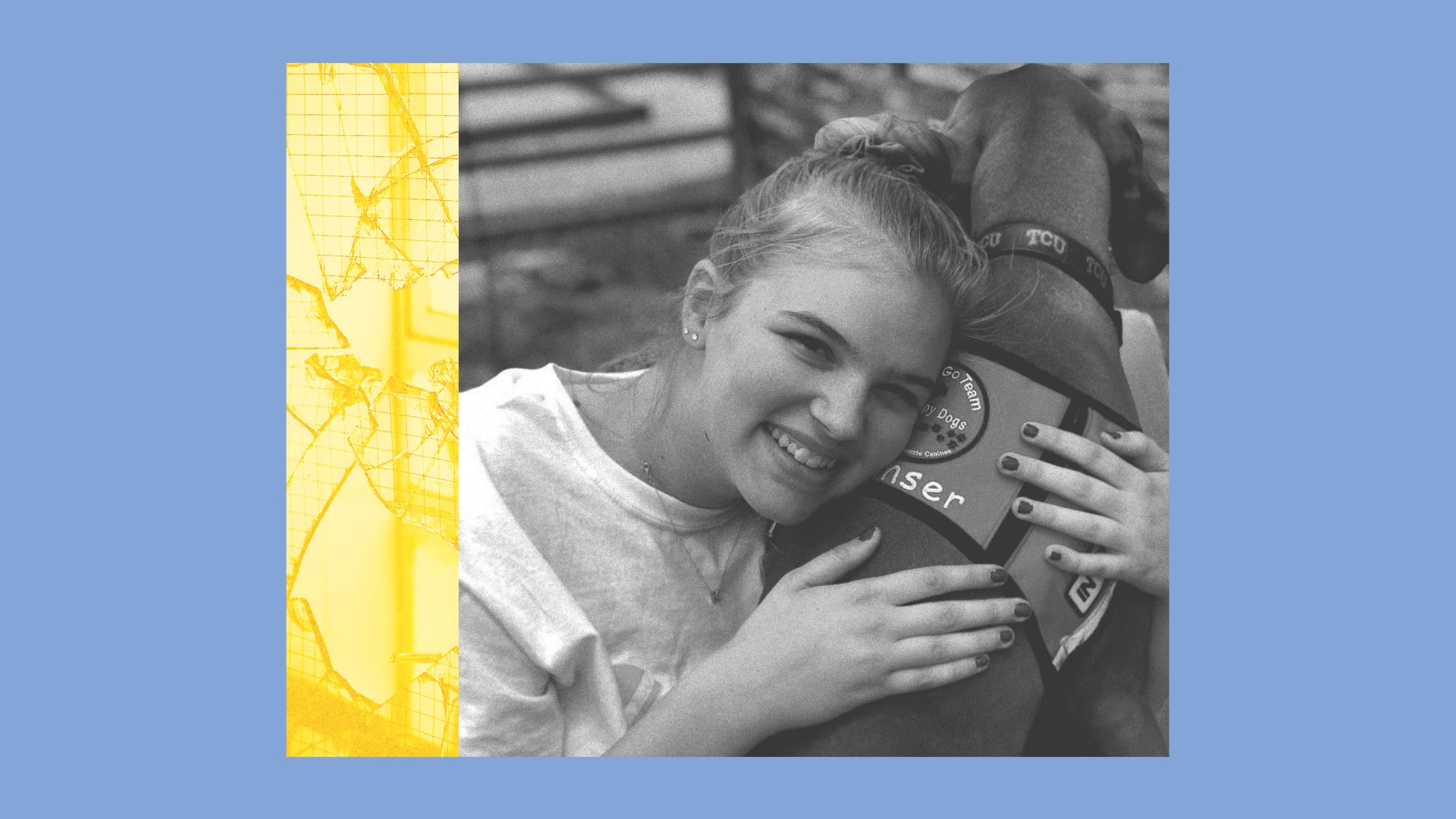
Ellie Wyse still remembers the day: May 7, 2019. She was a high school freshman at STEM School Highlands Ranch on the outskirts of Denver, and classes were almost over when the school went into lockdown.
Wyse assumed it was a drill—but then it wasn’t ending. She heard loud noises, and to this day she’s not quite sure whether they were the gunshots from a classroom nearby. She got texts from her mom and others asking if she was okay.
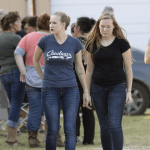
Then a squad of SWAT officers swooped into the room and took her out of the building. It was the scariest moment of her life, she told CT: officers swarming in with large guns and Wyse having to walk out with her hands up.
She and other students were moved from place to place before finally going to a nearby gym to reunite with their parents, who had been waiting for hours. Wyse learned later that one of two shooters in the incident was a friend of hers.
One student was killed, and eight others were injured. During the attack, when the shooters pulled out their guns, student Kendrick Castillo rushed one of them and was killed in the process. His sacrifice enabled other students to subdue the perpetrators.
That day, Wyse’s friendship with the shooter, whose actions she considered “heinous,” also died.
In the days and weeks after, Wyse, a bubbly, laughing, extroverted 15-year-old, grew quiet. She became more scared and anxious about everything.
“I didn’t really notice it on my own—because I was like, Nope, I’m just going to keep pushing forward,” Wyse told CT. “It was my mom who noticed that I really wasn’t okay. She had seen the personality shift.”
At least 398,000 American children have experienced gun violence at school since the Columbine shooting in 1999, and researchers are still assessing how this trauma affects them in the years after.
Wyse felt survivor’s guilt. And she initially struggled with how to feel about her friendship with the shooter.
“Why did I make it out of class and somebody else didn’t?” she said.
Her mom suggested she try a type of therapy called eye movement desensitization and reprocessing, or EMDR. Wyse was initially resistant but gave in.
EMDR is a therapy supported by scientific research that helps individuals reprocess post-traumatic stress in a safe setting. It is growing in popularity—some families CT interviewed whose children survived the recent Annunciation Catholic School shooting in Minneapolis planned to do EMDR therapy.
Unlike talk therapy, a type of cognitive behavioral therapy that focuses on the mind, EMDR is more body based.
Jessica Cobb, a Christian counselor trained in EMDR, compared the technique to sleeping, where your brain has a chance to process your day.
In a traumatic moment, “this alarm bell is going off in your brain, and it’s saying, I don’t know what to do with this. And so it holds on to it,” Cobb said. “Your memories get stuck in a raw, unprocessed form that’s full of images and emotion and physical sensations.”
Reprocessing that moment in a safe environment allows a person to gain distance from the memory and makes it less frightening.
In EMDR therapy, a counselor goes through several steps to help a patient prepare to reprocess the traumatic memory. The patient focuses on the memory while doing bilateral stimulation—eye movements, taps, or sounds.
Patients don’t have to describe the traumatic event while doing EMDR. After stimulation, they share about any sensations and negative beliefs that arose from reviewing the memory, such as “I’m not safe”or“I have no control.”
The therapist monitors the patient’s score on the subjective units of distress scale, or SUDS, as the session goes on to see how distressing the memory is. Once the distress reaches the lowest possible score, they work through positive beliefs around the memory, like “I survived” or “I am lovable.”
When Wyse finished her EMDR sessions after about six weeks, she was able to walk into her school without feeling anxious—for her, a huge step forward. After that, she also did talk-therapy sessions.
Traces of trauma remain. Her family has always conducted a big fireworks show on the Fourth of July, and before the shooting Wyse loved to be part of it. The first July after the shooting, she was holed up in her room wearing noise-canceling headphones. She felt horrible, as if she were messing up something fun for her family. As the years have gone by, she’s gotten better at handling fireworks, but she never enjoys them as she used to.
As she processed the attack, she decided to become a therapist to young people herself: “I know what it’s like to be in the classroom, waiting for it to be over, not sure how you’re getting out.”
“I’ve just noticed a gap in care—being a teenager who had experienced trauma and then compounding that with COVID,” she said. “I just saw this huge gap of need for people who really needed extra love and extra support and weren’t getting it.”
Teenagers, she noted, are also dependent on their parents to get therapy and drive to appointments.
Though she was initially hesitant about leaving Colorado and going to a Christian school, she had family friends who were Cedarville University alumni and urged her to try it out. When she visited, she felt at home and applied to study psychology there. She’s now a senior, planning to enroll in graduate school to become a licensed counselor.
Wyse knows taking care of her own mental health will help her be a good counselor. She has been in an improv comedy group the last three years—she thinks being social and trying new activities in community is good for her psychologically. She can still notice when she’s taking a “step back” in her healing process, becoming more socially withdrawn or quiet.
Cobb, the counselor, said patients need supplements to EMDR: predictable routines, emotional regulation tools like breathing and exercise, and supportive relationships from family, friends, and pastors who don’t rush the healing process or judge.
“It’s so important to have trauma-informed schools and churches,” she said.
Some research has shown that people who felt support from religious communities after mass shootings experienced fewer symptoms of post-traumatic stress disorder (PTSD).
After a traumatic event like that, parents should look for signs of PTSD or acute stress, like a child being withdrawn, overly anxious, or prone to nightmares, Cobb said. EMDR practitioners are generally easy to find.
Christian counselors largely support EMDR as a trauma therapy, but some have concerns.
The Biblical Counseling Coalition in 2021 released a statement critical of EMDR, saying the framework was “fundamentally God-less, Christ-less, and Spirit-less,” but conceded it could provide “a limited, important degree of usefulness for some Christians under some circumstances.”
“Scripture is the only source for primary, authoritative beliefs and values. We should be enamored with it, and with nothing else,” the statement concluded. “Other models and methodologies will come and go as the world pays attention to the latest this or the latest that in the marketplace of psychotherapeutic ideas.”
Cobb, a biblical counselor herself, disagrees with the assessment: EMDR is focused on a neurobiological issue and doesn’t replace prayer or Scripture, she said. Christian counselors can incorporate faith-based resources in the EMDR process if they want, she said, like sharing a Scripture when a patient is in a distressing moment.
The point of EMDR is “you can’t do any healing if you aren’t feeling physical safety,” Cobb said.
Wyse thinks using psychological “tools God has given us” is useful, and then patients can go to biblical counseling to work through spiritual issues. As she healed, she said her faith grew.
During her freshman year at Cedarville, she was struggling being away from her parents and Colorado. For some reason she read the book of Ecclesiastes. One verse jumped off the page: “For he will not much remember the days of his life because God keeps him occupied with joy in his heart” (Ecc. 5:20, ESV).
A calligrapher, she wrote the verse down and put it on a board above her desk. Now she has it memorized.