This piece was adapted from Russell Moore’s newsletter. Subscribe here.
The United States and Israel are at war with Iran. Put aside, for a moment, whether you or I support or oppose this. That’s a massively important debate with massively important implications for the lives and deaths of countless persons, for the meaning of the US Constitution, and for the Iranian people. When I say “put aside” the debate, I don’t mean permanently; I mean just for this moment. Right now, I don’t want to talk about just war theory, Middle East policy, or even the future of the human race. I want to talk about you.
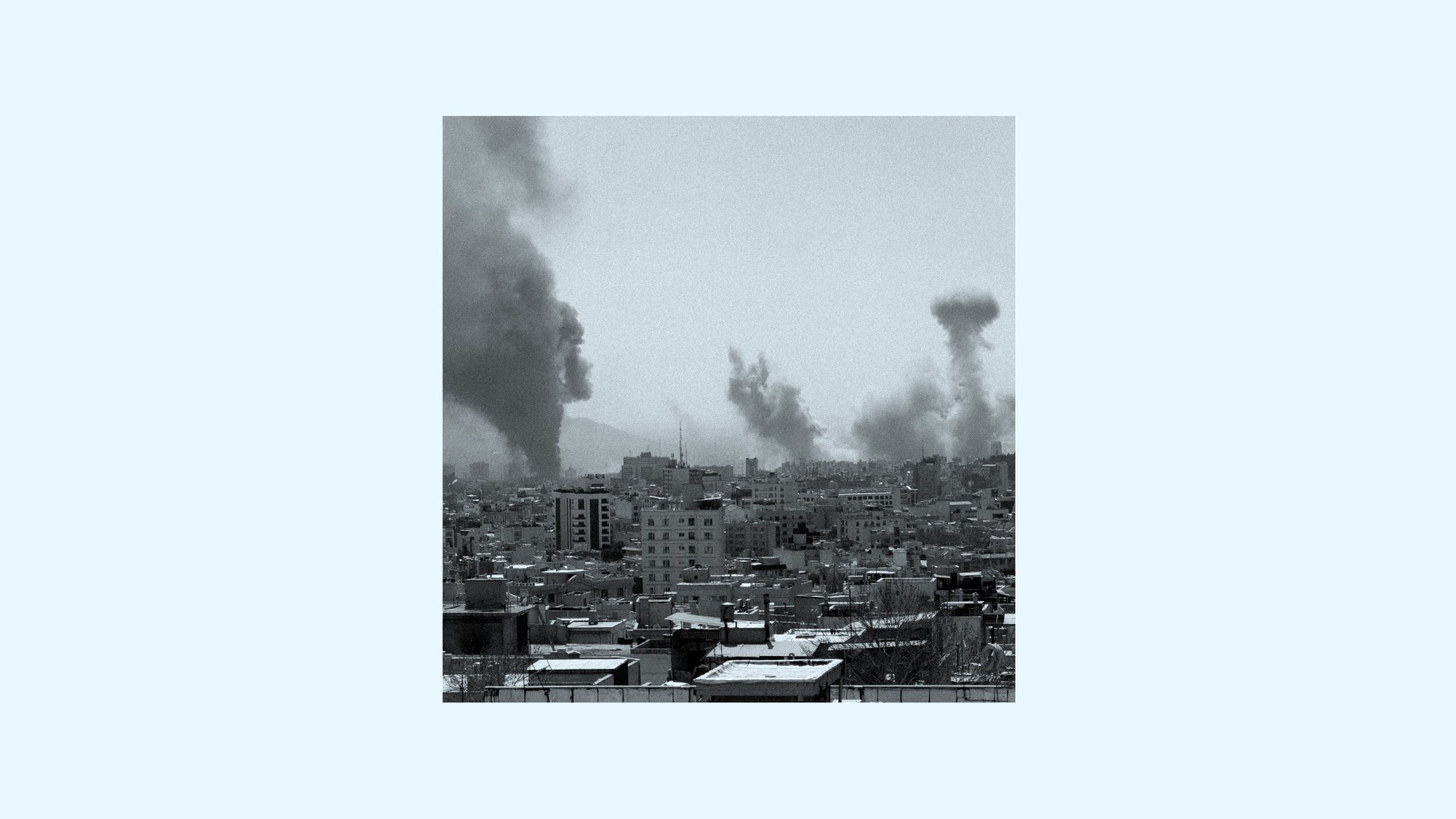
We don’t know if this war, like the last one Israel fought with Iran, will be over in 12 days; if it will last five weeks as President Trump projected; or if, like the Iraq War, it will grind on for years. We also don’t know whether we will forget in a few years the images we see on our screens right now or if we will have them etched in our minds as the beginnings of an era-shaping war. We don’t know.
What we do know, though, is that wars tend to shape more than just nation-states and historical trends. They tend to shape each of us too, sometimes subtly, by redefining what feels normal and what doesn’t. And that brings with it not just geopolitical risk but personal temptation.
This morning I was rereading a speech that a then-young Wendell Berry gave against the Vietnam War in 1968. Berry spoke about what that war, which he opposed, was doing to civilians in Vietnam and to American ideals. But he went further. He gave the example of a war that everyone in that room likely would have seen (as I do) as a just one: World War II. Despite the fact that we “fought on the right side and with good reasons,” he said, even necessary wars tend to “serve as classrooms and laboratories where men and techniques and states of mind are prepared for the next war.”
If he was right on that point, and I think he was, we ought to pay careful attention not only to whether we support or oppose this war with Iran but also why and how. That’s because what turns out to be most persuasive to us is what we take for granted—what we assume when the course of the world seems like “just the way things are” and we can’t even see the moral options and thus ignore them.
So what might be the temptations for you and me?
The first is bloodlust. As most of you know, I am not a pacifist. Unlike my Anabaptist ancestors, I do think there are times when war is morally justified. I wrote each of the Southern Baptist Convention’s resolutions supporting the War on Terror and the Iraq War in the early years of this century. And yet I look back and see in at least my immediate reaction to September 11 a warlike spirit that went beyond patriotism. As we were watching on the twin towers fall, a friend of mine yelled, “We should bomb Afghanistan until nothing is left there but glass!” I felt that too. And bound up with that feeling was a desire for not just public justice but also personal revenge. It felt good to feel that pulse of vengeance. That’s why it is so dangerous.
Those of us who believe in the possibility of just wars should guard ourselves more closely than others because we can easily forget that even when war is the only option, it is always awful. The awfulness of war is especially hard to see in a time when battles seem to us like video games played by other people. If war gives us a charge of delight, something is happening to us.


The second temptation is what the people of old called sloth. That doesn’t mean laziness or inactivity but numbness and deadness. One of the scariest aspects of these hostilities is the way so many people—including Christians—seem to see them as just another part of the cycle of history. And if recent patterns persist, Americans will soon grow bored of hearing about this war and want to move on to other things. Maybe with this war, we can. But sooner or later, there will be a war where we won’t be able to move on.
Wars and rumors of wars ought not to panic us, Jesus said (Matt. 24:6), but we also ought to remember that they are birth pains of the destiny of the entire cosmos. As C. S. Lewis told students at the University of Oxford during World War II, war ought to remind us of what is always true but almost never perceived: We are mortal. We are going to die. Nothing around us is as permanent and stable as it appears. Even if we are not in danger of being drafted or fighting, we ought to pray as those whose lives are a vapor (James 4:14).
And the third temptation is duplicity, and by that I mean something at the very root of the word, what Jesus’ brother called double-mindedness (1:8). We tend to think of a “double-minded” person as someone who can’t make up his mind, but there’s something else there: a disconnect between the conscience and the intellect. In our own time, this reveals itself perhaps most obviously as what some call tribalism.
There’s nothing wrong with changing your mind. As a matter of fact, when our information changes, it would be immoral not to change our minds. We grow and change. I’m not sure my mind would be different about Iraq knowing only what I knew then. But knowing what I know now, I would never have thought about it the same way.
War tends to reveal our inner lives. Right now, some who told us they were “America First,”—defined as, among other things, avoiding Middle Eastern wars—are now cheering the bombing of Iran or even justifying a full-scale invasion and occupation. Now if someone changes his or her mind after being persuaded—after someone makes a case that the previous viewpoint was wrong—that is no flaw. An entire generation of America First isolationists changed their minds (and rightly so, in my view) after the bombing of Pearl Harbor. But if people change their minds just because the leader of their side is for something and those on the other side are against it, they ought to see that they have outsourced their consciences. They are no longer citizens but subjects.

And the same is true for those who would have gladly supported the killing of the Iranian supreme leader if it were done by President Barack Obama or by Kamala Harris but now would be secretly disappointed if the operation is anything other than a disaster. This is not a political campaign. Real human lives—and lots of them—are at stake.
Now, it’s not wrong for someone to trust the character or intellect of some leaders more than others. That’s reasonable. It’s also not wrong if you oppose this war and would have supported it if it had been done the way the Constitution mandates: through the consent of the people’s representatives. The same is true if you oppose it because you are confused by the varying reasons our leaders have given as to why we’re doing it, and doing it now.
But if you would be irritated if the war ends quickly and if the Iranian people are free, because it would help the image of people we oppose or because it would take away the opportunity to say “I told you so” to some really obnoxious people, you are in moral peril.
Some of us are more vulnerable to some of these temptations than to others. Some of you might not be especially given to any of them. (If so, pray for the rest of us.) But the quickest way to yield to a temptation is not to see it at all. “Therefore let anyone who thinks that he stands take heed lest he fall” (1 Cor. 10:12, ESV) is as true in wartime as it is in peace.
War, in every case, is hell. Let’s watch out for ourselves, lest it also make us hellish.
Russell Moore is editor at large and columnist at Christianity Today and leads its Public Theology Project.