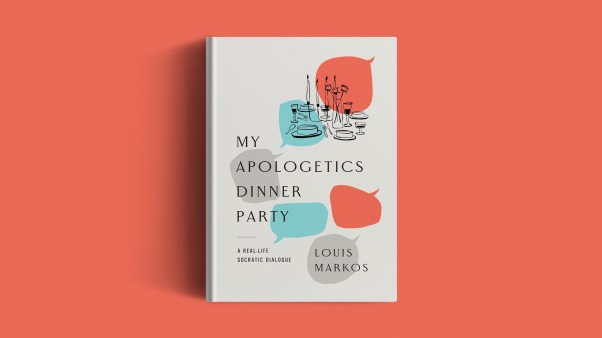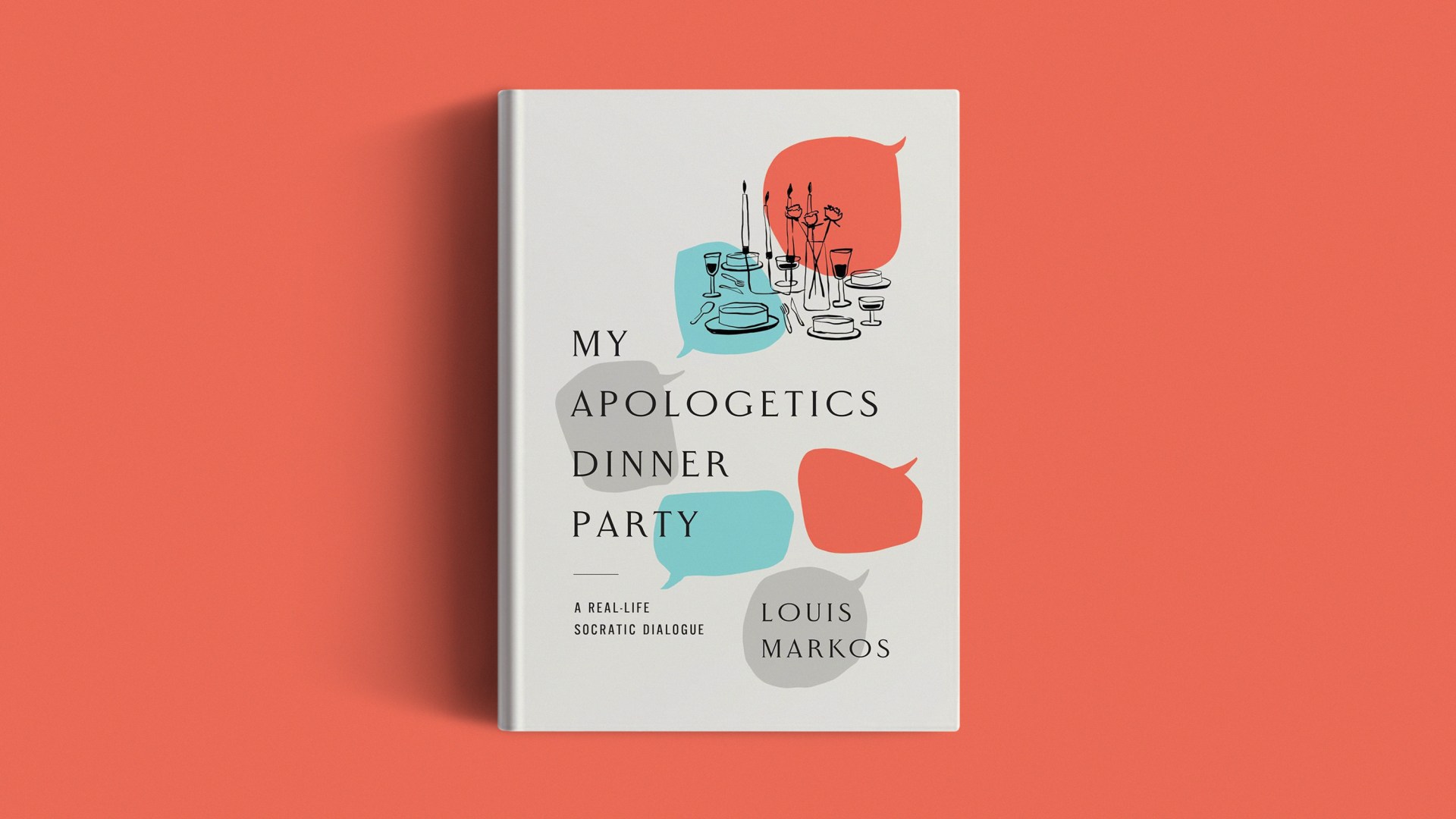
The story below is fictional. Many of the events in the story did happen during dinners I’ve hosted, and all the people in the dialogue are patterned after real people, sometimes in composite form, with whom I have dialogued over the last 25 years. I have written this story, informed by real conversations, to illustrate how discussion about faith, miracles, and the meaning of life might play out with a diverse group of people from different backgrounds and religions.
For many years, I had been hosting an international Thanksgiving potluck at my home. But never before had so many come and from such radically diverse nations, backgrounds, and faith journeys.
My job that day was not so much to answer every question with airtight logic and irrefutable proofs as to clarify what Christians actually do believe, to distinguish the myth from the history, the rumors from the facts, the urban legends from the true stories.
Well, that’s what I would end up doing for most of the evening, but it’s not where I began. All I could think of when the clock struck three was that the person bringing the turkey had not yet arrived. This was somewhat problematic, given that the dinner was scheduled to begin at two o’clock! Since I have learned through my work with internationals that punctuality is an American virtue—or hang-up—not shared by most people outside Northern Europe, I didn’t take it personally.
Still, I had to do something to keep my hungry guests entertained while we waited for the entrée. The fact that my wife was out of town visiting relatives, leaving me in sole charge of the festivities, merely added another layer of butterflies to my stomach.
Luckily, my daughter, Stacey, happens to be a vocal performance major at my university who possesses a wonderfully clear and pure soprano voice. In order to divert attention away from growling stomachs, I lifted up my right hand and announced, with barely concealed pride, that my daughter would perform “Silent Night” for us. In typical fatherly fashion, I didn’t consult her before making the offer, but then she was used to such things. I felt quite sure she wouldn’t let us down … and she didn’t.
While I played the threechord tune on my piano, Stacey sang the first stanza with a depth of feeling that caused a hush to fall over the room:
Silent night! Holy night!
All is calm, all is bright.
Round yon virgin mother and child
Holy infant so tender and mild,
Sleep in heavenly peace!
Sleep in heavenly peace!
As she sang the last word, I felt all my anxieties melt away. I was not the only person in the room who felt transported, for a brief, shimmering moment, to the manger. Yes, I thought to myself, this is going to be a peaceful Thanksgiving indeed.
I swiveled around on my piano bench to face my guests, all of whom were sitting in a large circle in my den. As I surveyed the room, enjoying the smiles on the faces of those who had been blessed by my daughter’s singing, I noticed that Anthony, one of my old students, looked troubled. He had grown up in a Christian home to parents who had immigrated to Houston from Egypt, but he had always struggled with the issue of miracles. I remember he once shared with me a story about an icon in his Coptic Orthodox church of the Virgin Mary that had started weeping. Apparently, when other icons were placed next to it, they would start weeping as well.
He didn’t ridicule these claims—like most of my Egyptian students, he was a polite young man with an ingrained respect for tradition and authority—but I could tell that he was troubled by the thought that something could happen for which he could find no natural, scientific explanation.
He simply couldn’t square what he read in the Bible with what he had learned in school about the human body and the laws of nature.
“Anthony,” I said, “something seems to be worrying you.”
“It is, Dr. Markos,” he said, “but I feel embarrassed to say it in this group.”
“Please don’t be embarrassed,” I replied. “We’re all friends here, and no question is ever off the table.”
“All right, but remember that I warned you. It’s about the Christmas carol your daughter just sang. It was beautiful, but there’s a phrase in it that bothers me.”
“What phrase is that?”
“Virgin Mother.’ Isn’t that an oxymoron?”
Well, well, I thought to myself, this is going to be an interesting Thanksgiving.
“Everybody knows that a woman can’t give birth to a child unless she has sex with a man. That’s simple science. If the people back in Jesus’ day thought his mother was a virgin, that was only because they didn’t understand how procreation works.”
“If you mean they did not know about sperm and eggs, then you are right. But tell me this. When Mary told Joseph that she was pregnant by the Holy Spirit, how did Joseph react?”
“He was upset and was prepared to divorce her in secret?”
“Why did he want to divorce her?”
“Because he thought that she had been unfaithful?”
“Why did he think that?”
“Well, she was pregnant, and Joseph knew he had not had sex with her. That meant she must have slept with another man.”
“Ah, so what you are telling me, Anthony, is that Joseph, though he knew nothing about sperm and eggs, was well aware that women don’t get pregnant if they haven’t had sex?”
“Of course he knew that. … I mean … well … oh my.”

“Don’t worry, Anthony, I can’t tell you how many times I have heard highly educated professors say that the people of the past believed in miracles only because they were ignorant of the laws of nature. I hope you see now the flaw in that argument. The only way a person can recognize that a miracle like the Virgin Birth has occurred is if he is fully aware of the way things normally work in nature.”
“Hasn’t modern science proved that the laws of nature cannot be broken?”
“Good point, Anthony. Modern skeptics are right when they say that the laws of nature can’t be broken.”
“Wait a minute, are you agreeing with me that miracles are impossible?”
“If miracles did in fact break the laws of nature, then I would agree with you. But I don’t agree that they do. Miracles don’t break the laws; they suspend them.”
“What’s the difference?”
I went over to the shelf and plucked down a vase. Then, with the vase in my right hand, I moved to the center of the den. “Anthony,” I asked, lifting up my right hand as high as it would go, “What would happen to this vase if I let it go?”
“It would fall to the ground and shatter.”
“Exactly. We are back to the unbreakable law of gravity. But watch this.”
As everyone in the room gasped with horror, I opened my hand and let the vase fall. Another second and it would have smashed to pieces, but the crash never came. Before the vase could hit the ground, my left hand swooped across and caught it midfall.
“Okay, Anthony,” I said with a smile, “did I just break the law of gravity?”
“No.”
“Then what happened?”
“You altered the course of the vase by catching it with your left hand.”
“In other words, I suspended the natural course of gravity by adding in a new factor. What will happen if I open my left hand?”
“Gravity will take over again, and the vase will break.”
“Do you see now the difference between breaking and suspending the laws of gravity? A miracle takes place when the hand of God reaches into our physical world and suspends, for a moment, the natural course of the laws that run it.”
Louis Markos is professor of English and scholar in residence at Houston Christian University, where he holds the Robert H. Ray Chair in Humanities. Taken from My Apologetics Dinner Party by Louis Markos. Copyright (c) 2026 by Louis A. Markos. Used by permission of InterVarsity Press. www.ivpress.com
Related