This piece was adapted from Russell Moore’s newsletter. Subscribe here.
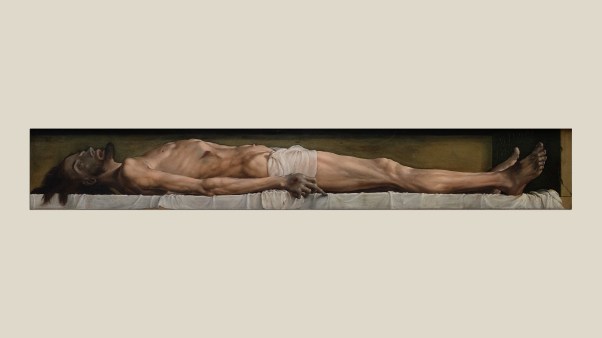
Most unbelievers are civil or even curious when we talk together about the Christian faith, with less than a handful of exceptions. One of those was on a university campus when a man said, “The 21st century is not the time for a zombie story, and that’s what Easter is.” His jab was that, by believing a previously dead man is now alive, we worship a reanimated corpse. “Ah,” I said. “The 21st century is a zombie story, and that’s what Easter undoes.”
My questioner was not stupid. He was right, of course, that we expect dead things to stay dead. That was true in the first century too. And he was right that we have an uncanny dread when we hear stories of things that are supposed to be dead but don’t stay that way. That was also true in the first century.
Even before his death, Jesus had to reassure his own followers that he was not an apparition. When the disciples saw his figure walking on the sea, “they thought it was a ghost, and cried out, for they all saw him and were terrified” (Mark 6:49–50, ESV throughout). When he appeared after the Resurrection, the disciples were again “frightened and thought they saw a spirit,” to which Jesus replied, “See my hands and my feet, that it is I myself. Touch me, and see. For a spirit does not have flesh and bones as you see that I have” (Luke 24:37–39).
A zombie is kind of a ghost in reverse: A ghost is a soul disconnected from a body, and a zombie is a body disconnected from its soul. Both ideas are rooted in our fear of death and of the mysteries of what’s beyond. Ghost stories are usually about some sort of unresolved business—a grievance unavenged or a love unrequited. The concept of presence without embodiment is scary to us. Zombie stories are about corpses that are essentially just meat animated by appetite. There are bodies but no reason or imagination or love, just craving.
Zombies and ghosts are stories we tell about two sides of the same dilemma. Even those who do not recognize the authority of the Bible can see some truth in the ancient account that “the Lord God formed the man of dust from the ground and breathed into his nostrils the breath of life, and the man became a living creature” (Gen. 2:7). We intuitively know that we are made of the same matter that’s in the cosmos around us. At the same time, we can reflect on that reality with a consciousness that transcends our biological makeup.
As Walker Percy wrote a half century ago, we feel sundered from ourselves because we seem to be neither organisms reacting to an environment nor intelligences standing apart from it. So we try to resolve the tension by thinking we are either merely animals, spurred on by conditioning or instinct or repressed sexual urges, or angels, potential gods who can transcend human limits. Our attempt to be all one or the other leads us to be neither: History has shown repeatedly that the refusal to be a creature turns a person into a monster.
And so here we are, over a quarter of the way through the 21st century, and we seem to have the worst of both stories.
We move like ghosts in this digital world—connected but disembodied, present but lonely. Many of us do not know our friends or acquaintances. We merely haunt them, lurking over their Instagram photos or their posts on X.


At the same, we feel like zombies. Our biological appetites are intact, but they are tossed to and fro by algorithms that tap into our limbic responses. Pornography can give the sensation of sexuality without intimacy. Online gambling can give the rush of earning without working. Even shopping can feel like the serendipity of finding exactly what you’ve been wanting—until you realize companies have only made it seem that way.
And what is the end result? Many people feel dead inside, hollowed out. When that gets intolerable, we have ways to try to go all in and become wholly ghosts or zombies. We can get addicted to drugs that speed us up or numb us down. We can become occultists seeking spiritual escape from the world or materialists trying to merge with it. And none of it works. That’s because the forces that offer solutions are the same ones driving the problems.
Zombies, after all, are devoid of reason or reasonableness, imagination or imaginativeness. All that moves them is what they want. And what they want is to feed off the life of others, to bite and devour what they cannot experience. And they are easy to command. All one must do is to find out what they want and drive them toward more of it, making sure there’s never enough.
The Bible actually has a zombie story, or at least a preemptive attack on one. The Serpent of Genesis 3 appeals to both aspects of the human makeup: zombie and ghost. We can act like animals, driven by appetite: “The woman saw that the tree was good for food, and that it was a delight to the eyes, and that the tree was to be desired to make one wise” (v. 6). We can act like gods, free from the created limits of morality (“Did God actually say?” v. 1) or mortality (“You will not surely die,” v. 4). The aftermath the account describes is one of disconnection—from each other, from God, from the world around us, even from our own bodies.
Fallen humanity was then driven from the garden. What most of us do not think about, though, is why:
Then the Lord God said, “Behold, the man has become like one of us in knowing good and evil. Now, lest he reach out his hand and take also of the tree of life and eat, and live forever”—therefore the Lord God sent him out from the garden of Eden to work the ground from which he was taken. He drove out the man, and at the east of the garden of Eden he placed the cherubim and a flaming sword that turned every way to guard the way to the tree of life. (vv. 22–24)
To leave a dying people with access to ongoing life would be leave them in a zombie existence that we can perhaps best describe as hell. Exile from the garden was judgment, yes, but it was also grace.
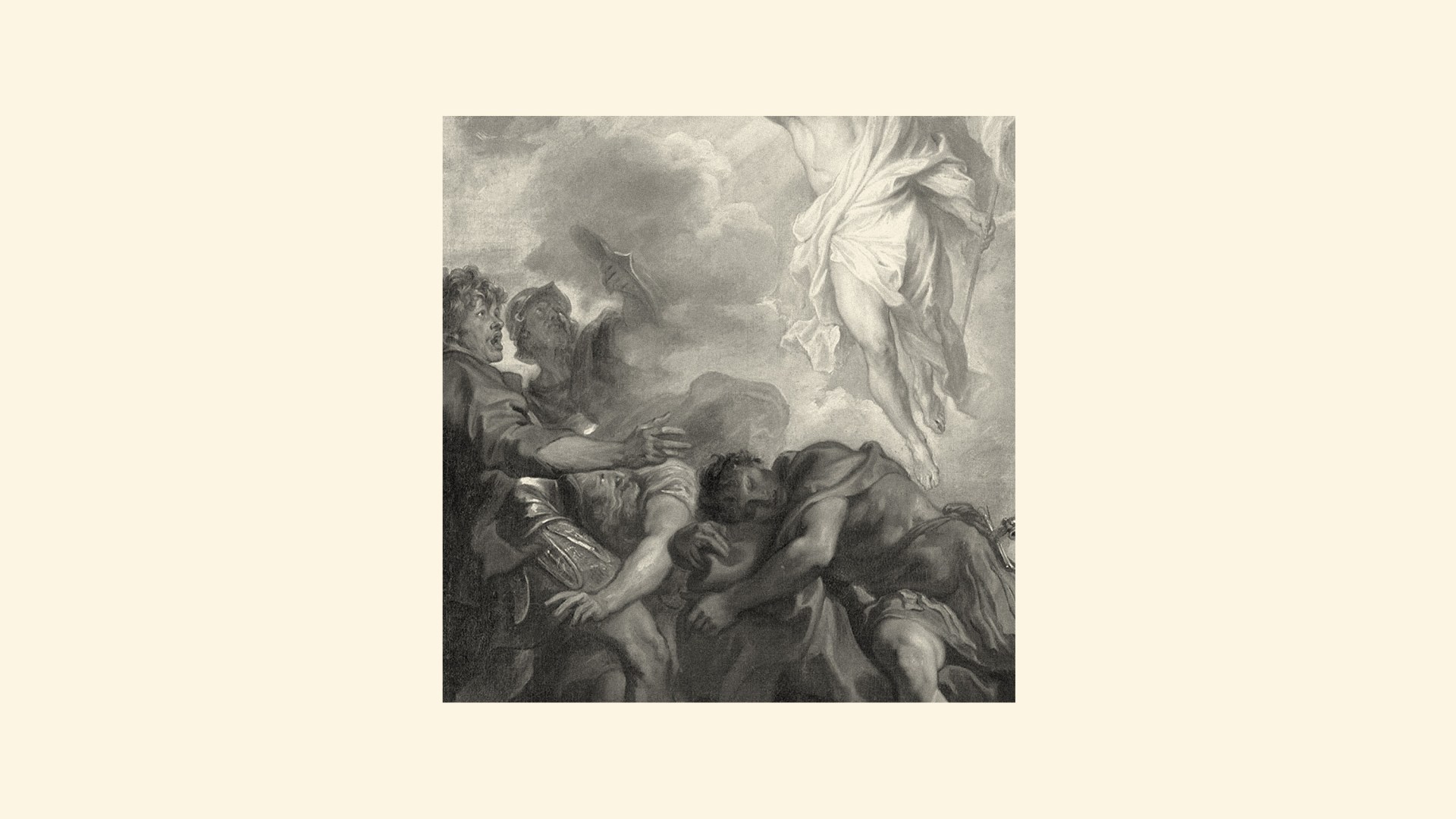
In the Gospels, the tomb of Jesus is described as being in a garden (John 20:15). Angelic beings are there, but the swordsmen—soldiers Pilate hired to guard the grave—fled the scene. Clothes are shed and folded in the crypt. Jesus approaches a weeping woman and calls her by name. And he tells her to “go to my brothers and say to them, ‘I am ascending to my Father and your Father, to my God and your God’” (v. 17).


In the resurrected Jesus, everything that was pulled apart now holds together—dust and breath, matter and spirit, heaven and earth, humans and God. The curse of death has ended. The covenant promises hold true. And Jesus’ message goes to the very ones who broke from him and fled at the arrest. He is “the firstborn from the dead” (Col. 1:18), whom we cannot follow now but will later.
And follow him where? As a pioneer, he is leading us into the very presence of God. All things are put back together there. And the Tree of Life is there (Rev. 22:2), unguarded and unharmed. It’s with a people who can eat of it, not as mere animals and not in limitless autonomy but as those who can say, “Behold, the dwelling place of God is with man. He will dwell with them, and they will be his people, and God himself will be with them as their God” (21:3).
Jesus is no ghost—and he is no zombie. He’s a living man standing in the presence of God, and his life flows backward to us. We feel the first twitches of life, just enough to make us want to join him where he is. He joined us in our human nature and reconnected it to God. He joined us in our curse and undid it. And he joined us in the sentence of death and reversed it. We hide in the bushes, trembling in shame, when we sense the presence of God. He steps forward and says, “Here am I, and the children God has given me” (Heb. 2:13, NIV).
Easter is no zombie story. It’s the end of one.
Russell Moore is editor at large and columnist at Christianity Today as well as host of the weekly podcast The Russell Moore Show from CT Media.