Ravi Kishore, a third-generation Christian from the southern Indian state of Andhra Pradesh, is caught in a bind. When census officials knock on his door, he must choose between two identities that dictate his life: his Dalit caste or his Christian faith.
Although his family has practiced Christianity for generations, they prefer being listed as Scheduled Caste (SC) Hindus in government records. The SC status, which is given to marginalized castes including Dalits, has allowed Kishore’s grandfather and father to access education and employment opportunities previously unavailable to the caste due to historic and ongoing discrimination. By identifying as Christians, they would lose that protection.
“I know I am not being honest by hiding my Christian identity,” Kishore said. “But do I have an option? Is the government being fair to Dalit Christians?”
Hundreds of kilometers away, in the northern state of Uttar Pradesh, Suraj Kumar is caught in different dilemma.
Kumar has been a Christian for about a year and a half, worshiping quietly with seven other families at a house church in his village. He works as an electrician to earn a living. His Christian identity, he felt, could come in his way of cultivating local networks and securing government contracts, which are necessary for his work and income flow.
“In my work, relationships matter,” he said. “If people know I am a Christian, it could change how they see me.”
In a state with an anti-conversion law in force and hostility towards Christians at its peak, Kumar is wary of identifying as a Christian in the census. “Tomorrow, they could charge me in some case just because I am a Christian,” he said.
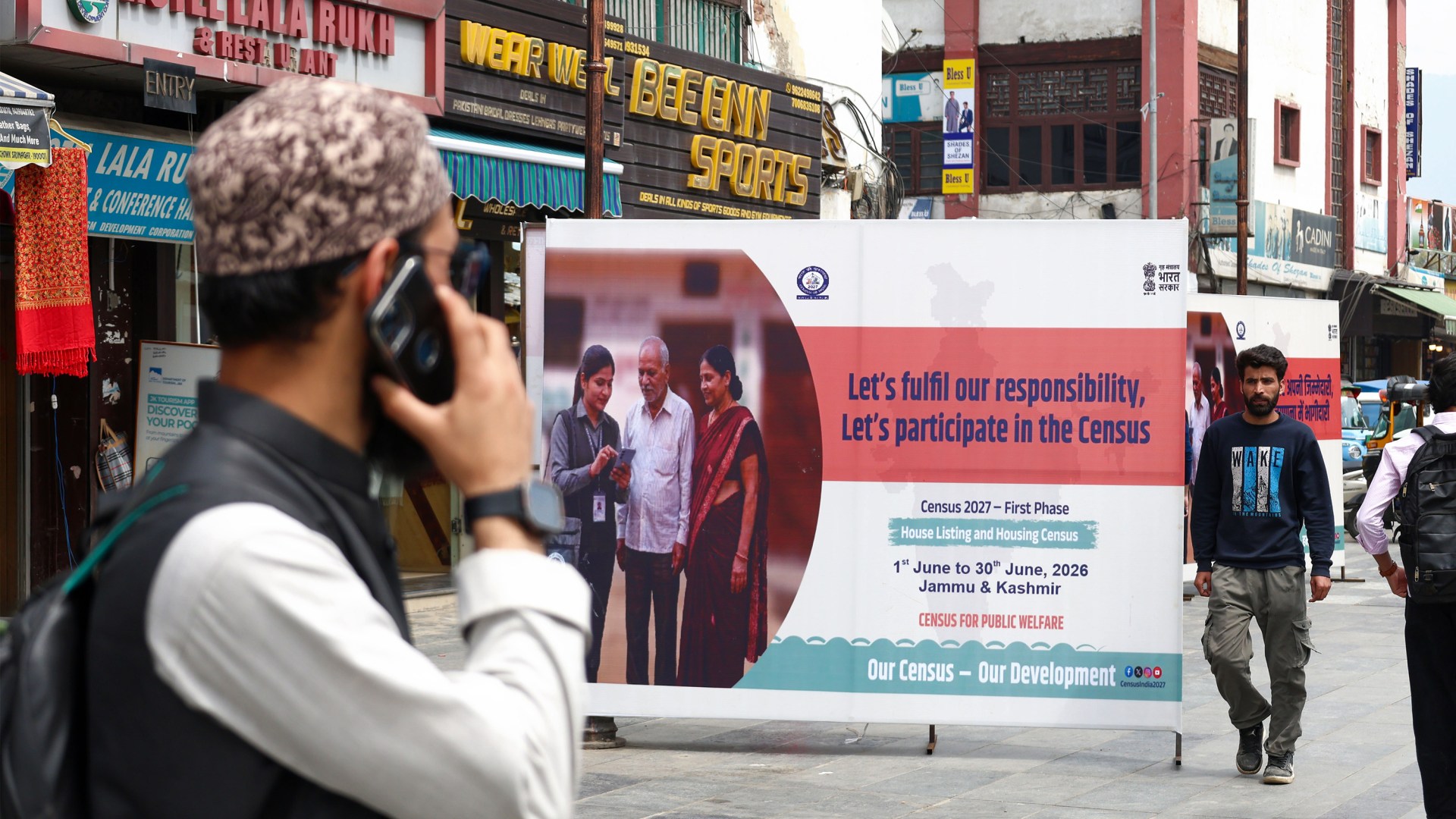
As India embarks on counting its estimated population of 1.4 billion this month, Christians are forced to make difficult choices that can impact their safety, identity, and belonging. The last census held in 2011 found that Christians make up 2.3 percent of the Indian population, which many believe to be undercounted due to the dilemmas believers like Kishore and Kumar face.
Originally scheduled for 2021, the government delayed the census due to the COVID-19 pandemic and administrative challenges. More than 3 million officials have been deployed to enumerate the world’s most populous country. The exercise will stretch over a year, with final data expected to be available at the end of 2027.
For the first time since India’s independence in 1947, the census will record caste along with religion. Intense political debate preceded this decision, and the change is expected to have wider implications for welfare delivery, public policy, and representation of various communities.
For Christians, particularly those from Dalit backgrounds or those living in regions steeped in religious hostility, the act of speaking openly about faith comes with its own consequences.
Christians in the 13 Indian states where anti-conversion laws are being enforced fear that their disclosure could invite unnecessary trouble from the government, leading to false charges against them. Police can make arrests without a warrant, and obtaining bail is extremely difficult. Convictions can result in jail terms ranging from one year to life imprisonment, along with hefty fines. In Uttar Pradesh, police made 1,682 arrests under the law between November 2020 and July 2024.
Hindu nationalists often justify violence toward Christians by claiming “conversion mafia” are leading large numbers of Hindus to Christ. While anecdotal evidence by church leaders reveals a growth in house churches across India’s urban and rural areas, there is no reliable data to capture the trend. According to census data, the percentage of Christians has remained largely stable between 1979 and 2011, making up 2.6 percent and 2.3 percent of the population, respectively.
“The very fact that the Christian population is less than 3 percent even after 79 years of independence shows that mass conversions are a bogey,” said Joshua Kalapati, associate editor of the Oxford Encyclopaedia of South Asian Christianity.
Similarly, a 2021 report by the Pew Research Center found that religious conversion in India is “rare.” Yet the narrative of mass conversion continues to shape public discourse, deepening the vulnerability Indian Christians face. As a result, Christians and Hindus will be watching the results from the 2026 census closely.
In the case of Dalit Christians, the census raises a far more complex question.
Under Indian law, SC status and the reservation benefits linked to it are restricted to Hindus, Sikhs, and Buddhists. Dalit converts to Christianity and Islam are excluded, under the assumption that caste does not exist in these religions.
Numerous government-appointed commissions found that in Indian society, caste transcends religion, and Dalit Christians face double the discrimination as Indian society looks down on both identities.
As a result, many of those believers are faced with a difficult choice: Declare Christian faith openly and risk forgoing job prospects and entrance to universities, or remain Hindu on paper and practice Christianity in private. Over the generations, many Christians have chosen the latter.
“Dalit Christians should be allowed to record both their identities,” said Asir Ebenezer, general secretary of the National Council of Churches in India. “Denying that choice amounts to discrimination.”
At a deeper level, the census also raises a fundamental question of who the government qualifies to be called a Christian.
“Is it someone formally affiliated with a church and holding a baptism certificate? Or someone who quietly attends a house church, believes in Christ, but has no official documentation?” asked A. C. Michael, national coordinator of the United Christian Forum. “It is a gray area.”
For some, safety and security take precedence over the question of identity. “There is no need for bravado,” said John Dayal, a Christian human rights activist. “Take your call on how you want to be identified by the state.”
But when the census data is finally released, the numbers still will not represent a true picture of the community as it will likely undercount Christians. Still, many are excited to see the results.
“The upcoming census, since it includes caste enumeration, will surely unravel more layers of Christian identities,” Kalapati said. “The census will generate more discussion and debate around the social status of the Christian community.”