On Saturday, February 28, just a few hours after the start of the US–Israel war against Iran and before the internet went dark, my sister called from Yazd in central Iran. Her voice was calm.
“Don’t worry,” she said. “We have supplies. We’ll stay home. We’ll lock the doors.”
Then the line went silent.
By the next evening, reports emerged that her area had been bombed. After that, nothing. No messages. No calls. No confirmation. Just silence.
Days later, she managed to call again briefly, just long enough to say the family was alive. Alive—but still behind locked doors.
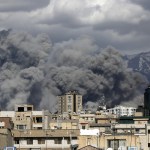
In recent weeks, Iran has been plunged deeper into war. Airstrikes have hit cities, energy infrastructure, and residential areas. Reports—fragmented and difficult to verify—suggest widespread destruction of homes, hospitals, and public spaces. Communication blackouts have made it nearly impossible to know what is happening on the ground.
For those inside—and for those of us with family there—fear, uncertainty, and waiting are a lived reality.
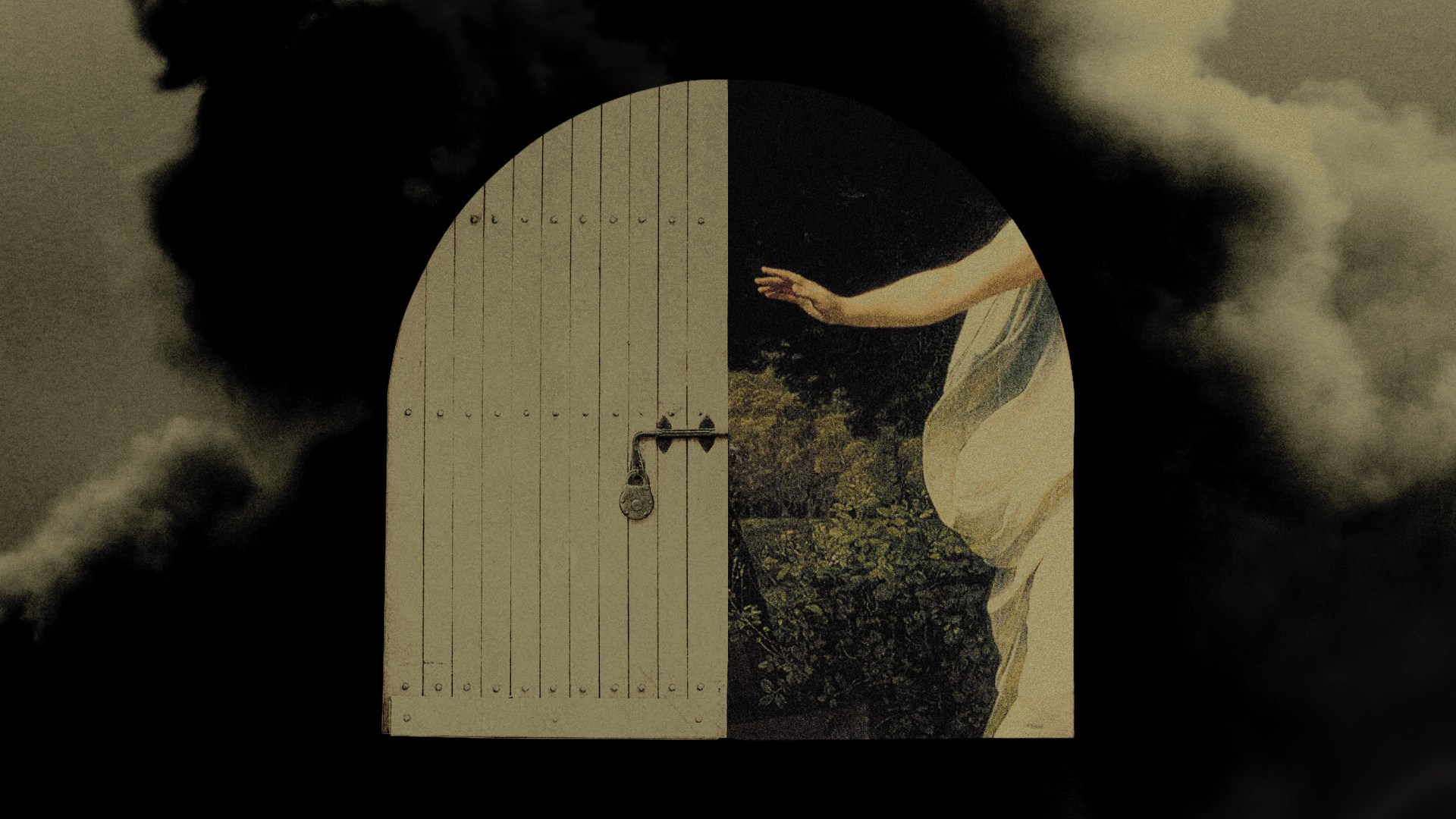
And in the middle of that waiting, I found myself returning to a familiar passage: “On the evening of that first day of the week, when the disciples were together, with the doors locked for fear of the Jewish leaders, Jesus came and stood among them and said, ‘Peace be with you!’” (John 20:19).
John’s gospel does not hide the fear of the disciples. After the Crucifixion, they are not bold or triumphant. They are hiding. Their fear is a reasonable response to violence. They have seen what power can do, so they lock the doors.
That image, behind locked doors, has followed me in the weeks since the war began. It is one Iranians are familiar with. In societies shaped by prolonged authoritarian rule, closing the door is not simply retreat; it is learned wisdom. Private space becomes a fragile shield against surveillance, detention, and violence. And yet even locked doors do not—and did not—always protect us.
My childhood unfolded in the shadow of prison. Visiting my siblings in prison was part of ordinary life. I remember one visit when my brother was weeping. He had tried to save a prostitute sentenced to execution by asking to marry her, hoping to spare her life, but his request came too late.
“I couldn’t save her,” he said. The system was swift and unforgiving.
Yet even within prison, there were signs of dignity. I remember the handbags and handicrafts prisoners made, which we bought to support them. As a child, I loved those heavy handbags: their stitching, their colors, their weight. Only later did I understand that they were more than objects. They were quiet acts of resistance, beauty created under constraint.
Our home was never entirely private. At least once a month, we burned books in our backyard tanur—the bread-baking oven—after warnings that the Islamic Revolutionary Guard Corps was coming to search the house. A neighbor, both a friend and an informant, would give us a narrow window of time. We burned books to protect ourselves, then slowly bought them again. Buying and burning, concealing and reclaiming.
Even home was negotiated space, never fully secure.
My journey adds another layer. As a young student leader, I identified as a Communist and atheist. I believed structural injustice required structural change. When I once told my mother that I might be arrested, she said, “If it is for your ideology, I will be proud of you. But if it is for immorality, I won’t forgive you.” That distinction shaped me deeply. When I later became a Christian, my concern for justice was reoriented. Faith did not silence political awareness; it deepened its grounding.
As older teenagers, my friend, my brother, and I searched for the unmarked graves of dissidents executed in the early 1980s. We found two beneath a large tree. We sat there in silence then read a poem to them.
These memories shape how I respond to the present geopolitical moment. As a family, we did not support the Iranian regime. My story is marked by resistance to its coercive practices. Yet opposing domestic authoritarianism does not automatically mean embracing foreign intervention. Sovereignty, even when misused by regimes, remains a serious moral concern. The history of the region reminds us that external military action often fractures societies rather than restores them.
When Jesus appears in John 20, Rome has not fallen. The empire remains intact. The disciples remain vulnerable. And the risen Christ shows them the scars in his hands and side. The scars remain visible, a reminder of the violence. Yet resurrection carries it forward in transformed form.
I too have seen scars caused by interrogation and torture, even more vividly after I became a Christian. I have seen cigarette burns on a friend’s side, leaving small holes in his flesh because of his faith. I have seen another friend’s shoulders damaged simply because he believed in Christ. I have seen my brother’s back torn by lashes. I have also known detention and questioning myself.
John’s narrative resists two temptations: It does not deny fear. (The doors remain locked.) Nor does it promote retaliation. Instead, Christ speaks peace into a room shaped by fear. This peace is an invitation to a different way of being present. “As the Father has sent me, I am sending you” (v. 21). The disciples are commissioned to embody power rather than taking it.
Today, responsibility cannot be reduced to simple alignment with a regime or foreign power. It calls for discernment. As part of the Iranian diaspora, I am conscious that those inside the country have endured sustained repression in ways many of us outside have not. Our voices must therefore be careful: How do we speak responsibly about a country we no longer live in—but still belong to?
Iran today feels like a locked room, a place filled with the sounds of aircraft, explosions, ambulance sirens, fear, rumors, and unanswered questions. Perhaps my own heart feels like that room too. I now know that my family are alive. But many others have died, and many more have been made homeless. New scars are forming—on bodies, on cities, on memory.
Part of me wonders, Could this mean change? Could I return? Another part asks, What will be the cost? Will sovereignty be lost? Will Iran become another fractured country in the Middle East?
When Jesus says, “Peace be with you” (v. 19), it is not the peace of empire. It is not the peace of silence. It is the peace of wounded hands that did not retaliate.
I am Iranian. I am Christian. I carry scars.
John 20 also speaks of breath. Jesus breathes on the disciples and says, “Receive the Holy Spirit” (v. 22). Breath recalls creation: a new beginning. It suggests that renewal begins with interior transformation and shared vocation rather than dominion. Applied to Iran, it suggests that lasting change emerges from dignity, accountability, and resistance. It resists the reduction of our future to pure power calculations.
Christ enters the locked room without dismantling the door. He does not rebuke the disciples for their caution. He neither glorifies fear nor demands reckless exposure. He stands among them, shows his scars, and speaks peace.
I do not know how Iran’s political future will unfold. Power will shift. Narratives will compete. Nearly five decades of accumulated scars will not disappear overnight.
What remains is a posture shaped by memory and faith, resistance and grace—resistance without cruelty, critique without surrender to empire, hope without romanticizing collapse. The inheritance of my childhood—prison corridors, burned books, hidden fugitives, unmarked graves—does not demand vengeance. It calls for moral seriousness and responsibility.
The passage in John does not offer escape from uncertainty. Peace is spoken into fear, not after fear is gone. Scars are acknowledged. Commission follows encounter. The locked room becomes not only a place of confinement but also a place from which vocation begins.
Behind locked doors, the gospel reminds us, Christ is present.
A version of this article was published on the Oxford Centre for Mission Studies’ website.
Related