Late March is corn-planting time, and from 4:30 a.m. to 10 p.m. every day, Mississippi farmer Rodney Mast hums along in his John Deere tractor, hundreds of unsown acres spread before him and a can of Planters peanuts by his side.
“This is the time of year that farm boys live for,” said Mast, who lives in Crawford, Mississippi.
But there’s more to Mast than meets the eye. On top of his tractor, two small flags ripple in the wind: one American and one Ukrainian.
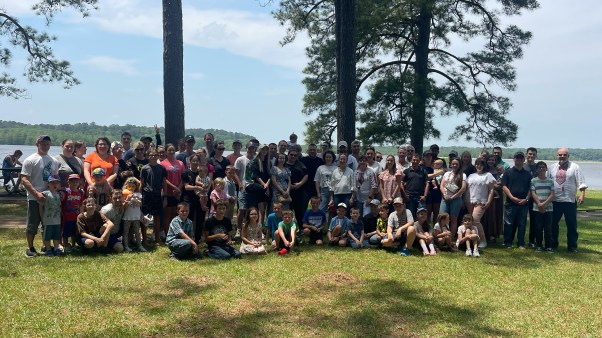
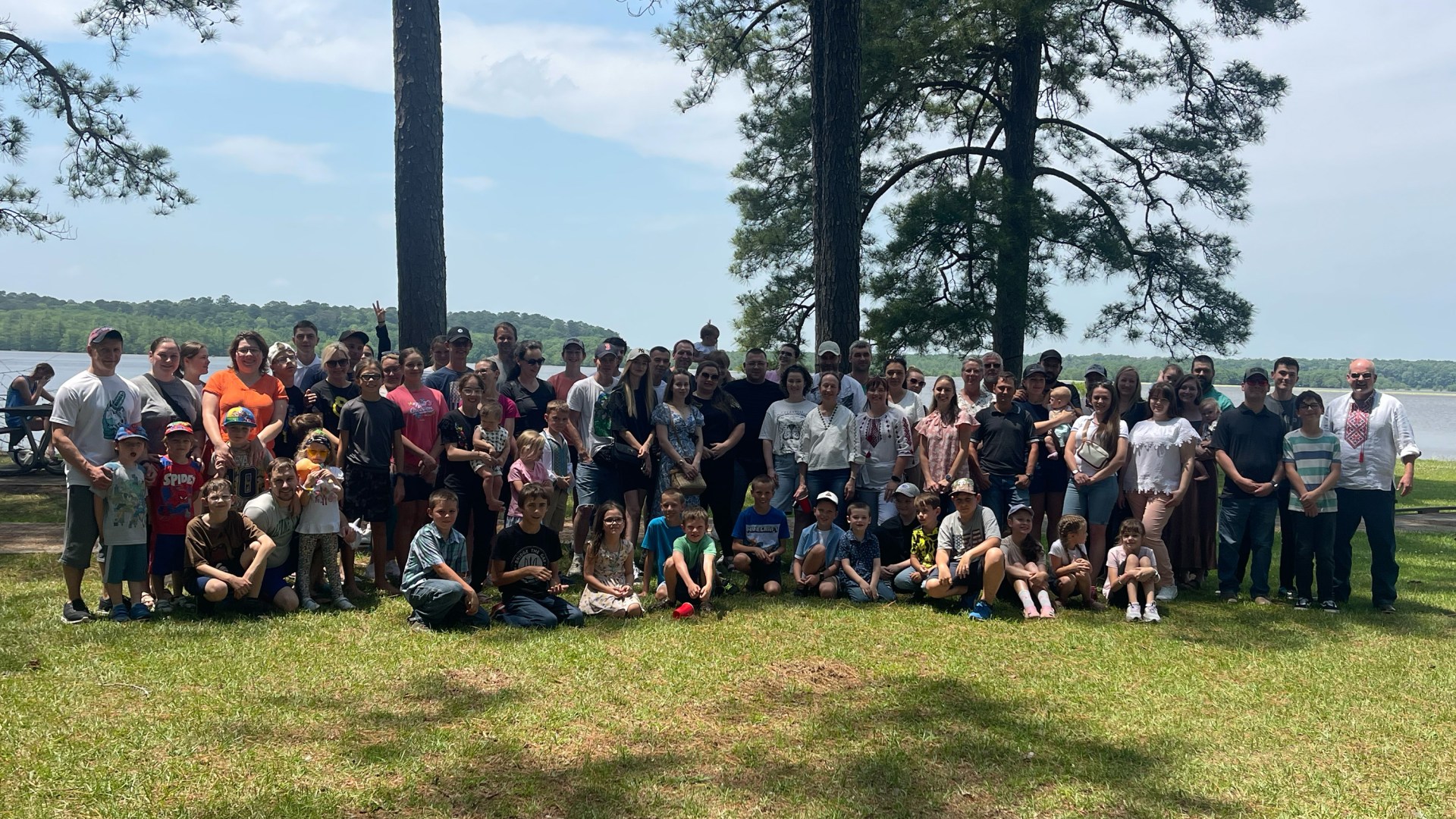
Mast has helped more than 150 Ukrainian refugee families resettle in the US—24 of them in the rural Golden Triangle area of northeast Mississippi.
“If five years ago, ten years ago, someone would’ve told me that I would have created a little Ukrainian community here in Mississippi, I would’ve practically laughed,” Mast said.
Mast is a third-generation farmer, but his family has left behind a legacy of more than crop raising.
Mast’s grandparents moved from Indiana to Mississippi in the 1960s to help with racial reconciliation in a deeply divided post–Jim Crow South. Mast said his grandmother cared for sick neighbors and taught literacy classes for Black women. His grandfather provided jobs for their husbands on his farm, always treating them like equals. Mast said this example instilled in him a passion for cross-cultural ministry.
His farming background also uniquely prepared him to “do the task in front of him,” which is how his efforts with refugees began, he said.
“We have to do whatever the crop is demanding, whatever the weather gives us,” Mast said. “We have to adjust and roll with the punches.”
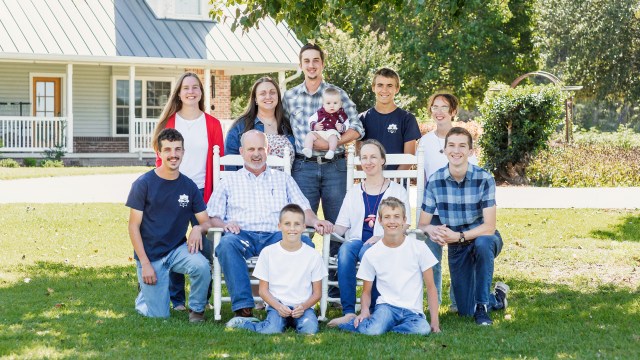
In December 2018, Mast and his wife, Christine, hosted a child from Ukraine for six weeks through International Host Connection, a nonprofit that connects orphans with US families. This led to their 2019 adoption of three boys from Ukraine. The organization asked Mast to serve on its board, and when war broke out in February 2022, he traveled to Poland to oversee the evacuation and resettlement of orphans. He returned to Poland in June of the same year and, after making sure the orphans were situated, shifted his efforts to help Ukrainian families.
On April 21, 2022, the Biden administration created the Uniting for Ukraine program, which allowed an individual in the US to sponsor a displaced Ukrainian family for a period of two years. Mast researched videos about the program, thought it looked “pretty easy,” and proceeded with the paperwork.
While searching social media groups for potential Ukrainian families to match with, he had two criteria: eagerness to work and respectfulness.
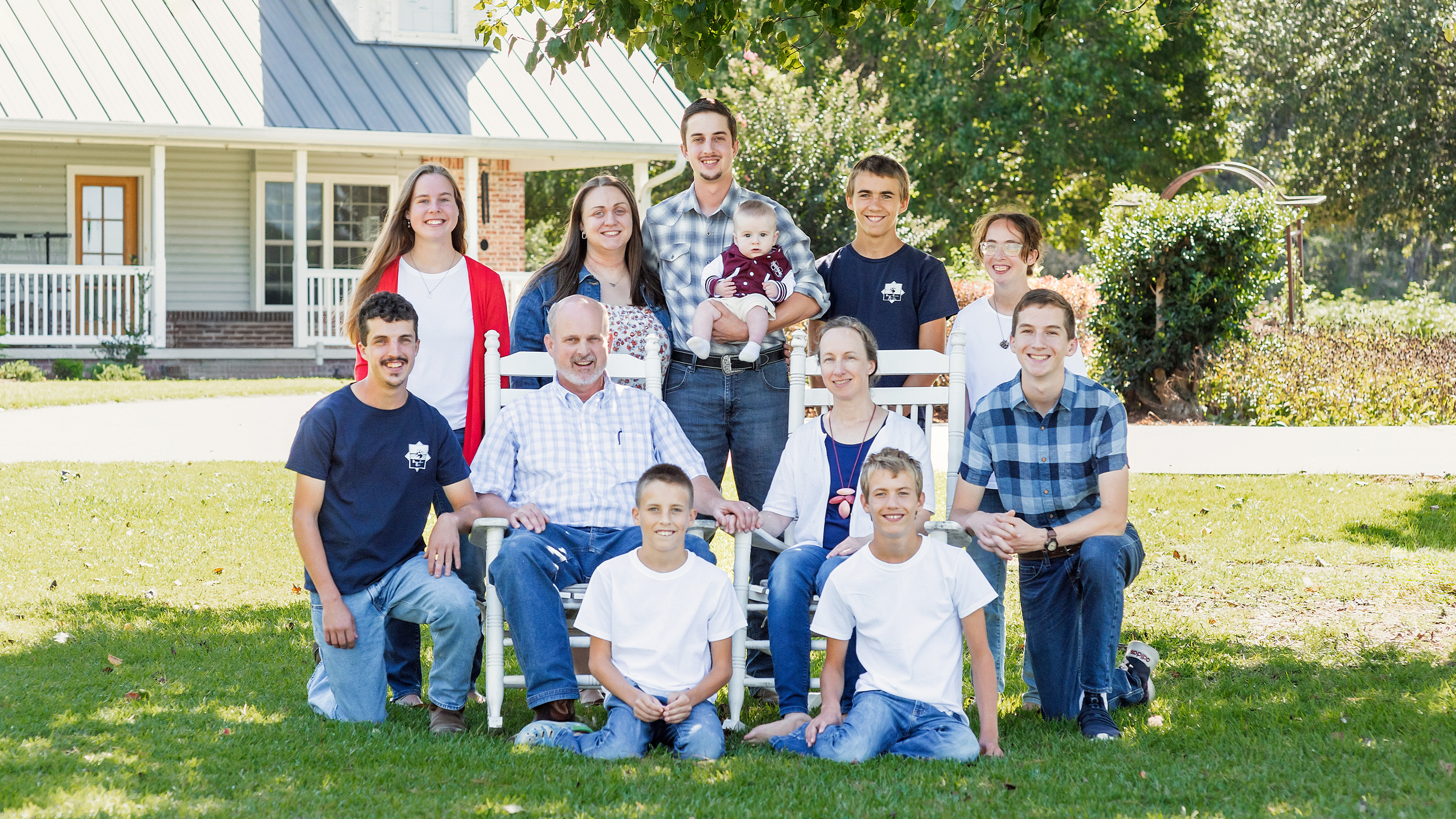
The first family the Masts sponsored had five sons. Mast and his wife, parents of eight children themselves, immediately connected with them. “Our hearts went out to them,” Mast said. The family arrived that August.
Since then, Mast said he has become a “middleman and mentor” to hundreds of sponsors in the US, connecting them with Ukrainian families and providing resources and guidance as they navigate the process.
But sponsorship is only the beginning. It takes a village to care for these families, and Mast said the response from his community has been “overwhelming.”
Churches and individuals across northeast Mississippi rallied to support the newcomers. Ahead of their arrival, Mississippians donated clothes and household items and decorated apartments. Once the Ukrainians arrived, these Americans showed them how to enroll their children in schools, accompanied them to the doctor, and helped them open bank accounts and obtain phone plans.
Mast’s church, Redeemer Church in Starkville, Mississippi, has an average weekly attendance of 12–15 Ukrainians and hired a Russian translator for its sermons. Way of the Cross church in nearby Brooksville puts Russian text on the screen, and Emmanuel Baptist Church in Starkville has a Russian Bible study.
“It’s sweet and good when people outside of their familiar culture are mingled together under the banner of Christ,” said Kevin Shoemaker, head pastor of Redeemer Church.
Halyna Yefimenko, a young mother from southern Ukraine, arrived on September 9, 2023, at the tiny Golden Triangle Regional Airport with her husband and two sons. She was eight months pregnant. Waiting to greet her was the Mast family as well as her family’s sponsors, who drove them to their new home—fully furnished with donated furniture, beds made, pictures on the wall, and even groceries in the fridge.
Their sponsors organized a housewarming party for them, which families from the sponsors’ church, Way of the Cross, attended, bringing gifts and welcoming them to Mississippi. Church members also threw her a baby shower and were present at the birth of her child. Yefimenko was blown away.
“We have probably never received so much help in our lives,” Yefimenko said. She added that the example of their love strengthened her faith. “I believed in God before in Ukraine too. But when I moved here and met these people and I saw how they believe in God, my faith [has] become more strong.”
Kseniia Yermakova, who goes by Ksu, is an Orthodox Christian from Sloviansk, a small city in Eastern Ukraine eight miles from the frontline. Mast’s generosity and care deeply impacted her as well.
On the day the war began, February 24, 2022, Yermakova, who was living in Kyiv at the time, received an early-morning phone call from her best friend. “What do you hear?” the friend asked. As they were speaking, Yermakova saw and heard a missile slice through the sky. In that moment, she said, she understood the war had begun.
She and her now-husband fled on foot to her in-laws’ home in a suburb of Kyiv, not knowing it was occupied by Russians. The couple decided they couldn’t hide in the basement and wait for a missile to bury them with debris, so they fled to central Ukraine, Yermakova recalled. Her best friend left for the US, where Mast helped her resettle in Mississippi. She begged Yermakova to come too.
“We believed in Ukrainian victory so much that we thought that we are safe in our own country,” Yermakova said.
But in 2024, Yermakova and her husband began talking about growing their family and didn’t want to have a baby in a city with perpetual shelling. They decided to move to the US, and her best friend sponsored them. Through Uniting for Ukraine, even parolees could sponsor other families if they had sufficient financial means.
Yermakova’s parents and grandmother still live in Sloviansk despite her constant pleading for them to move to a safer part of Ukraine. Just two weeks ago, a Russian bomb destroyed her grandmother’s home. Her grandmother survived only because she had gone outside for a few minutes.
“I’m calling my mom every day to find out if they are still alive,” Yermakova said.
Yermakova said she carries a lot of sadness with her, especially for her family still in Ukraine, but continues to be impressed with the kindness of Mast and others in her small Mississippi town. Mast lent Yermakova and her family money for their resettlement process, helped them find their apartment, and provided furniture and household items.
“People here are [warm hearted], and they are generous, and they are ready to help,” Yermakova said.
Yet even after arriving in the US, the hardships have continued for Yermakova and thousands of other Ukrainian refugees. In the first month of his second presidential term, President Donald Trump halted the Uniting for Ukraine program. While Ukrainian refugees in the US are eligible to apply for re-parole, the US Citizenship and Immigration Services’ (USCIS’s) slow processing times have forced Ukrainians out of legal status—and out of the country. Many have no home to which they can return. USCIS also increased fees for approved re-parole applications to $1,000 per person, which poses a great financial challenge for refugees, especially large families.
Mast has witnessed firsthand the toll this has taken on the Ukrainian community.
“They weren’t wanted there; they aren’t wanted here. They don’t know where to go,” he said.
Refugees are allowed to apply for re-parole six months before their current parole expires. Because of the long wait times, Yermakova applied even earlier, although USCIS noted that filing earlier would not result in a faster decision and could result in denial. Her family’s parole expires April 19, and with it her husband’s work permit and driver’s license.
They’ve heard nothing so far except that their case is still being processed. The family is exploring other immigration routes, including work visas and asylum. If those pathways aren’t possible and their parole isn’t renewed in time, they have no idea what they’ll do next.
Mississippians continue to rally around these families, joining calls with lawyers, lending money for fees, extending prayers, writing letters to USCIS pleading their Ukrainian friends’ immigration cases, and organizing social events, like an annual crawfish boil, to build community. Mast travels regularly to Washington, DC, to advocate for Ukrainian interests, including the Ukrainian Adjustment Act, which would provide a pathway to permanent residency for parolees in the US.
Vika and Bryan Jones from Emmanuel Baptist Church help Mast coordinate social events for the Ukrainian community. Vika, a Kazakhstan native, speaks Russian, the first language of many Eastern Ukrainians. She often acts as a translator for the refugees, including Yefimenko when she was at the hospital giving birth. The Joneses urge Americans not to forget the plight of Ukrainians.
“The war is still going on there, but it’s not new anymore,” Vika Jones said. “So I feel like people think ‘Oh, [Ukrainian refugees are] fine’ and everything, but they’re still struggling.”
Supporting Ukrainian refugees is part of the biblical mandate to love your neighbor, Mast said.
“God has very unique plans in our lives,” Mast said. “One thing I would express to other people that wonder, ‘How do we get involved in something like that?’ I don’t know. Just do the task that’s in front of you. Help the person that is nearby, and see what happens.”
Related