Looking east on a clear day, Usama Nicola can see Amman, Jordan, from his balcony in Bethlehem. Since Israel and the US jointly attacked Iran on February 28, the father of three has been able to trace the white smoke of incoming Iranian missiles during the daytime. At night, barrages streak across the sky like menacing shooting stars. Every morning, Nicola finds that the decorative letters spelling out L-O-V-E lining a shelf on his balcony have shifted from the impact of missile interceptions.
By the war’s second week, Nicola had deleted the Israeli early warning app on his phone since he could hear the air raid sirens installed in Israeli settlements surrounding Bethlehem. During an incoming barrage, all he and his family can do is shelter in their home. Unlike many Israelis, most Palestinians in the West Bank do not have safe rooms in their homes, and the Palestinian Authority has not provided public shelters for citizens.
“We are totally in the hands of God,” said Nicola, a Roman Catholic.
Now in its second month, the war has claimed at least 4,500 lives in more than a dozen countries and has sent global energy markets spiraling. President Donald Trump said that talks aimed at ending the conflict are progressing, though Iran denies any direct negotiations. Israel and the US continue to target military and nuclear sites in Iran, while Israelis and Palestinians shelter from an average of 10 Iranian missiles daily, a 90 percent reduction since the beginning of the war.
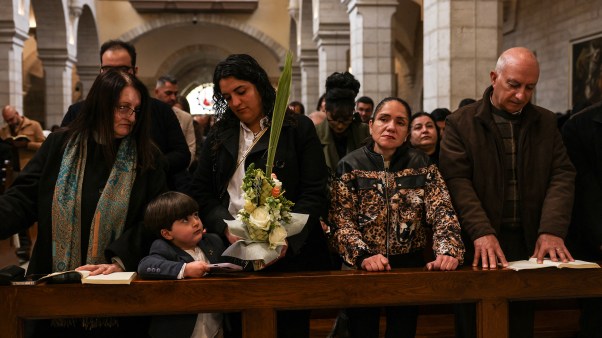
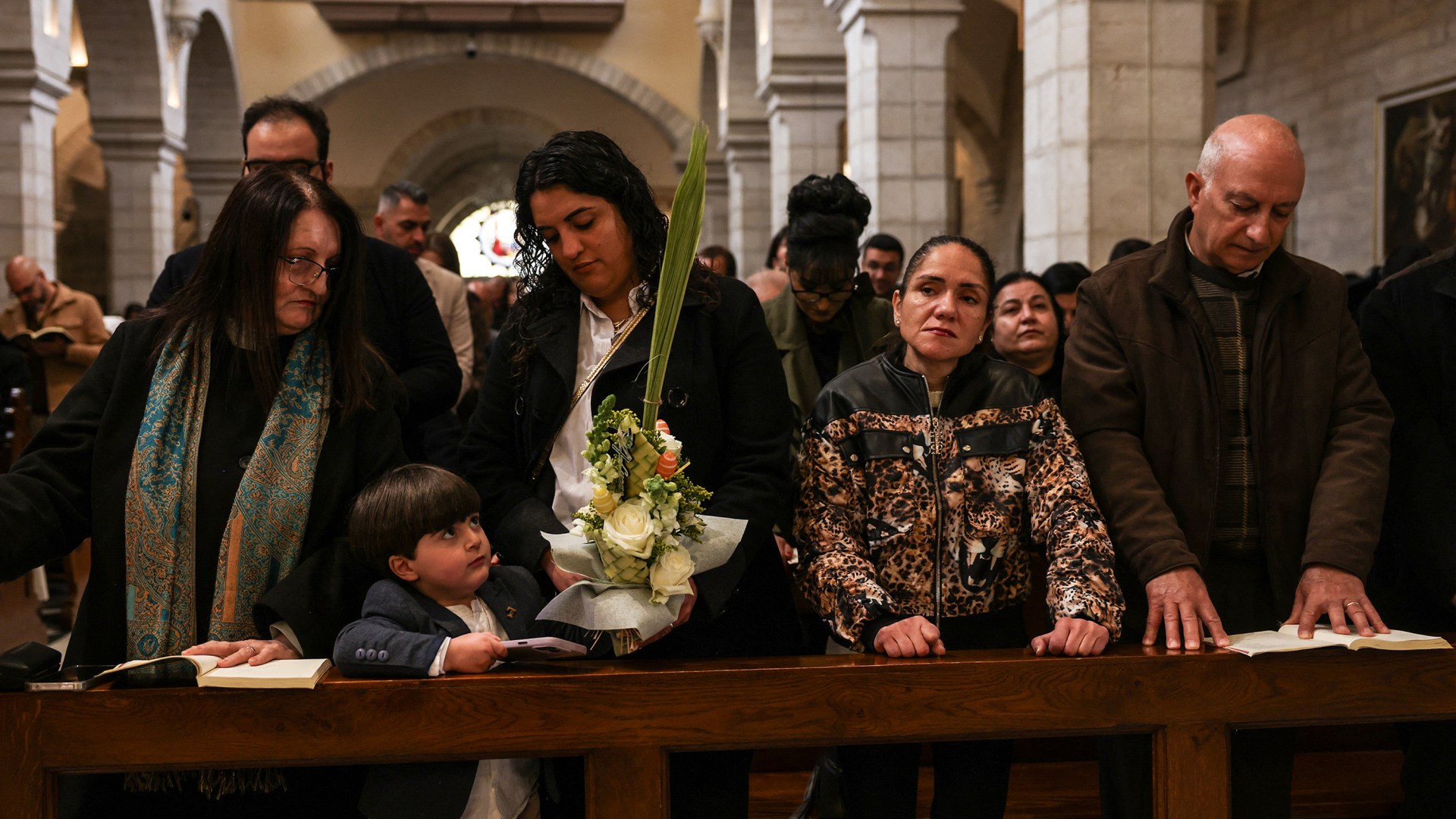
Palestinian Christians living in the West Bank, Gaza, and East Jerusalem number fewer than 47,000 and make up just 1 percent of the population. As they prepare for Easter, they find themselves under immense pressure as they face war alongside tightened movement restrictions and continual cycles of settler violence.
At this time of year, Nicola usually leads locals and tourists on hiking tours in the desert east of Jerusalem and Bethlehem. He finds the quiet of the desert healing. Small wildflowers remind him that even in harsh conditions, life continues. Especially during Lent, he enjoys walking in this wilderness—the same one in which Christ was tempted for 40 days—to listen for the voice of God.
This year as the Bethlehem governorate’s 23,000 Christians anticipate Easter celebrations, Nicola cannot go to the desert to relieve stress. Since October 7, 2023, the Israeli government closed more of the desert to Palestinians, he says. New barriers and heavy fines deter them from entering previously accessible areas—though the land is technically part of the West Bank and still open to Israelis. Nicola says that Bethlehemites feel caged.
In addition to the Israeli-built security wall, checkpoints, and roadblocks, about 20 settlements and outposts built on the West Bank’s Area C confine Bethlehem’s residents. Bypass roads, which can only be used by Israelis, connect these communities. Nicola describes this system as a vast net thrown over the West Bank.
Israeli settlements in the West Bank and East Jerusalem house around 737,000 settlers, with 100,000 in the Bethlehem governorate alone. Though the Israeli government legally approves of the settlements, claiming they are necessary for Israel’s national security and are built on “legitimately acquired land,” international law considers them illegal. The UN describes them as built on expropriated land belonging to the future Palestinian state.
For many, life in the West Bank, which Israel occupied in 1967, has become unbearable. Nicola says that every day, he hears about another Palestinian preparing to leave. In the last two and a half years, he estimates that Bethlehem has lost 10 percent of its Christians. Hundreds of families with centuries of history in the Holy Land have emigrated, seeking freedom, better economic opportunities, and a future for their kids.
“I know, personally, leaving is better for me and for my children,” Nicola said. “But I decided to stay because I feel that I am connected to the town of my faith because of the history of my family in this place, because of my church, because of my deep roots. Yes, we lose freedom … but my faith makes me stronger. I need to stay human under all these pressures.”
The steady stream of Christians leaving the Palestinian territories is not new. Statistics show that Bethlehem’s population was more than 80 percent Christian in 1947. By 2017, due to emigration and much lower birthrates in Christian families than in their Muslim counterparts, it was around 10 percent.
Fares Abraham left Beit Sahour, a town east of Bethlehem, in 1998 to study at Liberty University. He committed his life to Christ at a Rick Warren conference, then worked as a contractor for the US government.
Three years later, his family followed him to the United States amid heavy fighting between the Israel Defense Forces and Palestinian armed groups during the Second Intifada. Many nights, his parents and siblings had slept on the floor to avoid the bullets whizzing through their windows. Hours after they left Beit Sahour—temporarily, they said, until things cooled down—Abraham’s uncle called his father to say their home had been shelled by an Israeli tank.
In 2013, Abraham founded Levant Ministries, an international organization that disciples young Arab Christians and mobilizes them to reach their communities with the transforming love of Jesus.
Levant Ministries works with young people in Bethlehem, many of whom feel trapped. “When they can’t find a good paying job, when they can’t find land to build a house on, when they can’t access roads, when they can’t travel freely—that creates a huge vacuum and it creates … a sense of desperation caused by the Israeli military occupation,” Abraham said.
Abraham, who now lives in Orlando, Florida, with his wife and three kids, describes Christian Palestinians as the salt of the earth and the life of Christ’s body in the Holy Land. He believes Christians are poised to speak life and embody biblical principles and values in a conflict-ridden region. Therefore he finds the diminishing Christian presence in Palestine alarming.
A 2020 survey by the Palestinian Center for Policy and Survey Research and the Philos Project found that 60 percent of Palestinian Christians left the region for economic reasons. In Bethlehem, more than half of the city’s Christians work in the tourism industry, which was crippled first by COVID-19 and then the Israel-Hamas war. After October 7, 2023, the Israeli government revoked work permits for nearly 100,000 West Bank Palestinians working in Israel and Israeli settlements. As of July 2025, only 11 percent of those permits had been renewed.
But Palestinians’ concerns are more than economic. More than 80 percent of those surveyed fear settler attacks, deprivation of their civil rights, and expulsion by Israelis from their homes and lands. About 70 percent are concerned about “the endless Israeli occupation.”
“If you want to bless Israel, then bless them with Jesus, and the way you bless them with Jesus is by strengthening the Christian presence,” Abraham said. “For me it’s counter-gospel, it’s anti-gospel, if we support policies that diminish the Christian presence.”
Buthina Khoury, a filmmaker and Greek Orthodox Christian living in Taybeh, describes how some of these policies manifest in her village. With a population of around 1,300, Taybeh, located north of Jerusalem in the Ramallah and Al-Bireh governorate, is considered the last completely Christian village in the West Bank.
As Khoury spoke with CT, an Iranian missile exploded overhead. The war with Iran does not frighten her, she says, especially after watching Palestinians die daily in Gaza during the Israel-Hamas conflict. For her, the real fear comes from radical settler attacks and from Israeli forces controlling movement in and out of Taybeh.
As in Bethlehem, IDF checkpoints and road closures make travel in and around Taybeh extremely difficult. Before her father’s death, Khoury regularly drove him 11 miles to Ramallah for kidney dialysis, frequently getting stuck on the roads for hours. Her nieces and nephews who attend Ramallah schools must leave home at 5:30 a.m. to arrive for classes at 8.
Radical settler violence has pummeled Taybeh as well. Khoury says that sometimes armed settlers raid the village at night, shooting windows and breaking into homes. They’ve set fire to cars and graffitied racist messages on walls. In the fall, settlers shot at Taybeh residents trying to harvest olives in their orchards. Early in the Iran war, they stole her cousin’s horse and pony, which she said were valued at close to $10,000.
On the night of March 21, settlers launched a coordinated attack on Palestinians in 20 locations across the West Bank after a Palestinian-owned truck hit an ATV and an 18-year-old settler in it died. In Taybeh, Khoury says that around 30 settlers occupied a factory at a quarry a few kilometers from her home. They raised an Israeli flag and expelled the owner, telling him he could move to Egypt or Jordan.
Settler violence has skyrocketed since October 7. In 2025, there were 867 recorded incidents of settler violence toward Palestinians, according to The Times of Israel. The IDF and Shin Bet, Israel’s security agency, believe that a group of around 300 radical settlers are responsible for most of the violence. Under far-right security minister Itamar Ben-Gvir, settlers are usually protected by the IDF or the Israeli police, and their crimes usually go unprosecuted.
Palestinians who try to defend themselves or their property against settlers are “shot at, killed, detained, injured, beaten,” Khoury said. Last month, Israeli settlers beat and sexually assaulted a 29-year-old Bedouin shepherd. They also attacked his children, relatives, and an American staying with the family, stealing their valuables and 400 sheep.
Khoury believes in living out Jesus’ commands to love her neighbor, love her enemy, and turn the other cheek. Yet she admits that the amount of violence she has witnessed in the last two and a half years makes her long for the injustice of occupation to be lifted.
“We cannot endure any more violence,” Khoury said. “We cannot endure any more humiliation. We cannot endure to be treated like animals, as they describe us. We cannot accept that anymore. We have paid a high price throughout the years.”
In the meantime, Khoury deals with stress by providing physical and emotional support to other Palestinians—Christian and Muslim—in Gaza and in northern West Bank cities like Jenin, Tulkarem, and Nablus, which have borne the brunt of IDF incursions in recent years.
“To be close to Christ, I have to be close to all those fellow Palestinians who lost their dear ones,” she said.
Traditionally, Khoury says that Taybeh’s Orthodox, Catholic, and Melkite Christians gather on Easter to pray in the ruins of St. George’s Church, built in the fifth century to commemorate Jesus’ visit to the town, then known as Ephraim. After a Lenten fast, Orthodox Christians wait to receive what they claim to be a miraculous holy fire from Jerusalem’s Church of the Holy Sepulchre.
Khoury has not been able to visit the traditional location of Jesus’ crucifixion, burial, and resurrection since 2019. She laments that she cannot get an Israeli permit to go to Jerusalem and pray in the church, though tourists visit with ease.
Nicola’s visit to the Holy Sepulchre on Easter weekend last year turned traumatic. Israel granted Nicola and his then-eighth-grade son Yazan permits to enter Jerusalem, but not his wife and two other children. When the two returned to Bethlehem that evening, Nicola said his return was recorded but his son’s was not. Consequently, authorities blacklisted Yazan, barring him from returning to Jerusalem for months.
Nicola will not be able to worship at the Holy Sepulchre this year, though he considers visiting Jerusalem inextricably linked with Easter. After the war with Iran started, Israeli authorities closed the holy sites of Al-Aqsa Mosque, the Western Wall, and the Church of the Holy Sepulchre indefinitely.
On Palm Sunday, Israeli police prevented Cardinal Pierbattista Pizzaballa, head of the Catholic Church in the Holy Land, and Francesco Ielpo, the guardian of the Church of the Holy Sepulchre, from entering the church. In response to international uproar, the police and church leaders reached an agreement on Monday that will allow Holy Week services to be broadcast to Christians worldwide—though access to the church will be given only to “representatives of the Churches.”
With shrapnel falling in the Old City recently, Israel calls these restrictions a security precaution. At the same time, Palestinian Muslims and Christians fear these closures set a dangerous precedent of restricting access to holy sites.
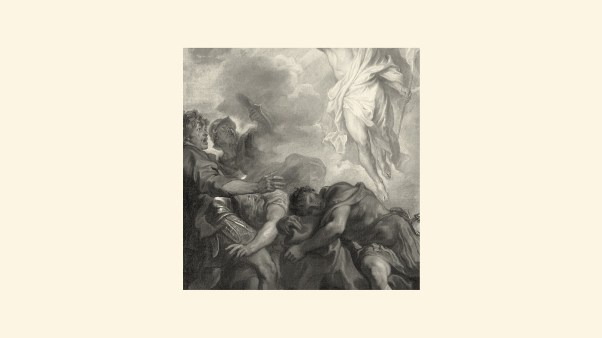
“I feel that we Palestinian Christians are still on the Via Dolorosa, at the stations of the cross,” Nicola said. “But we know that in the end, there is an empty tomb, there is a resurrection.”