Wilshire Boulevard runs like an artery through Los Angeles, stretching 16 miles from downtown to the Pacific Ocean. It’s named after Henry Gaylord Wilshire, an influential real estate developer who once marketed a strange 1920s invention called the Ionaco, an electric healing belt.
According to Wilshire’s advertisements, the device was plugged into a household light socket and worn around the body, where it was said to improve the blood and increase oxygen in the body, restoring the user to health. It was promoted as a cure for a wide range of diseases, including cancer, diabetes, tuberculosis, and arthritis. Medical experts later dismissed it as quackery, but that didn’t stop people from buying it. Wilshire sold more than 50,000 belts.
It’s easy to laugh at something like the electric healing belt. But there’s a deeper reason people bought them: Wounded people long for healing.

Today, we still search for healing but may turn to cutting-edge medical treatments, wellness culture, self-help programs, therapy, spiritual practices, or online advice about how to optimize our bodies and minds. Some of these may genuinely help. But beneath promises of optimization, there lies the same deep human desire to be healed and made whole. Good Friday speaks directly to that longing. It tells the story of a God who entered a wounded world not only to forgive sin but also to bring healing.
While this essay focuses on healing, I want to make clear that the Cross is a multidimensional work of God’s grace: In Christ’s death we find forgiveness of sins, victory over evil, justification before God, the removal of shame, and many more benefits within the broader story of the kingdom of God. My hope here is that we would remember the essential yet often overlooked truth that Good Friday is the source of our healing.
We know something in us—and in the world—is not the way it’s supposed to be. Every ambulance siren, every crowded emergency room, every whispered prayer beside a hospital bed reminds us that something in this world is deeply wrong. We live in a world marked by illness, injustice, grief, broken relationships, anxiety, and despair.
The longing for healing is one of the most universal human experiences. The Bible describes this condition with a striking metaphor: The world is sick.
According to the prophet Isaiah, “The whole head is sick, and the whole heart faint” (Isa. 1:5, ESV throughout). The sickness is not confined to the soul but pervades our entire being and even the world we inhabit, yet its deepest root is our estrangement from the God who made us.
But the Good News of Good Friday is that God has not abandoned his creation to its sickness. He has entered it to bring healing. Throughout the Gospels, Jesus restores sight to the blind, strength to the lame, hearing to the deaf, and dignity to those society has pushed to the margins. Yet these miracles are more than displays of compassion or supernatural power. They are signs of a deeper mission: Jesus came as the divine physician for a sick world. In him, the Lord who “forgives all your iniquity” and “heals all your diseases” (Ps. 103:3) has entered history, beginning a restoration that will culminate in “the healing of the nations” (Rev. 22:2).


It’s important we recover Jesus as Healer alongside Jesus as Savior. In Luke 5, after calling a tax collector to follow him, Jesus explains the heart of his ministry: “Those who are well have no need of a physician, but those who are sick” (v. 31). The implication is clear: Humanity is the patient. Jesus is the healer.
Jesus also expands our understanding of what constitutes healing. In Mark 2, when a paralyzed man is lowered through a roof to reach him, Jesus first declares, “Your sins are forgiven” (v. 5). Only afterward does he tell the man to stand and walk. Physical restoration and spiritual restoration are intertwined.
The New Testament even reflects this overlap in its language. The Greek word sozo is often translated “save,” but it can also mean “heal” or “make well.” Biblical salvation is not just about forgiveness in a legal sense. It is also about the restoration of the whole person and ultimately the whole creation.
Scottish theologian John Swinton notes the Bible doesn’t have a word precisely equivalent to the modern medical definition of health. Today, we often think of health simply as the absence of disease. The Bible paints a richer picture. It speaks instead of righteousness and peace, of being in right relationship with God, with others, and with creation. The Hebrew word shalom captures this vision: harmony, wholeness, life working the way God intended (Isa. 32:16–18; Col 1:19–20).
This vision of shalom stands behind one of the most famous prophetic descriptions of the Cross:
He was pierced for our transgressions,
he was crushed for our iniquities;
upon him was the chastisement that brought us peace,
and with his wounds we are healed. (Isa. 53:5)
Notice the suffering of the servant deals with our sin and brings peace. Through the suffering servant’s wounds, healing flows. But how does Jesus bring that healing?

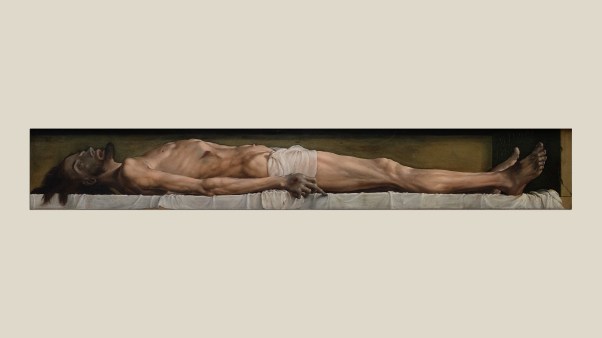
The Gospels carefully recount the physical wounds of Christ. He was scourged with a whip embedded with bone and metal (John 19:1). Soldiers struck his face (Matt. 26:67). A crown of thorns was pressed into his skull (John 19:2). Nails pierced his hands and feet (20:25). Yet his suffering was not just physical.
Emotionally, he experienced profound sorrow, even sweating blood in the Garden of Gethsemane (Luke 22:44). Relationally, he was betrayed by Judas (Matt. 26:47), denied by Peter (vv. 69–70), and abandoned by most of his disciples (v. 56). Spiritually, he bore the crushing weight of human sin, crying out from the cross, “My God, my God, why have you forsaken me?” (27:46).
Matthew connects Jesus’ healing ministry to Isaiah’s prophecy: “He took our illnesses and bore our diseases” (8:17). In other words, Jesus does not merely remove suffering from a distance but takes it upon himself, bearing in his own life the brokenness he came to heal.
Although we feel helpless watching someone we love suffer, Jesus did what we cannot do. Because he was fully God and fully human without sin, he could bear the wounds of the world on our behalf. He entered into our suffering to overcome it. Henri Nouwen was right to call Christ “the wounded healer.” The healing he offers does not come from a distance. It comes through his own suffering love.
Although healing and wholeness have been accomplished at the Cross, our experience of them unfolds in what Christians often call the “already and not yet” of the kingdom of God. Through Jesus’ death and resurrection, the decisive victory has already been won. Sin has been forgiven. Evil powers have been defeated. The restoration of creation has begun.

But the fullness of that healing has not yet arrived. We still live in a world of hospital rooms and funeral services. Christians still experience illness, grief, and mental anguish. Sometimes God brings remarkable healing in this life. Other times the healing we long for comes only in the end-of-time resurrection.
This tension can be difficult to live with. But it also points us toward hope. Good Friday reminds us that the deepest healing in the universe came through suffering love. Easter assures us that suffering will not have the final word.
One day the healing that began at the Cross will spread through the entire creation. Bodies will be raised. Tears will be wiped away. The fractured world will be restored to shalom. Until then, we wait in hope, trusting the one who bore our wounds. And by his wounds, we are healed.
Jeremy Treat is pastor for preaching and vision at Reality Church of Los Angeles and professor of theology at Biola University. He is author of The Crucified King, Seek First, The Atonement, and Everyday Discipleship.
Related