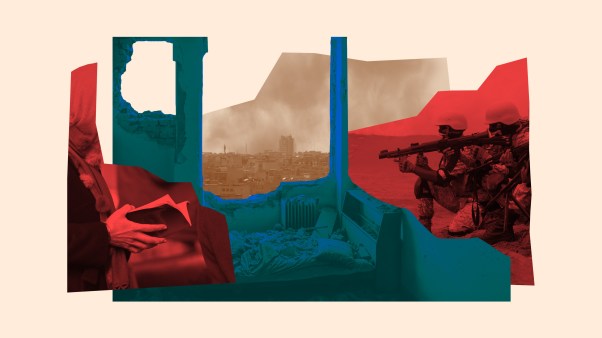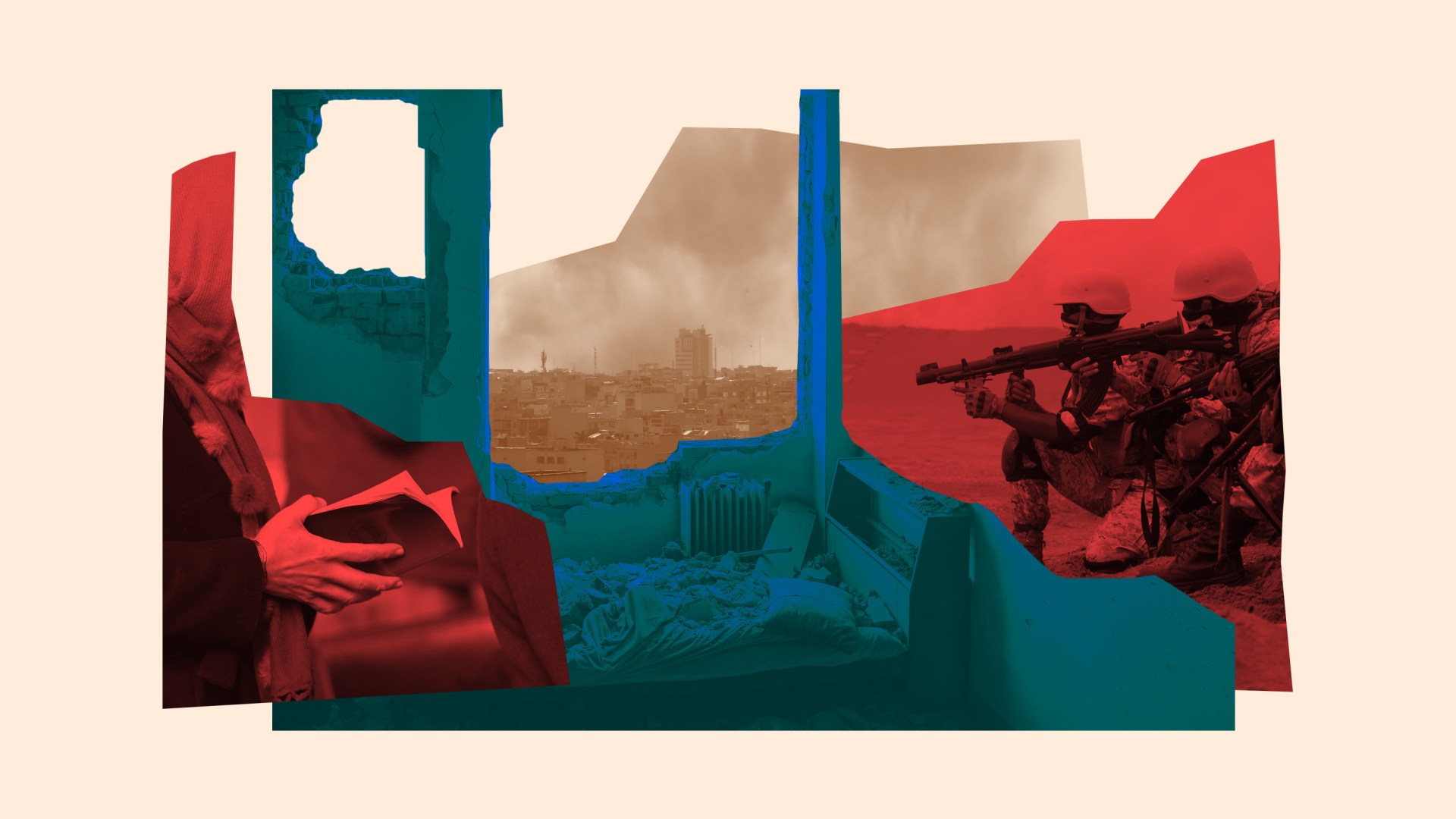
Let me tell you about Yahya, whose real name I am withholding for his safety. He’s a leader in Iran’s house church movement, a Christian from a Muslim background, and a husband and father to a young family. Like many other Iranian Christians, Yahya has paid the cost of being a believer under the Islamic regime. He has been interrogated, detained, abused, and may soon be summoned to serve a long prison sentence for his Christian ministry. And now, like the rest of Iran’s 93 million people, he is a citizen of a nation at war.
“Life is hard,” Yahya told my team and me recently when we briefly spoke to him through voice messages that were interrupted because of a weak internet connection. “But we are continuing. And the Lord is showing his glory.”
These were not just empty words. At a time when many Iranians are afraid to travel inside the country, Yahya had just returned from a trip to several remote villages, where he had gone to serve the poor, share the gospel, and offer Persian New Testaments to curious residents. Five people gave their hearts to Christ over a few days.
Many other believers are also choosing to shine Christ’s light amid the war, which was largely paused on Tuesday under a fragile, two-week cease-fire. I hear the stories of these believers in the work I do every day at Elam Ministries, an organization that aims to strengthen churches in Iran and beyond. Even in this season of fear, turmoil, and uncertainty, Iranian Christians continue to be resilient, courageous, and hopeful. And each story brings a prayer of thanks to my lips.
The Iranian church was prepared for this moment because it has endured many trials. Since the 1979 Islamic Revolution, Muslim apostasy has been anathema to the country’s ruling clerics. They insist Iranians from Muslim backgrounds must not be exposed to Christian teaching. The regime permits Iran’s ancient Christian communities—the Armenians and Assyrians—to worship in their minority languages. But Persian-speaking churches have been increasingly persecuted, particularly because many members are converts from Islam.
In the early decades after the Iranian Revolution, authorities martyred eight key Christian leaders. They threatened and eventually closed churches offering Persian services. In the ’90s, the regime banned Iran’s Bible Society. And today, it is against the law to sell or use the Persian translation of Bible.
Pushed underground, Persian-speaking Christians now meet only in house churches, facing constant threats of raids, arrests, interrogation, torture, and prosecutions that often end in prison. Yet many still choose to follow Christ.
Courage like Yahya’s—continuing ministry despite a pending prison sentence—is common. Countless brothers and sisters have stood firm under persecution while praying for and witnessing to their persecutors. When I asked one couple why they are ready to suffer for Christ, they said, “Because we have tasted and we have seen.”
recommended


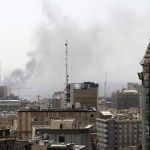
Many Iranian Christians demonstrated this legacy of courage during other recent hardships. First came the brief but intense war with Israel (and the US) in June 2025. During that period, the underground church felt the same shock and fear as the wider population. Still, we heard many continued meeting for worship. Some opened their homes to those fleeing major cities. Others walked the streets to pray, even as bombs fell. Some found faith during the 12 days of war.
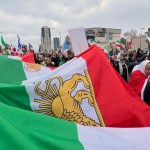
Then, earlier this year, Iran faced dark days when government forces killed thousands of unarmed Iranians. The crackdown left countless wounded and traumatized. Christians went into hospitals to pray with the wounded. They visited grieving neighbors. They offered comfort and shared the message of Jesus whenever possible.
Now, amid war, we see the same pattern play out. Through gaps in the internet blackout, I hear that many house churches are still meeting despite government checkpoints increasing the risk of being searched and arrested. Recently, a team member told me about a group of 9 Christians who continued to meet amid the chaos and violence. Friends and family members noticed the peace the Christians had and wanted to know more. They then joined the group, which has grown to 21, demonstrating the evangelistic work that has made the Iranian church among the world’s fastest-growing Christian movements.
Courage often finds its expression in action, and the generosity our organization sees on the ground is one example. In the early weeks of this war, a relatively new convert contacted his pastor and said he wanted to give his tithe to poor Christians in other cities. The pastor suggested to send money to a poor family caring for a grandfather with a disability in a distant city.
A few days later, members of another house church traveled independently to the same city to share the gospel and ended up at that family’s home. The church members reported the family told them, “We had completely run out of money, but then, at exactly the moment we needed it most, help arrived.”
We see the same Spirit-inspired outward focus in house church leaders, such as Parvin and her husband, Amir (again, not their real names). The couple lives in a heavily bombed area. But when our team suggested relocating to a safer place, they gently declined. “We want to stay and help people,” Parvin explained. “And if the situation allows, we also want to share the gospel.”
Since the start of the war, Parvin has been preparing basic food parcels for families in her neighborhood. Prices have been rising rapidly amid an already-devastated economy, and many are struggling to make ends meet. One parcel went to a single mother raising a child with disabilities. The woman had been anxiously wondering how to make her money last until the end of the month. “When she saw how God had provided for her, she started crying,” Parvin said.
related

The Iranian church is courageous, generous, and growing through a commitment to witnessing. This does not mean the church is perfect, nor that every Iranian Christian is perfectly or consistently courageous, generous, or bold. Believers in Iran are, like us, fallen human beings who must rely daily on God’s grace to be conformed to the image of his Son. Moreover, the church faces the same challenges as any rapidly growing Christian movement, such as ensuring good order, accountability, and orthodoxy. The additional challenge of persecution can also sometimes result in the scattering and isolation of believers.
Harder days may be coming for Iran, and more than ever the country’s people will need the church to shine as an embodied witness to the love of Christ. A lot of uncertainty lies ahead: While there could be greater freedoms for the Iranian people, there are also many dark possibilities.
The regime, though wounded, could cling to power and become more repressive. A deadly persecution of Christians and other minorities could follow. In recent decades, Iran has persecuted the underground church but has avoided widespread executions for apostasy, partly due to international scrutiny. But that could change.
If the Islamic republic remains, it may seek out those whom it views as the enemy within. House church Christians—which the regime already erroneously labels “Zionists”—would be easy targets. Some prominent Christian diaspora leaders have openly sided with opponents of the regime, such as Reza Pahlavi, which could make Christians appear as dangerous foes. History shows believers have been executed as enemies of the state during upheavals, including in the French, Russian, and Communist Chinese revolutions. Iran could follow a similar path.
The global church should pray against this outcome and be ready to support our brothers and sisters in the country. Here is how we can respond:
First, I believe we should shift our focus from geopolitics and place it on the church. It is easy to become preoccupied with Washington, Tehran, and the shifting dynamics of power. Yet Scripture consistently directs our attention elsewhere. In the Gospels, the Epistles, and Revelation, God works his purposes most decisively through Christ and his church.
Many Christians inside Iran are keeping this focus. Whatever the outcome of this war, people like Yahya believe what Iran needs most is the kingdom of God. Their identities and loyalties are tied to the heavenly, eternal kingdom rather than the rise and fall of earthly ones. They challenge our own walks with Christ: Are our own identities and loyalties firmly grounded in our heavenly citizenship?
Second, we should commit to sustained and informed prayer. Praying for protection, courage, unity, and continued growth among believers in Iran is one of the most meaningful ways to stand with them in whatever lies ahead.
Third, we should support practical efforts that strengthen the Iranian church. This includes providing Bibles, leadership training, and pastoral support—quiet, faithful investments that enable believers to endure and grow under pressure. Even in these difficult days, hope remains for Iran because, as Yahya told me with a quiet conviction, “The church in Iran is alive.”
David Yeghnazar is executive director of Elam Ministries. Born in Iran, his family has served the Iranian church for three generations.