In 2006, Marie Monville was living a quiet life in Lancaster County, Pennsylvania. That changed on October 2, when her husband walked into a one-room Amish schoolhouse nearby in Nickel Mines and opened fire.
Charles Carl Roberts IV, a milk truck driver, shot ten girls ages 6 to 13, killing five before taking his own life after a police standoff. His motives remain unclear. In the hours that followed, Monville sat in her parents’ home trying to make sense of what had happened.
Then the Amish came.
Monville’s father went outside to meet them and found they approached with forgiveness, offering comfort and inviting Monville to grieve alongside them.
That moment reshaped her life.
“My life has been so tremendously positively impacted by the fact that this was a community who wasn’t trying to hold me responsible for Charlie’s choices,” Monville said. “They were just as concerned about me as they were about their own community members.”
Such responses are rare in the aftermath of mass violence. They may become rarer still as American law redraws the boundaries of responsibility.
In 2024, authorities reported 14-year-old Colt Gray had entered Apalachee High School in Winder, Georgia, with a semiautomatic rifle. Four people were killed in the shooting that followed—two students and two teachers—and nine others were injured.
The case drew national attention not only because of Colt Gray’s age—making him potentially the youngest perpetrator in a school shooting of this scale in decades—but also because of what followed.
On March 3, a Barrow County jury convicted his father, 55-year-old Colin Gray, on 27 criminal counts related to the shooting, including second-degree murder, cruelty to children, and involuntary manslaughter. Colin Gray has not yet been sentenced but could face decades in prison.
Colt Gray’s trial has not been scheduled yet, but his father’s verdict signals a push to hold parents criminally responsible for their children’s violence. The push raises legal questions. For Christians, it also raises scriptural ones.
In Deuteronomy 24:16, Israel’s law draws a clear boundary around guilt: “Parents are not to be put to death for their children, nor children put to death for their parents.” Ezekiel 18:18 reiterates this, saying a father does not bear the burden of sin for his son, and vice versa. All people bear responsibility for their own sin.
Yet Scripture also acknowledges that the consequences of sin rarely remain confined to one life—and there are often penalties for negligence. In Exodus, Israel’s laws dictate that if an ox kills someone, the owner is liable for the death only if there were warning signs the ox would do so, bringing biblical liability beyond the threshold of intentions.
Scripture also calls parents, particularly fathers, to raise their children in godly discipline and not to provoke them to wrath (Eph. 6:4). How people prompt their children to respond to the world around them is important—especially in the Gray case.
Consequences of sin ripple outward through families, communities, and generations. Modern courts are not applying biblical law, but cases like Colin Gray’s pose a question: Who is responsible for a mass shooting, and where does the ripple begin?
According to reporting by The Washington Post, Colt Gray had a family life full of neglect and abuse as well as a shrine to a mass shooter in his bedroom—and the FBI had investigated him a year earlier for online threats. Months before the attack, his father gave him the rifle used in the shooting as a Christmas gift.
The teen’s final text to his father before the shooting read, “I’m sorry, it’s not ur fault.”
The jury disagreed, returning a verdict in less than two hours.
Mass shootings have increased over the past two decades. The Rockefeller Institute of Government reports that the annual average has more than doubled over the past 30 years, from 9.4 incidents between 1995 and 2005 to 19.5 between 2015 and 2025.
The Gray case is the second major instance in which a parent has been held criminally responsible for a child’s role in a mass shooting. It follows the 2021 attack at Oxford High School in Michigan, where 15-year-old Ethan Crumbley killed four classmates.
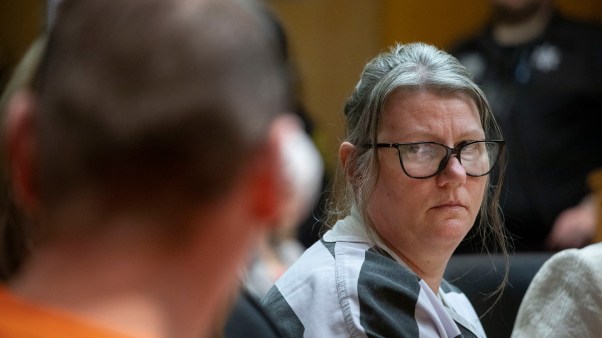
His parents, Jennifer and James Crumbley, were later convicted of involuntary manslaughter after prosecutors argued they ignored clear warning signs and failed to secure the firearm they purchased for their son. Each received sentences of 10 to 15 years.
Before those cases, parents were occasionally charged for providing access to firearms or for neglect, but they were not charged with crimes as severe as manslaughter or murder.
Touro Law Center professor Jolie Zangari, a legal scholar who has studied parental criminal liability in cases of youth violence, said the Gray case may mark a turning point but does not introduce a fundamental change in the law.
She said both the Gray and the Crumbley cases involved an unusual level of parental awareness of their children’s struggles along with decisions to buy firearms for them. In most cases, Zangari said, parents are not fully aware of the extent of a child’s mental health issues or access to weapons.
“Part of me thinks now this will open up additional prosecutions, but I also think this is a massive wake-up call for parents,” Zangari said. “We can simply wonder how many parents now have chosen to lock up their guns … how many parents may perhaps think twice about purchasing guns for their children.”
Zangari said she views the verdict as a positive development and similar legal arguments could extend beyond parents in rare cases, perhaps to spouses or school administrators, depending on what others knew and how they acted.
Justin Heinze, a University of Michigan researcher who studies school shootings, said the recent cases target “egregious lapses in parental responsibility” rather than introducing a broad new standard.
While Heinze’s work focuses on prevention, such as school preparedness, early intervention, and firearm safety, he said the prosecutions may still have an effect.
“I do think [these cases] communicate more clearly the importance of secure [firearm] storage,” Heinze said. “Hopefully this raises some awareness.”
Twenty-six states have some form of safe storage law, holding adults accountable if children gain access to unsecured firearms. The threat of murder charges, however, marks a significant escalation.
For Monville, the legal shift raises a different question: Could forgiveness be dismissed in favor of justice?
“My hope would be that [Colin Gray] comes to know God and finds that place of forgiveness … to forgive his son, to forgive himself, and to reach out to those his son impacted,” she said.
Monville left the legal diagnosis to the courts, saying if parents have committed crimes, like neglect, they should be prosecuted. Beyond the courtroom, she said, she hopes Gray’s prosecution does not take a key element from him: his humanity.
“This is somebody’s life,” Monville said. “It’s not just a story that we’re going to look at today and forget about next week.”
Mass shootings are often senseless, and Monville fears families craving justice will try to find solace in arrests and clarity through convictions, losing the concept of mercy and forgiveness from which she has benefited.
“We want to be able to figure out how to make it fit,” Monville said. “We want a resolution sometimes to something that just doesn’t have one.”
After the Nickel Mines shooting, Roberts’s mother, Terri Roberts, developed close relationships with Amish families, including regularly visiting and helping a survivor who was disabled in the attack. Terri Roberts later wrote about her journey through grief and forgiveness before her death in 2017.
Monville has followed a similar path, becoming a speaker and mentor. None of it, she says, would have been possible without the Amish community’s response. Although she was not culpable for her husband’s actions, she had to go through a personal process of forgiveness as well, letting go of bitterness and shame.
“I want to be who God created me to be and live the life that he’s called me to, regardless of these circumstances,” she said. “I cannot do that if I allow unforgiveness to take hold inside of my heart, because it’s going to permeate everything.”
Donald Kraybill, a leading scholar of Amish life and former director of the Young Center for Anabaptist and Pietist Studies at Elizabethtown College in Lancaster County, said such forgiveness is rooted in the example of Christ.
“They would be quick to say it’s not easy,” Kraybill said. “And yet it’s what Jesus calls them to do, despite the pain.”
That commitment does not negate justice, he added. Rather, Amish communities often entrust ultimate judgment to God. In the years after the shooting, some Amish told Kraybill the tragedy unexpectedly amplified their witness across the globe.
“I remember one saying, ‘We could never do this as a missionary,’” he said. “‘If we tried, it would take years. Here it happened overnight.’”
Weeks after the 2006 shooting, the Amish tore down the schoolhouse, burying the epicenter of the tragedy. Today, the site is a pasture with grass, trees, and ribbons tied to fence posts.
Though books, films, and even a play have revisited the event, nearly 20 years after the shooting, Kraybill said many Amish no longer want to speak about it.
“They told me, ‘We’ve put this behind us,’” he said. “‘It’s been in God’s hands for a long time.’”