As a culture, we tend to think of grief as healthiest when abbreviated and restrained, as seemingly quick and efficient as other aspects of our fast-forward, high-tech lives.
Even mental health experts disagree over what "normal" grief looks like. Although the depressive symptoms of bereavement have long been considered standard to the grieving process, doctors proposed a revision to the newest edition of Diagnostic and Statistical Manual of Mental Disorders to eliminate the bereavement exclusion from the definition of depression, allowing doctors greater freedom to diagnose and treat grief as a pathological condition.
Move on. This is the cultural imperative imposed on bereavement. We picture the season of mourning as a hurdle to clear and sadness as something to be eventually left behind. We're distinctly uncomfortable with tears. Grief, as a category of human experience, has grown closer to becoming something clinical in America, a condition worthy of a prescription.
This push to rush through or pathologize grief hasn't always been there. In her poignant piece, Let's Bring Back Mourning Clothes, Jana Riess recounts the loss of her mother and wishes for the days when one could, for a season of months, even years, don a black dress to signal sadness. "The purpose of the all-black fashion was to give the bereaved survivors some much-needed cultural latitude. The clothes they wore practically screamed, 'The following person requires a wide berth.'" Mourning clothes had the benefit of conveying, without a word, the need for a sympathetic space. They normalized grief by bringing it into public view, but they also safeguarded the healing process by signaling the bereaved must be handled with care. In this way, mourning clothes achieved a welcome symmetry between private and public grief—a symmetry we've since lost.
Following the respective deaths of my father and brother 15 and 20 years ago, I didn't grieve in the Victorian era of mourning clothes, nor in the age of digital disclosure. Grieving still maintained a private dimension. It was a time before cell phones and personal computers, so I had no virtual life or identity to manage, no dreaded obligation to articulate grief in 140 characters or a sum things up in Facebook status update. The only face I had to compose was my real one, and grieving was an act shared only with a close circle of friends and family. This was a real luxury: a public audience isn't always welcome to grief's ugly events of denial, anger, and depression.
Unfortunately for us today, the notion of private, intimate grief is now going the way of mourning clothes. In exchange, we have an increasingly public grief. Social media abolishes distance, bringing us artificially close to tragic events and those who suffer them. What would have once been private sorrow is now publicly mediated, even publicly scrutinized (especially for our celebrities), and this has perhaps been no more evident than in the recent case of Rick Warren after the tragic death of his son.
Although we may be grateful for Rick Warren's public commitment to keeping faith on Twitter, I'm just not so sure that our social media can handle the messy complexity of grief. Not only does social media tend to promote artificiality, but media is inherently impatient, predatory for today's breaking stories. Grief, on the other hand, requires a slow healing and cannot be rushed. It is a marathon, not a sprint, and those who grieve need friends willing to lag behind—in yesterday's news.
Our media is also predisposed to shareable sound bites, but grief by contrast, can be inarticulate, especially when we're mad. We can't always make sense when we grieve. In the book that he wrote after his wife's death, Lewis recognizes the provisional disabilities of bereavement, and in rereading his own words of an earlier chapter, he admits, "They appall me." He had portrayed God as a Cosmic Sadist, rejected the doctrine of his goodness. But later, he calls those words "no so much the expression of thought as of hatred . . . the pleasure of hitting back."
In A Grief Observed, C.S. Lewis travels the road of grief. He calls it a "long valley, a winding valley where any bend may reveal a totally new landscape." No one vista conveys the entire scene, and we don't really move on from grief as much as discover new perspectives. Lament is the biblical language that we're supposed to learn on route. The Book of Job, the Book of Lamentations, and the Psalms of lament all teach us that it is possible to simultaneously attest to life's caprice and to affirm God's sovereignty, to say that the world is cruel as well as to proclaim that God is good. Lament affirms these cruel paradoxes of earthly existence, and that's why grieving can't be done well on social media, which may tempt us to prematurely resolve dissonance and avoid what is messy and hard.
We don't have to deny the senseless horror of tragedy in order to defend God's goodness. Lament can actually teach us to call death by its rightful name: enemy. And here is something unexpectedly beautiful that happens when we learn to cry and cry out, as Ellen Davis said in Getting Involved with God:
When you lament in good faith, opening yourself to God honestly and fully—no matter what you have to say—then you are beginning to clear the way for praise.
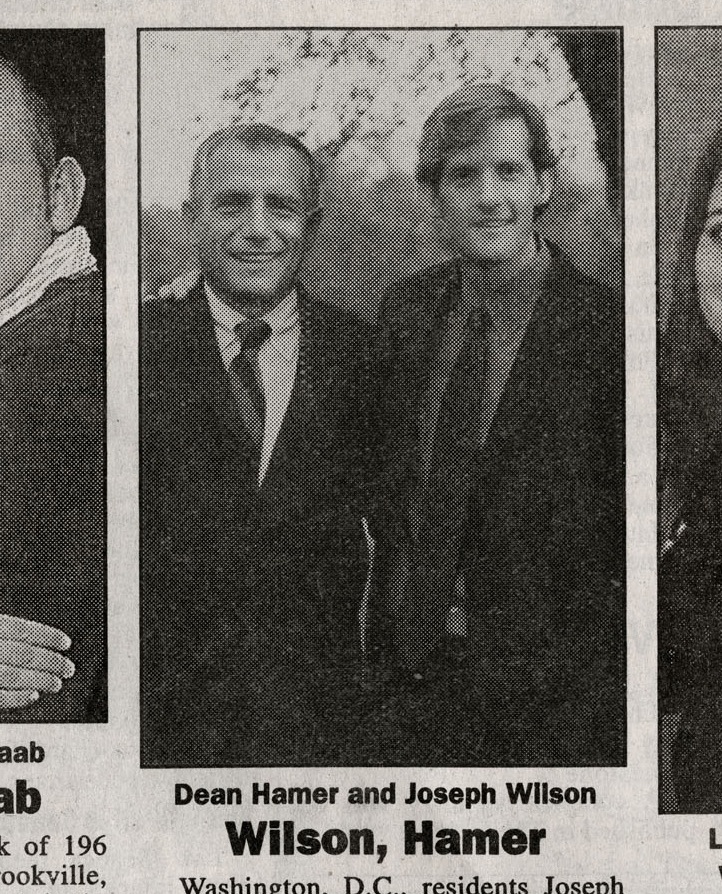
When Joe Wilson got married, he put an announcement in his hometown newspaper in Oil City, Pennsylvania. Nothing unusual about that, except that Wilson had married another man–and a picture of the two of them appeared in the paper. Angry, even hateful, letters to the editor poured in; one said that it would’ve been better for Wilson not to have been born. Wilson responded not in anger himself, but by revisiting his hometown, with his partner and a couple of camcorders, to look into the town’s attitudes.
The result is Out in the Silence, a 65-minute documentary that ends up following four main subplots in Oil City. First, a gay teen who was verbally and physically abused at the local high school, and the quest that he and his mother take to confront those attitudes and the school district’s refusal to make things right. Second, a lesbian couple that buys a crumbling downtown art-deco theater and renovates it into a functioning civic showcase again. Third, a woman representing the American Family Association who seems to be on a crusade against gays, more anxious to speak out against their “agenda” to take the time to meet or listen to any of them.
Fourth – and likely most interesting to CT readers – a local Christian pastor and his wife who had written one of the letters to the editor decrying homosexuality, only to later show tolerance and love toward the filmmakers as they got to know them in the months ahead. The pastor didn’t compromise his biblical beliefs at all; he continues to believe that homosexuality is a sin. But, for the first time in his life, he actually gets to know gay people, and by the end of the film is calling them friends. There’s some interesting dialogue between the two “sides” as their unlikely friendship unfolds throughout the film. It’s really a Christlike response from the pastor.
Though the film is made by two gay men, it doesn’t seek to promote a “gay agenda” or to stereotype the “religious right.” It’s simply a matter of trying to understand attitudes in small-town America. The filmmakers end up advocating for the teenager to the school board and in a civil rights lawsuit, and the local school board ends up admitting they should’ve done more to help the boy who was abused; they incorporate staff training as a result. Despite some initial opposition, the two women end up re-opening the theater to a warm reception of both gays and straights. The AFA rep never changes, and refuses to look the gay men in the eye or even have a conversation with them. And the pastor and his wife seem glad to have made new friends, though they clearly disagree with their lifestyle.
The film is showing at the Human Rights Watch Film Festival in New York today, followed by broadcast on New York’s two largest public television stations, WLIW (June 26, 3 p.m. ET) and WNET (June 27, 11:30 p.m. ET). For more on the film, click here. Watch the trailer here: