
Christians interested in environmental issues call the church to awareness, action.
An Amish proverb states, “We didn’t inherit the land from our fathers; we are borrowing it from our children.” In the spirit of this proverb, a group representing a small but growing Christian ecological movement met last month in Madison, Wisconsin, to discuss Christians’ responsibility to care for the environment.
The forum, called Reclaiming the Covenant, was sponsored by the North American Conference on Christianity and Ecology (NACCE) and the World Alliance of Reformed Churches. Fred Krueger, executive directer of NACCE, compared society’s regard for ecological issues today to its view of slavery 150 or so years ago.
“As long as slavery was discussed in economic terms,” said Krueger, “there was not much progress toward abolishing it. Abolition came after it reached the pulpits of this nation as a moral issue.” He added, “We need to see ecological issues in moral terms also, because most of the important forms of ecological healing are never going to be financially profitable.”
Calvin DeWitt, one of the conference organizers, said that interest in ecological issues has barely begun to take root among Christians in North America. “In the churches and Christian groups where I speak,” he said, “there is usally a handful of people who are practicing care for the Earth.”
DeWitt, a professor of ecology and environmental studies at the University of Wisconsin, said last month’s forum marked the first time on this continent that Christians have convened to address justice, peace, and the integrity (wholeness) of creation as inseparable concerns.
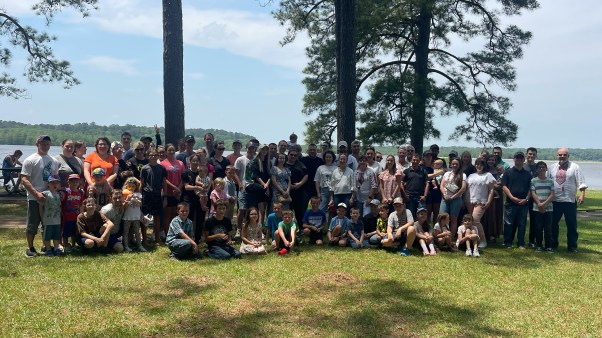
Many of the 60 who attended were scholars, 10 of whom gave major addresses. Douglas John Hall, professor of theology at McGill University in Montreal, Canada, laid a theological foundation for the forum’s focus. Hall asserted that various ancient and modern influences have given Western civilization “a hierarchic conception of being, in which the human is elevated and, ultimately, virtually abstracted from nature.”
In challenging this view, Hall said man’s possession of the image of God is not an “endowment.” Using the metaphor of someone standing before a mirror, Hall said human beings reflect the image of God only as they stand in proper relationship with him and, in turn, with other people and the rest of creation.
Grim Future?
One result of the conference was a statement on peace, justice, and the integrity of creation that will be sent to church groups and denominations for use as an educational tool. Also, James Van Hoeven, one of the conference organizers, will represent the conclusions of those who gathered in Madison to the World Council of Churches (WCC). In 1990, the WCC will hold a major convocation on ecological issues.
The four-page statement begins, “God’s earth faces a crisis. Without serious, immediate attention, the future of life as we know it is grim.” The statement affirms that Jesus Christ is the Lord of creation; it urges “reduced consumption and the living of technologically simple lives.”
Elsewhere it states, “At a time when oceans are dying, when forests are disappearing, when atmospheric conditions are deteriorating, when soil is being exhausted, and species are driven to extinction, we urge the churches to self-examination and confession.”