The word apology initially meant “a speech in defense,” and, as any parent will tell you, that’s still what you’re most likely to get when you ask a young child to apologize to a sibling. The Greek root survives today in the words apologia and apologetics, both of which can mean “a formal defense or justification” (The Apologia Project, for example, is dedicated to intellectual defenses of the Christian faith). Apology began to mutate in the late 16th century, shedding its sense of justification and beginning to bear regret and guilt, although it would be more than a century before the latter sense became the primary definition.
Today, politicians and other public figures tend to turn their apologies into apologetics. Evaluating former baseball player Pete Rose’s recent autobiography and the statements of former U.S. Defense Secretary Robert McNamara in the documentary The Fog of War, Bruck Kuklick writes in Christianity Today‘s sister publication, Books & Culture, “Each man owns up to past blunders, but each refuses to admit any character defect; and each tries, in different ways, to deflect serious criticisms.” Both, Kuklick says, come across as self-serving and low on remorse.
Sometimes apologies seem defensive by their indifference to the severity of the sin. When Connecticut governor John Rowland announced his resignation last month in the face of a federal corruption investigation, he said only, “I acknowledge that my poor judgment has brought us here.” Poor judgment, unlike pride and lying, isn’t really a sin—only a mental malfunction—so it’s easier for politicians to own up to. You could call it a kinda culpa. Beware the dodging going on when you hear “regrettable,” “unfortunate,” or “unacceptable” instead of “sorry.” These words often try to turn apologies from acts of humility into acts of bravado. As linguist Geoffrey Nunberg notes, such buzzwords are “an elegant way of appropriating the indignation without accepting the blame.”
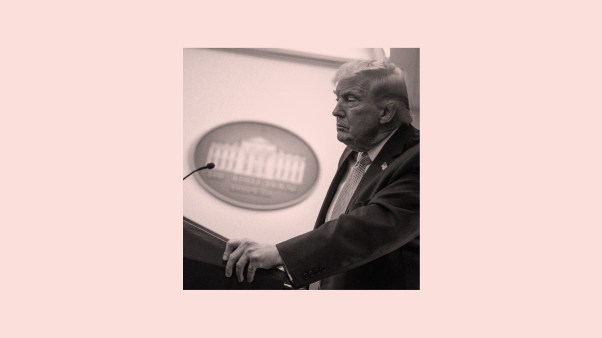
By these standards, current Defense Secretary Donald Rumsfeld was downright candid when he told Congress in May, “To those Iraqis who were mistreated by members of the U.S. armed forces [at Abu Ghraib], I offer my deepest apology” (though critics saw his resistance to resignation and investigation as undercutting his claim to “take full responsibility”). President Bush was less forthcoming, telling Arab television that the abuse “reflects badly on my country” and “does not represent the America that I know.” When asked by a reporter why the president didn’t say he was sorry, White House spokesman Scott McClellan replied, “I’m saying it for him right now.”
Apologies at such a high level are a delicate diplomatic matter. Bush emphasized to a gathering of Christian reporters, including one from Christianity Today, that his appearance on Egyptian television did not mean he was addressing the Arab world as a whole. “I said I am sorry for those people who were humiliated,” he told the gathering. “But I never apologized to the Arab world.” When asked by Larry King, “Why is it so hard for politicians … to say, ‘I was wrong’?” former President Bill Clinton, who issued some kinda culpas in his day, replied, “I think they’re always afraid of ridicule. They’re afraid they’ll be perceived as weak.”
If politicians are reluctant to apologize, religious leaders seem eager by comparison. “As the only Anglican bishop to have publicly endorsed the Australian Government’s case for war, I now concede that Iraq did not possess weapons of mass destruction,” wrote Tom Frame, in an article in the Melbourne Anglican that was reprinted in the Melbourne Age. He also said that, contrary to his earlier beliefs, Iraq did not pose a threat to the U.S., nor was it tied to Al Qaeda. Therefore, he wrote, “I continue to seek God’s forgiveness for my complicity in creating a world in which this sort of action was ever considered by anyone to be necessary.”
Elsewhere in Australia, the Synod of the Anglican Church issued a statement of apology to victims of sexual abuse: “We apologise and ask forgiveness for the church’s failure at many levels to listen to, and acknowledge the plight of, those who have been abused, to take adequate steps to assist them, and to prevent abuse from happening or recurring.”
Lately, religious leaders have been apologizing even when their culpability is not apparent. The nonprofit advocacy group FaithfulAmerica.org raised money over its website to air an ad on Arab television that apologized for Abu Ghraib. The ad said that “Americans of faith … express our deep sorrow” and “condemn the sinful and systemic abuses committed in our name.” Meanwhile, Pope John Paul II re-apologized on the occasion of the recent publication of The Inquisition, a 700-plus-page report that found that executions were not as common in the trials of heretics from the 13th to 19th centuries as previously thought. (The conclusion prompted the pope to qualify his apology: “Before asking pardon it is necessary to have an exact knowledge of the facts and to place the failings with respect to the evangelical needs there where they really are found.”) The Rev. Clay Ford was involved in last month’s apology by the mayor of Eureka, California, to the local Wiyot Tribe for an 1860 massacre at the hands of white men.
This gets into ethical gray area: Can someone apologize on a wrongdoer’s behalf? Can someone accept that apology on a victim’s behalf? Is there such a thing as vicarious responsibility?
While the ethics of all these apologies are unclear, they do affirm the importance of responsibility in a world strewn with wrongs left unaccounted for. As the Rev. John Buchanan preached last month at Fourth Presbyterian Church in Chicago, unlike ancient mythology and the social sciences, which see humans as corks tossed about by the gods or abstract forces, responsibility affirms the belief that God delegates stewardship of the world to human beings. “The Bible makes the stunning assertion, on the very first page, that … we’re the managers of the place,” Buchanan said. Apologies can be a way of taking this charge seriously.
Nathan Bierma, editorial assistant for Christianity Today sister publication Books & Culture, writes the “On Language” column for the Chicago Tribune.
Copyright © 2004 Christianity Today. Click for reprint information.
Related Elsewhere:
Last month, Bierma wrote “Ethnic Cleansing, Genocide, and Plain Old Murder” | What Tony Campolo and the State Department meant in recent comments about Palestine and Sudan.
Bierma also writes the Content & Context weblog for Books & Culture.
More of Bierma’s work is available at his website.
Earlier Christianity Today articles on this subject include:
So I’m Sorry Already | What do you say after you say “I’m sorry”? By Frederica Mathewes-Green (April 6, 1998)
Me? Apologize for Slavery? | I may not have owned slaves, but I’ve benefited from their having been used. By Gordon Marino (October 5, 1998)
Christian History Corner: Forgive and Remember | Pope John Paul II’s apology was unprecedented, but not entirely unique (Mar. 17, 2000)
Christianity Today sister publication Marriage Partnership has frequently discussed apologies on an interpersonal level.
Those interested in church apologies will want to read Mary Ann Glendon’s “Contrition in the Age of Spin Control,” which appeared in the November 1997 issue of First Things, and Avery Dulles’s “Should the Church Repent?” which appeared in the December 1998 issue.