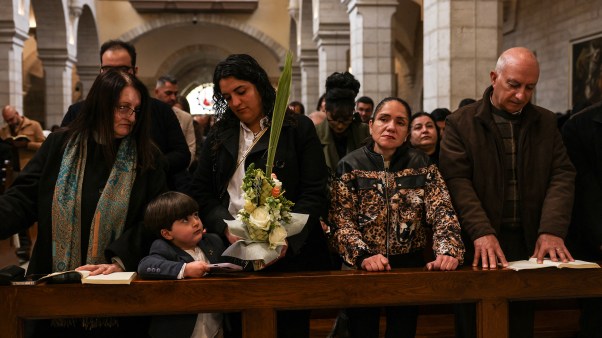
This week may prove monumental in the modern history of Egyptian Christianity. On Monday (Feb. 18), heads of the five largest denominations–Coptic Orthodox, Catholic, Protestant, Greek Orthodox, and Anglican–united to create Egypt’s first Council of Churches.
For the first time since the dawn of Catholic and Protestant missions in the 17th and 18th centuries, Egypt’s Christians formally stand united.
“I believe history will record this day as we celebrate the establishment of a council for all churches of Egypt,” said Pope Tawadros II of the Coptic Orthodox Church, which boasts approximately 90 percent of all Egyptian Christians. “I think such a step was delayed for years.”
In recent decades, tension has characterized ecumenical relations, amid an environment of majority Orthodox dominance, theological disputes, and accusations against minority denominations as sheep stealers. Administrative disputes even led the Orthodox Church to withdraw from the Middle East Council of Churches, leaving official dialogue among Egyptian Christians at a standstill.
Current developments, however, are reversing this trend.
“I believe the vast majority of Christian young people in Egypt in various communities long to see the church united in service,” said Bishop Mouneer Hanna of the Anglican Church.
But if a greater spirit of unity is a generational cry, it is spurred on by the perceived necessities of the Arab Spring.
“In light of the difficult moment Egypt is going through nowadays,” said Father Rafic Greiche of the Catholic Church, “we need to show solidarity, reinforce and sustain ourselves, and put our hope in the living Christ. Unity is an utmost necessity in order to pursue the church’s mission in bearing witness.”
Members of the council, however, are quick to dismiss the idea this solidarity should be interpreted as a direct response to Islamist political dominance.
“The Egyptian Council of Churches has no relation with politics,” said Safwat el-Baiady, president of the Protestant Churches of Egypt.
On the contrary, the council is mandated with coordinating between the churches, promoting their unity, and encouraging Muslim-Christian dialogue. Leadership will rotate between the heads of the denominations, each of which will be represented equally. This, in particular, demonstrates the significance of the council, as Egypt’s Orthodox vastly outnumber members of the other four churches.
Tied both to history and the future, challenges inherent in interreligious and interdenominational relations remain. Current events may have sparked the creation of the Egyptian Council of Churches, but it is only the resources of faith which will sustain it.
“The Lord has answered prayers which have been offered for 30 years,” said Baiady. “Our diversity must become a source of richness rather than a struggle.
“Unity is built on fruitful, humble love which favors the other over the self.”