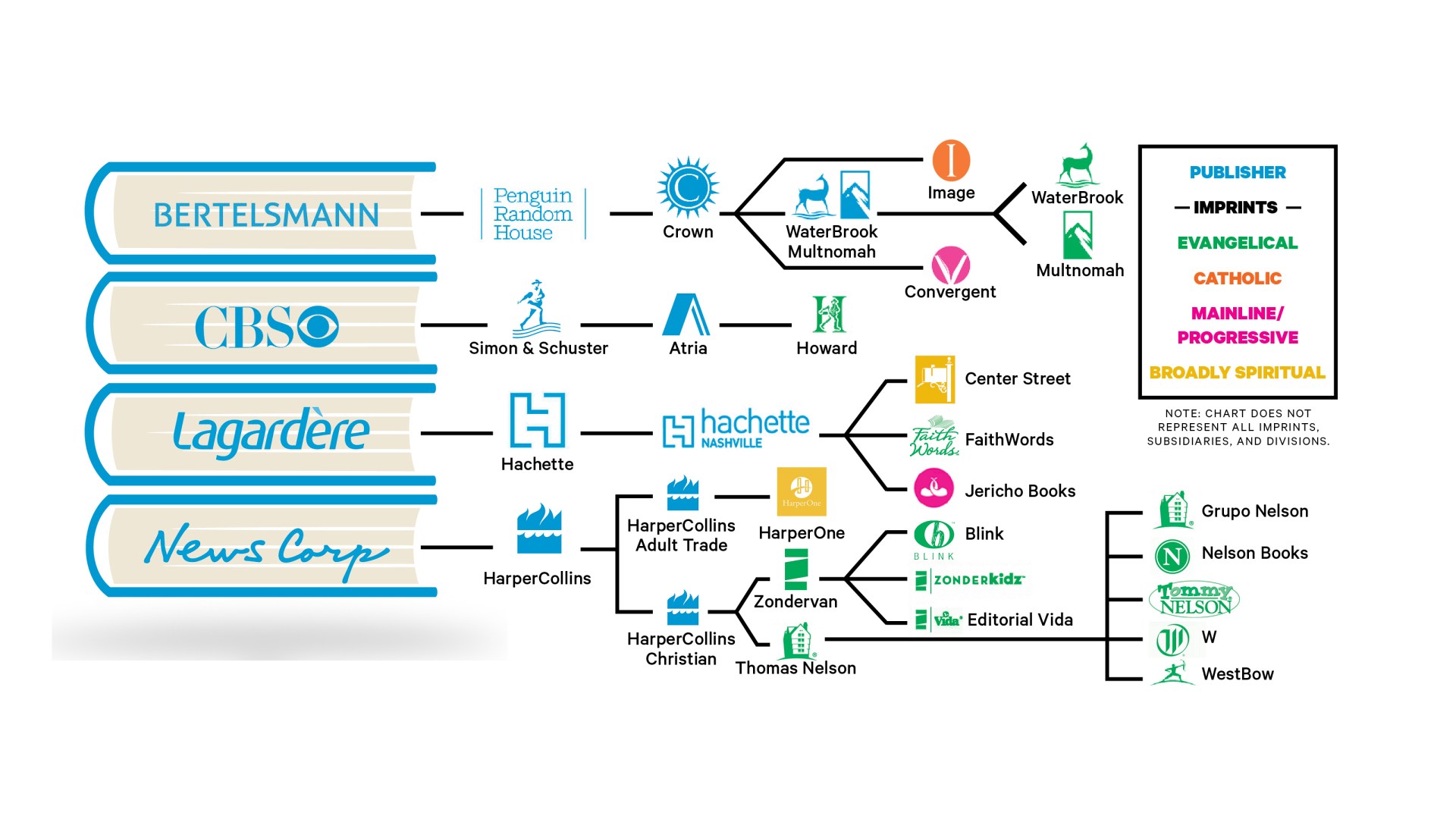

As Hobby Lobby made its case to the Supreme Court, arguing that its business is sufficiently Christian to be exempt from Obamacare's contraceptive mandate, another business was arguing its evangelical bona fides, too.
WaterBrook Multnomah Publishing Group, the evangelical division of Penguin Random House (PRH), is one of the world's leading Christian publishers. Its backlist includes David Platt's Radical, John Piper's Desiring God, and Stephen Arterburn's Every Man's Battle. But it has resigned its membership in the National Religious Broadcasters (NRB) rather than submit to an ethics review over God and the Gay Christian—a book it didn't actually publish.
The book, in which Matthew Vines argues that same-gender sex is not sinful, was published by Convergent Books. A 16-month-old PRH line, Convergent describes itself as "for progressive and mainline Christians who demand an open, inclusive, and culturally engaged exploration of faith."
In a letter to board members, NRB president Jerry Johnson said WaterBrook Multnomah employees worked on the Convergent book, noting that Stephen Cobb is chief publishing executive for both groups. Cobb also oversees Image, PRH's Catholic imprint. All three divisions share offices in Colorado Springs, away from PRH's Manhattan headquarters.
"This issue comes down to NRB members producing unbiblical material, regardless of the label under which they do it," Johnson said. "I asked them to reconsider and end the practice of having Christian workers from their publishing house work on Convergent projects. They declined."
In a statement published before the NRB letter, Cobb said no employees were forced to work on the book, and that a few took him up on his offer to abstain.
The point of imprints is to identify unique brands and styles to buyers, but boundaries within publishing houses are often blurred, said Lynn Garrett, senior religion editor for Publishers Weekly. Sharing offices and staff is common.
Michael Maudlin, executive editor of HarperOne, was surprised by the dispute. "WaterBrook has been very responsible, saying clearly that more liberal books will be published under the Convergent imprint, evangelical books under WaterBrook, and Catholic books under Image," he said. "I can't understand why that is a problem."
It's a problem "because they're all under one roof," said Dean Merrill, past editorial director for David C. Cook and Focus on the Family. While other PRH imprints have published material at odds with biblical teaching for years, it's Convergent's shared staff that matters, he said. "A brand is simply a public face to retailers and readers of what setting a book is coming out of. A publisher is not just a collection of typesetters and print buyers and people who put books in boxes. We're talking about the world of thought."
Meanwhile, another longtime evangelical imprint is getting even more directly involved in publishing a book that argues that same-gender sex is not sinful. Howard Books, a Simon & Schuster imprint (and not an NRB member) best known for its longtime Hugs series and hymnals, will publish a memoir in October by Jennifer Knapp, the Christian musician who came out as a lesbian in 2010. The book, a Howard spokeswoman said, "is simply a vehicle for us to encourage Christians to open their hearts and minds to having the discussion openly."