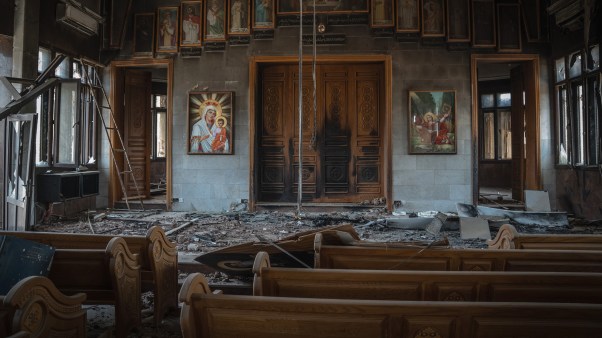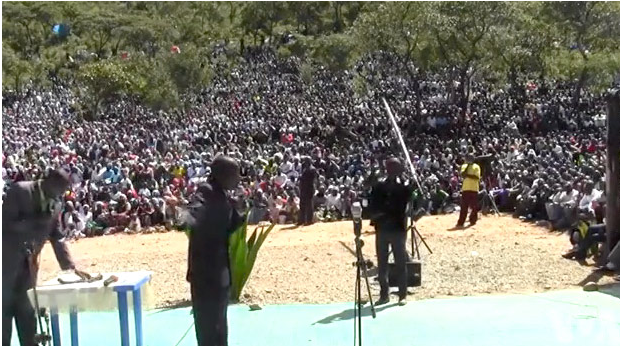
Weeks after a military raid on a Christian camp left more than a dozen people dead, Angola has banned nine churches for failing to operate within the law.
Following the April 16 attack on the Light of the World community, led by former Seventh-day Adventist Jose Kalupeteka, Angola’s president criticized the apocalyptic group for causing social unrest by scaring citizens into believing the world would end in 2015.
The Angolan military raided the camp after nine police officers were killed by Light of the World members during an attempted arrest of Kalupeteka.
The government and opposition party have offered conflicting reports on the total casualties, which range from 13 to hundreds. (Journalists have been denied access to the scene.) Light of the World members shouted "our weapon is the Bible" and "Jesus is our protector" during the siege, according to one account.
Voice of America's Portugese site has chronicled the saga of the 52-year-old Kalupeteka, who was kicked out of the Adventists in 2001 and started Light of the World in 2007. Kalupeteka confirmed his imprisonment earlier this week, after confusion about his whereabouts delayed the government's legal proceedings against him. Some have argued the incident should be taken to the International Criminal Court or the United Nations.
Six months before the raid, the government threatened Kalupeteka's group to follow the law and respect social order, or face charges. Angolan church leaders also expressed criticism.
While the southern African nation’s constitution officially protects freedom of religion, its policies often present a challenge to religious minorities, the US State Department noted last year. To legally operate, religious groups must gather 100,000 notarized signatures of individuals from at least 12 of Angola’s 18 provinces.
Behind the government’s strict regulations: a desire to better control upstart Pentecostal congregations, a top government official said in 2013.
“According to the minister, this was to combat witchcraft and illegal migration—but was targeting mostly Brazil-style evangelical groups that have mushroomed across Angola in recent years and have particularly worried establishment churches that have seen their congregations dwindle,” wrote an Africa researcher for Chatham House, a British think tank.
According to the State Department report:
Representatives of longer-established churches spoke critically of smaller, newer religious groups, such as the many small "family churches" opened in recent years, often with no more than a dozen members. These representatives accused founders of the small churches of profit seeking. Critics stated that leaders of some family churches exploited the poorest segment of the population and demanded thousands or tens of thousands of kwanzas (tens or hundreds of dollars) in tithes in exchange for promises of long life, prosperity, or miracles. Critics also maintained some religious groups created their own nongovernmental organizations with proceeds directed to pastors instead of helping the poor.
Angola drew scrutiny in 2013 after the government ordered a mosque to be demolished, and multiple outlets reported the nation had banned Islam. While the government refuted the reports, it noted that Islam had not yet been legalized.
Only 40,000 Muslims live in Angola, while Christians make up 90 percent of its population of 19 million, according to the Pew Research Center.
In 2013, CT noted that Angola suspended several Pentecostal churches after a stampede at a New Year's prayer vigil killed 16.