 Elliot Davis
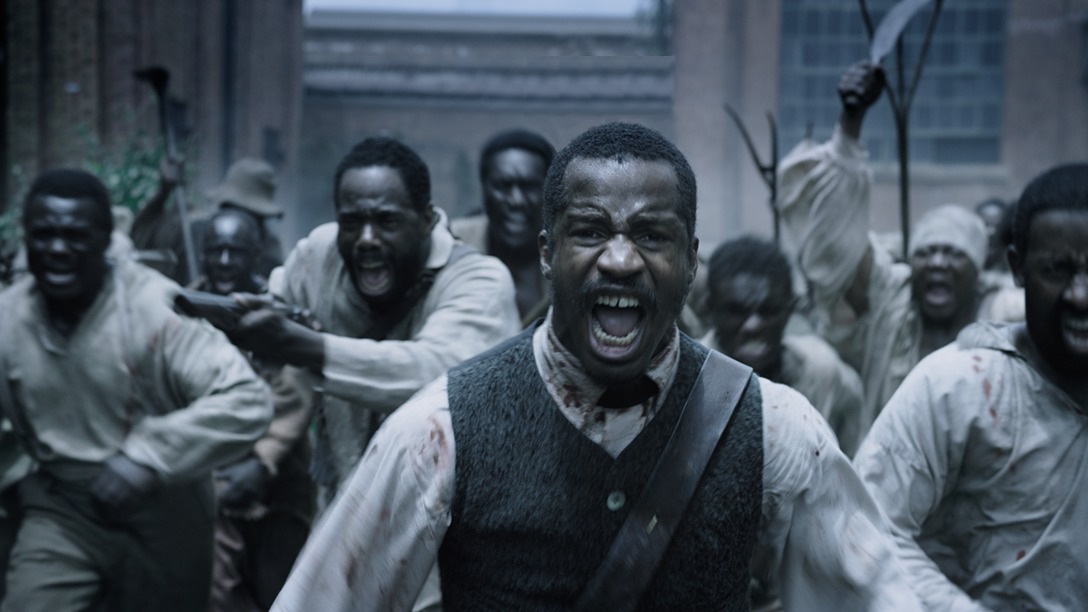
The very title of The Birth of a Nation is a protest: it’s ripped from the highly racist 1915 D.W. Griffith film that both essentially launched the film industry and inspired a relaunch of the Ku Klux Klan in Georgia. That this film, made in 2016 (and released, serendipitously, on the heels of #OscarSoWhite), shares a name with that one is a key reminder of where the industry started.
Actor Nate Parker directed, produced, wrote, and starred in this Nat Turner biopic, one of the most highly anticipated at the 2016 Sundance Film Festival. The film was seven years in the making—and it paid off. (Both artistically and literally; it sparked a record-breaking bidding war between distributors. Fox Searchlight bought it for about $17.5 million.)
Nat Turner was the slave who led a rebellion on August 21, 1831 that resulted in the deaths of 60 white people. He was later executed by hanging. Turner is a complicated figure, and one could argue the film unduly valorizes him (comparisons to Braveheart have been rampant since the film’s premiere). At the same time, Turner’s story has rarely been depicted on film and never in this way, and the story seems incredibly timely. Turner learned to read as a boy—illegal at the time—and became a preacher.
 Elliot Davis
This is Parker’s directorial debut, and there are flaws in the film; a few recurring images in particular don’t translate well, and the soundtrack is far too conventional, and there’s the aforementioned problem of valorization. But it’s also a stunning work of singular vision and a passionate political argument as well. After the film’s premiere, Parker brought what appeared to be the entire cast and crew up on stage, citing how important the community was to making the film happen, especially since he was discouraged repeatedly from making the film and telling the story.
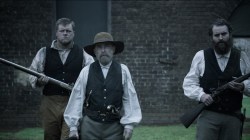
Even more importantly, Parker spoke about what he was trying to point out with the film. Many movies about slavery depict slave owners as demented bundles of pure evil who just want to beat slaves, but the reality, he said, was that many thought they were being benevolent and good. At the same time, the Bible was being used to justify their actions, to claim that white people were just naturally superior to black people. The injustice, Parker said, was in the system that shaped people to believe this. The film’s characters (white and black) spread out across the spectrum, helping reinforce this thesis.
What he’s pointing at is the truth of where things like racism come from: both from our hearts and from the institutions in which we’re embedded, which is to say that it can be hard to see how the systems around us create justice or injustice. Among these institutions, of course, is Hollywood itself—which is why the film’s title and its link to its predecessor is doubly effective. This is a remarkable thing to pull off in a film, and Turner’s story is a stirring and effective vehicle.
 Elliot Davis
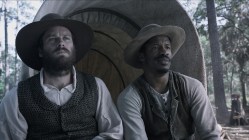
Also remarkable—and sobering—is the film’s deep engagement with the Bible, which Parker spoke about as well, citing his own Christian faith. Scripture is quoted repeatedly throughout the film in many contexts; I’m not sure I’ve ever seen a film with more of the Bible in the screenplay, including "Christian" films.
In one scene, Turner tells a group of slaves that for every verse that’s used to tell them they ought to submit to mistreatment and be enslaved, there’s another that says that they’ve been set free. He takes courage from the Psalms, and he is so deeply versed in the Bible—it was the only book allowed to him, as a black man—that he can reply to his challengers with Scripture at every turn.
This is the second film I saw at Sundance that suggests that the Bible has been used both to combat and to prop up racism (the other was Sophie and the Rising Sun, set over a century after The Birth of a Nation), and this critique seems worth heeding.
It’s also worth asking why the Christian film industry, which focuses on a Bible-heeding audience, hasn’t been telling these stories. After all, it’s the faithful who need to think the most about how they read and use the Bible. Even when the answer is ugly.
Our Sundance Coverage:
- Diary for Day 1: Agnus Dei, Sophie and the Rising Sun, and Maggie's Plan
- Diary for Day 2: Operation Avalanche, River of Grass, and Jim
- Diary for Day 3: Love & Friendship, Certain Women, and Mammal
- Diary for Day 4: Sing Street, Christine, The Birth of a Nation, and Holy Hell
- Diary for Day 5: Captain Fantastic, Complete Unknown, Kate Plays Christine, and First Girl I Loved
- Diary for Day 6: Morris From America, The Blackout Experiments, and Tickled
- Dispatch: Agnus Dei
- Dispatch: The Birth of a Nation
- Dispatch: Love & Friendship
Alissa Wilkinson is Christianity Today’s chief film critic and an assistant professor of English and humanities at The King’s College in New York City. She tweets @alissamarie.