In the book of Romans, the apostle Paul tells Christians that “the whole creation has been groaning as in the pains of childbirth.” He goes on to say that we “groan inwardly as we wait eagerly for our adoption to sonship, the redemption of our bodies” (8:22–23).
We African Americans understand this inward groaning—the discomfort of waiting for the full redemption of our physical selves. Like all creation, our bodies await renewal because they have borne pain and loss for far too long.
Some of our pain includes violent death at the hands of police officers or vigilantes who are intimidated by our presence and fire their guns, hang us from trees, pound us with their clubs, or crush us with their knees.
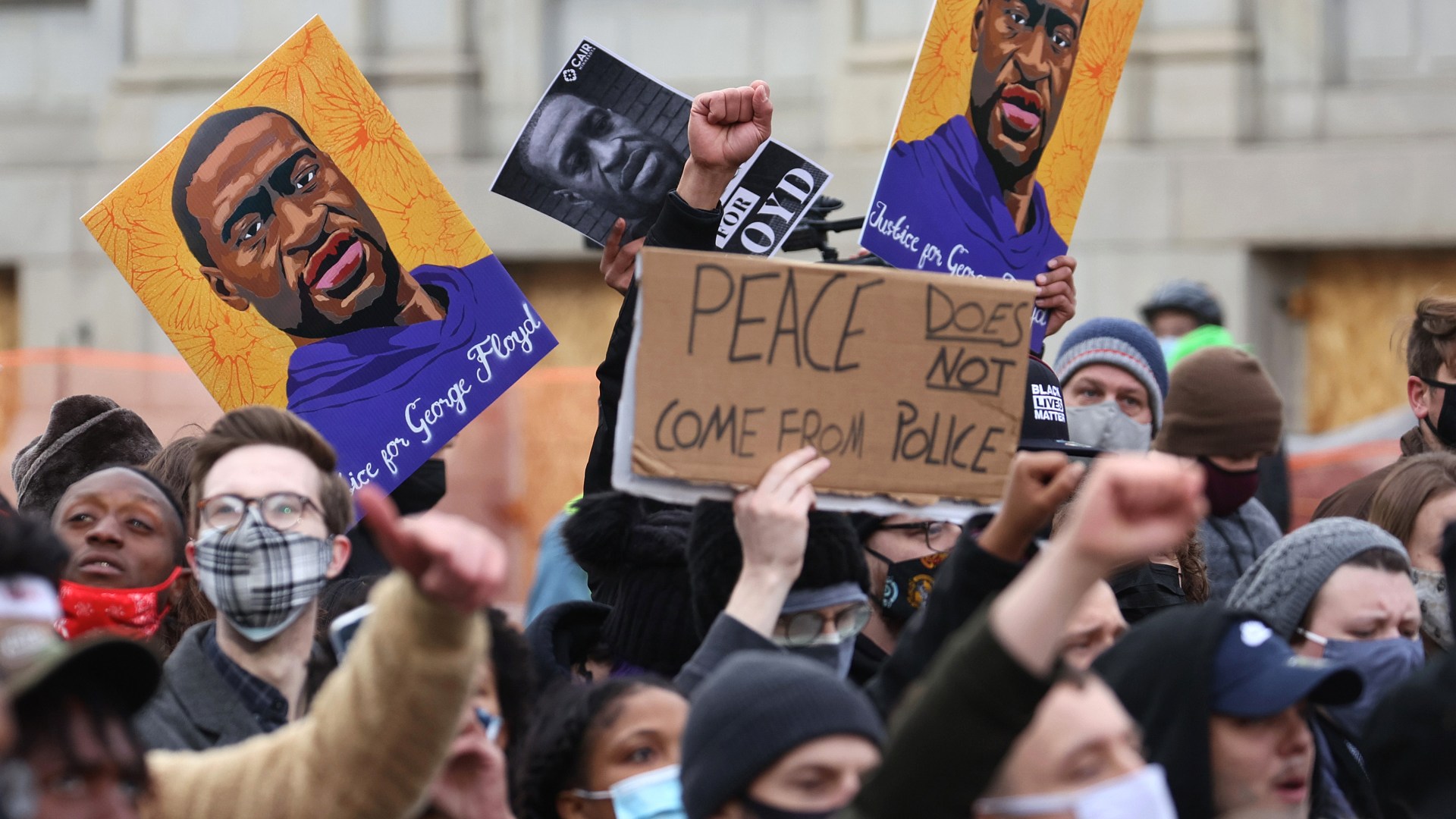
Former Minneapolis police officer Derek Chauvin didn’t accept George Floyd’s humanity but instead perceived his body as a threat. Chauvin ignored the onlooking crowd, who shouted at him to stop, and proceeded to drain the life out of Floyd over the course of nine and a half minutes.
The Minneapolis police officer was ostensibly fearful of a man who was already subdued and placed face-down on the ground. Because of the justice system’s track record of accepting police brutality as a necessary part of the job, Chauvin relied on his badge to justify his actions.
Still now, so many Black and brown bodies groan because of the bullets or the pounding they take, even from those entrusted to protect and serve us. Yet even when we are not physically beaten, we still groan. We groan for many different reasons.
There is another cause for groaning in anticipation of redemption: Our bodies are decaying faster than those of our white counterparts. The COVID-19 pandemic highlighted the health disparities already present between white and nonwhite people. And Black and brown folks are carrying so much anxiety that our life expectancy is significantly lower than that of whites.
Due to the stress of being Black and brown in the USA, we are physically less healthy than white people, even when our income levels are the same. We ache and groan simply because of the toll racism takes on our bodies, even when we are not physically under attack. We ache in the pit of our stomachs whenever we see the police cruiser in the rearview mirror, or hear the sirens getting louder.
We ache in our bodies when white people perceive us as being out of our place. We get followed in stores. We get mistaken for “the help.” We get ignored when we should be heeded, and we receive extra attention when we’re minding our own business. We inwardly groan because of slights, microaggressions, and especially encounters with authority figures that often quickly escalate to dangerous altercations.
Our children start to ache and groan early in life because they get suspended or otherwise punished more frequently than white students. Our bodies inwardly groan and eagerly await our adoption because injustice is painful. We ache and groan because our sisters and brothers get killed and we feel powerless. In pain we take to the streets. With groans, we raise our voices in protest and cry, “Black lives matter!”
But rather than receiving support from Christian sisters and brothers, we find that prominent and significant numbers of them demonize our pleas but not the system that crushes us.
It is no surprise that Chauvin’s murderous act was recorded, since we are hyperaware of police activity. And we are grateful for the young woman, Darnella Frazier, who pressed through her pain to record the horror. We ached and groaned for George Floyd, but also for all the other victims, many of whom did not have their brutal encounters recorded.
We held our breath for nearly a year, all the way up until the afternoon of April 20, 2021, when Judge Peter Cahill read the verdict. Chauvin was pronounced guilty of the three charges against him.
Even so, our groans haven’t stopped. Minnesota Attorney General Keith Ellison rightly acknowledged that the guilty verdict did not signal justice but rather accountability, because justice “implies true restoration.”
Indeed, justice means George Floyd would be alive today, because our society would find better ways to live as neighbors. Through love, we’d eliminate much injustice and tackle evil rather than tolerate it.
When I heard the verdict that Chauvin was found guilty, I wept in relief. But my inward groaning hasn’t stopped. The apostle Paul writes that all creation groans, yet we know that some parts are in more agony than others. Of course, our hope is eschatological, which is to say that justice will reach a climactic fulfillment at the end of time when Jesus returns. However, in the meantime, we strive—in the words of an old hymn—for a “foretaste of glory divine.”
We get that foretaste by focusing not only on individual behaviors but also on the unjust systems that exploit, threaten, and endanger anyone, especially those with relatively little societal power.
As we anticipate full redemption, then, let us do the handiwork that God has for us to do (Eph. 2:10). Our good work glorifies God not because we will put an end to all evil but because we might reduce some people’s suffering. Reducing the aches and pains demonstrates the love of a Savior who healed and fed brown bodies to show what the kingdom of God is like.