





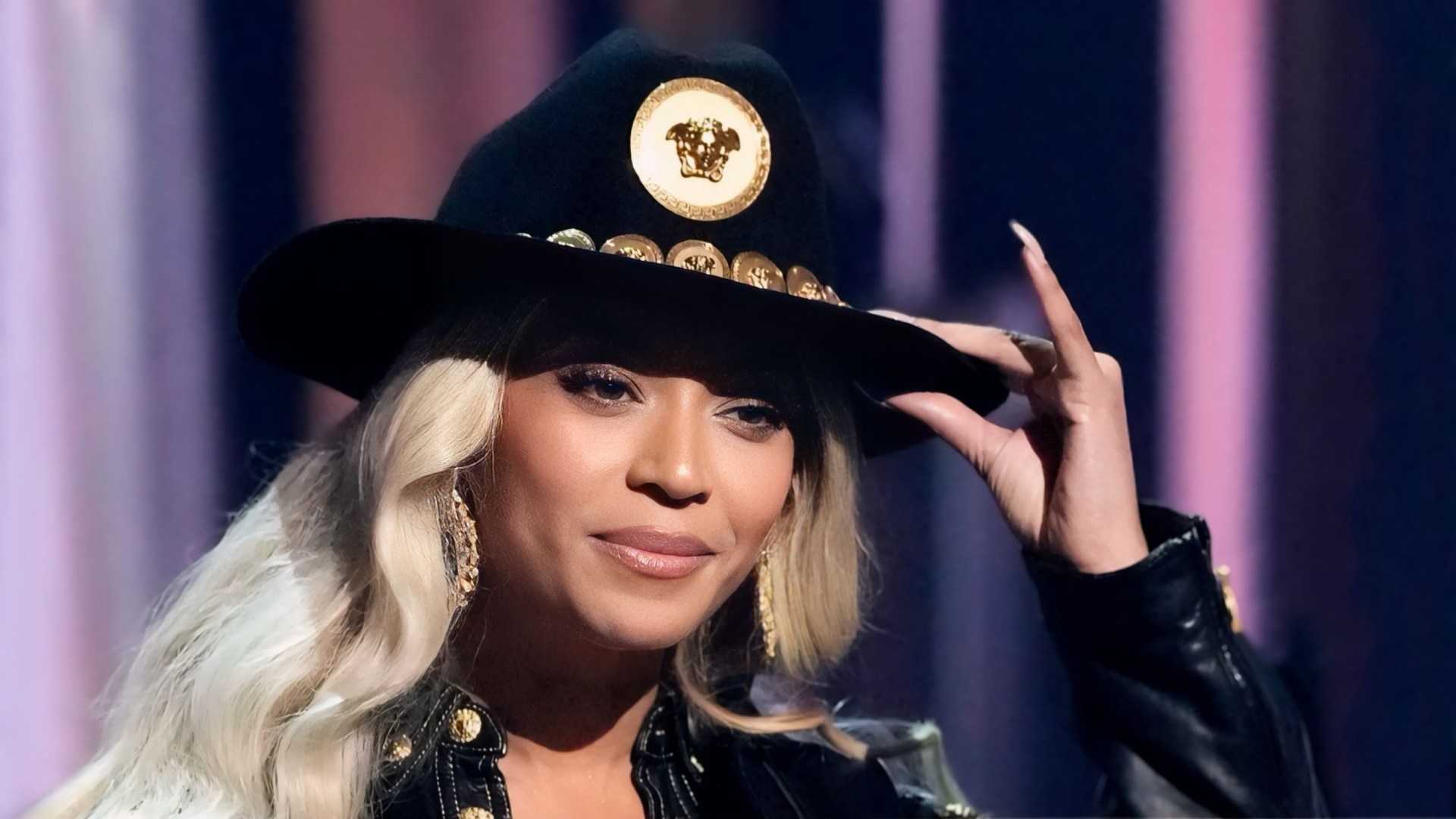
I wasn’t planning to listen to Cowboy Carter, the eighth studio album from American singer and songwriter Beyoncé. I’ve always had a love for her music—but country has never been my thing.
Plans changed when I started to read what people were writing about the record, from comments on social media to reviews in major publications. Their reactions were bitter, even cruel. “Beyoncé’s ‘Cowboy Carter’ isn’t a country album. It’s worse,” proclaimed one review in The Washington Post. “Beyoncé has chosen to do Dolly Parton karaoke,” writes the reviewer. “She sounds like she’s doing Wild West bedroom cosplay in outer space.”
“The lefties in the entertainment industry just won’t leave any area alone, right?” asked an interviewer on a One America News program. “They’ve got to make their mark, just like a dog in a dog walk park,” responded the interviewee.
It’s not that Cowboy Carter is exempt from criticism. Its genre-blending experimentation won’t be to everyone’s taste. Some listeners may have reservations about Beyoncé’s departure from her earlier pop and R & B records. That’s fine. Music, like all art forms, is subjective. Thoughtful critique can serve as a means for musicians to grow as artists, and to engage audiences in meaningful ways.
But that’s different from implying that Beyoncé can’t and shouldn’t sing country music simply because of who she is: not a white man from a rural small town, but a Black woman raised in Houston. A “stay in your place” undercurrent cuts through how critics have spoken about her new album, and it rubs me the wrong way.
Who owns country music? By releasing Cowboy Carter, writes Tressie McMillan Cottom in The New York Times, Beyoncé is claiming that she does. By “reinscrib[ing] a genre’s latent politics,” Beyoncé makes listeners “reckon with [their] complicity in that genre’s policing of who is and is not legitimately American.”

In my forthcoming book Womanish Theology: Discovering God Through the Lens of Black Girlhood, I reflect on another question of possession: Who owns theology?
In the first months of my seminary education, I read texts from some of the white male theologians who had historically framed the discipline: Karl Barth, John Calvin, Martin Luther, Paul Tillich. For me, those texts were theology.
It was only when elective classes introduced me to Black, liberation, mujerista, womanist, and feminist theologies, writings from thinkers like James Cone, Gustavo Gutierrez, Katie Cannon, and Elisabeth Schüssler Fiorenza, that I came to understand how marginalized voices could enliven my understanding of Jesus’ ministry. Excluding those voices as a significant source of theological knowledge would be a mistake.
Reading different kinds of theology, whether from thinkers of different cultural backgrounds or thinkers with whom we have profound disagreements, doesn’t have to undermine our own understanding of fundamental doctrine. We might disagree with some (or many) aspects of a person’s work. But that disagreement can be clarifying, helping us to develop our own arguments for what we believe. And diverse theology can provide new perspectives on belief and practice, fresh interpretive lenses for Scripture, and deeper understandings of God’s consistent character.
Take liberation theology, which emphasizes God's preferential option for the poor and oppressed. It reminds us that God is actively involved in the struggle for justice and liberation. In mujerista theology, God is portrayed as immanent and relational, engaged in the everyday struggles and triumphs of Latina women. In womanist theology, we pay particular attention to moments in the gospels when poor women encountered Jesus and his apostles.
In the same way that theologians from different backgrounds can offer different perspectives on the nature of the divine, country music as sung by Beyoncé provides its own unique perspective on the genre. Beyoncé adds context, just as other Black country artists like Linda Martell, Charley Pride, Tanner Adell, and Mickey Guyton have done.
How does a genre fixated on land and family and faith sound when Black artists take on those themes and reflect them through their experiences in towns and homes and churches? Beyoncé’s rendition of “Blackbiird” puts the struggle for Black civil rights alongside Levi’s jeans and long roads and banjo licks. That old struggle is part of our “country” too; as “American Requiem” puts it, “Nothin’ really ends / For things to stay the same, they have to change again.”
“Oh, Louisiana, I stayed away from you too long / Oh, Louisiana, How can a true love go so wrong?” goes one interlude, a sped-up Chuck Berry sample. Plenty of country songs are wistful about their roots. But Beyoncé’s reasons for staying away might be different.
An important caveat: Cowboy Carter doesn’t just offer something new because its singer is Black. It offers something new because its singer is Beyoncé—a global superstar, an icon. “This ain’t a Country album,” she wrote in her introductory Instagram post. “This is a ‘Beyoncé’ album.” That means listening for what Cowboy Carter has to say about fame and wealth, celebrity and pride—and using those declarations to understand a musical tradition, and an American culture writ large, more fully. Her cover of “Jolene,” for instance, gives us another view on the pain of betrayal from Queen Bey’s lofty vantage point.
“Used to say I spoke, ‘too country’ / And the rejection came, said I wasn’t ‘country ’nough,’” Beyoncé sings in “American Requiem.” “Said I wouldn’t saddle up, but / If that ain’t country, tell me, what is?”
I celebrate Cowboy Carter for its boldness, creativity, and depth. And I celebrate Beyoncé for fearlessly declaring that she belongs here too.
Khristi Lauren Adams is dean of spiritual life and equity and an instructor of religious studies at the Hill School. She is the author of several books including Parable of the Brown Girl and Unbossed: How Black Girls Are Leading the Way.









