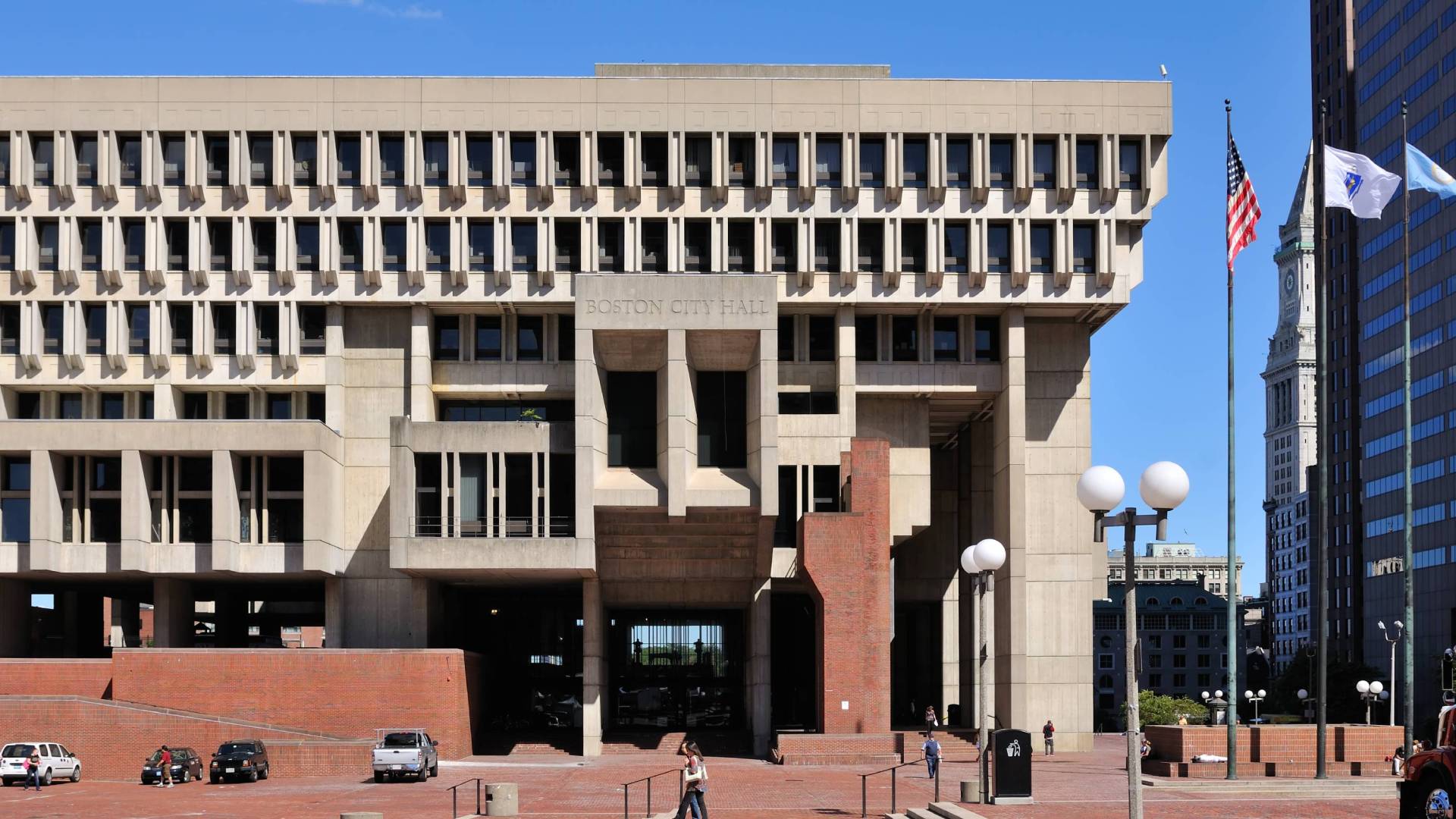
By hoisting 50 other flags up the city hall flagpole but turning down one Christian flag, the city of Boston violated the Constitution and denied a Christian group its free speech rights, the US Supreme Court ruled Monday.
The unanimous decision declared that because Boston’s flagpole hadn’t been used for government speech but as a public forum for hundreds of groups to use, the city discriminated against the group—Camp Constitution—that applied for the ecumenical flag to fly for a day.
“When the government does not speak for itself, it may not exclude private speech based on ‘religious viewpoint,’” wrote outgoing Supreme Court justice Stephen Breyer in the opinion; “doing so ‘constitutes impermissible viewpoint discrimination.’”
Christian religious liberty advocates are celebrating the ruling as a win, coming just over a month after the high court sided with the religious rights of a Texas death row inmate requesting prayer at his execution.
“In one of the last opinions Justice Breyer will ever write (he retires at the end of the term), he says, ‘…Boston’s refusal to allow petitioners to raise their flag because of its religious viewpoint violated the Free Speech Clause,’” tweeted John Litzler, an attorney in Texas who represents Christian nonprofits.
“This is the 2nd of 4 different religious liberty cases being decided by SCOTUS this term,” Litzler added. “The decisions thus far have been 8-1 and 9-0 in favor of those asserting religious liberty claims. Freedom of religion & religious speech are not controversial or partisan issues.”
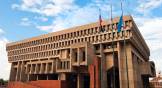
Brent Leatherwood, acting president of the Southern Baptist Ethics and Religious Liberty Commission, called the decision “a welcome addition to free speech jurisprudence.”
Pastor Chris Butler, a board member for the And Campaign and a US congressional candidate in Illinois, said the 9–0 decision was “spot-on” and that “religion MUST NEVER be the basis for exclusion.”
The court’s opinion focused on how readily Boston approved permits to fly other flags on one of three flagpoles outside of city hall, allowing 50 unique flags at 284 ceremonies between 2005 and 2017, including LGBT flags and flags of other countries.
“Indeed, the city’s practice was to approve flag raisings without exception—that is, until petitioners’ request,” Breyer wrote.
The plaintiff in the case, Hal Shurtleff, had asked to fly the Christian flag—a white flag with a blue box and red cross in the corner—in front of city hall on Constitution Day as a way to honor Christians’ civic contributions. His organization, Camp Constitution, promotes the country’s “Judeo-Christian moral heritage.”
The fact that the city of Boston emphasized accommodation and framed City Hall Plaza as a public forum rather than an outlet for its own views undercut its argument that allowing a religious flag would be government speech rather than private expression by citizens like Shurtleff.
The decision notes that “nothing prevents Boston from changing its policies going forward,” and other cities have been more selective in approving flags and designate that their poles are not a forum for free expression.
“This 9–0 decision from the Supreme Court strikes a victory for private speech in a public forum,” said Mat Staver, whose organization Liberty Counsel represented Shurtleff.
“This case is so much more significant than a flag. Boston openly discriminated against viewpoints it disfavored when it opened the flagpoles to all applicants and then excluded Christian viewpoints. Government cannot censor religious viewpoints under the guise of government speech.”
Justices Samuel Alito and Neil Gorsuch each penned concurring opinions with differing reasoning for why Boston’s rejection of Shurtleff’s permit application was wrong.
Gorsurch focused on the city’s claims that allowing the Christian flag to fly would violate the establishment clause. He criticized Boston’s use of the 1971 Lemon v. Kurtzman decision, which had to do with schools and church-state separation.
“For as long as the First Amendment means anything, government policies that discriminate against religious speech and exercise will only invite litigation and result in losses like Boston’s,” Gorsuch wrote.
“Today’s case is just one more in a long line of reminders about the costs associated with governmental efforts to discriminate against disfavored religious speakers.”